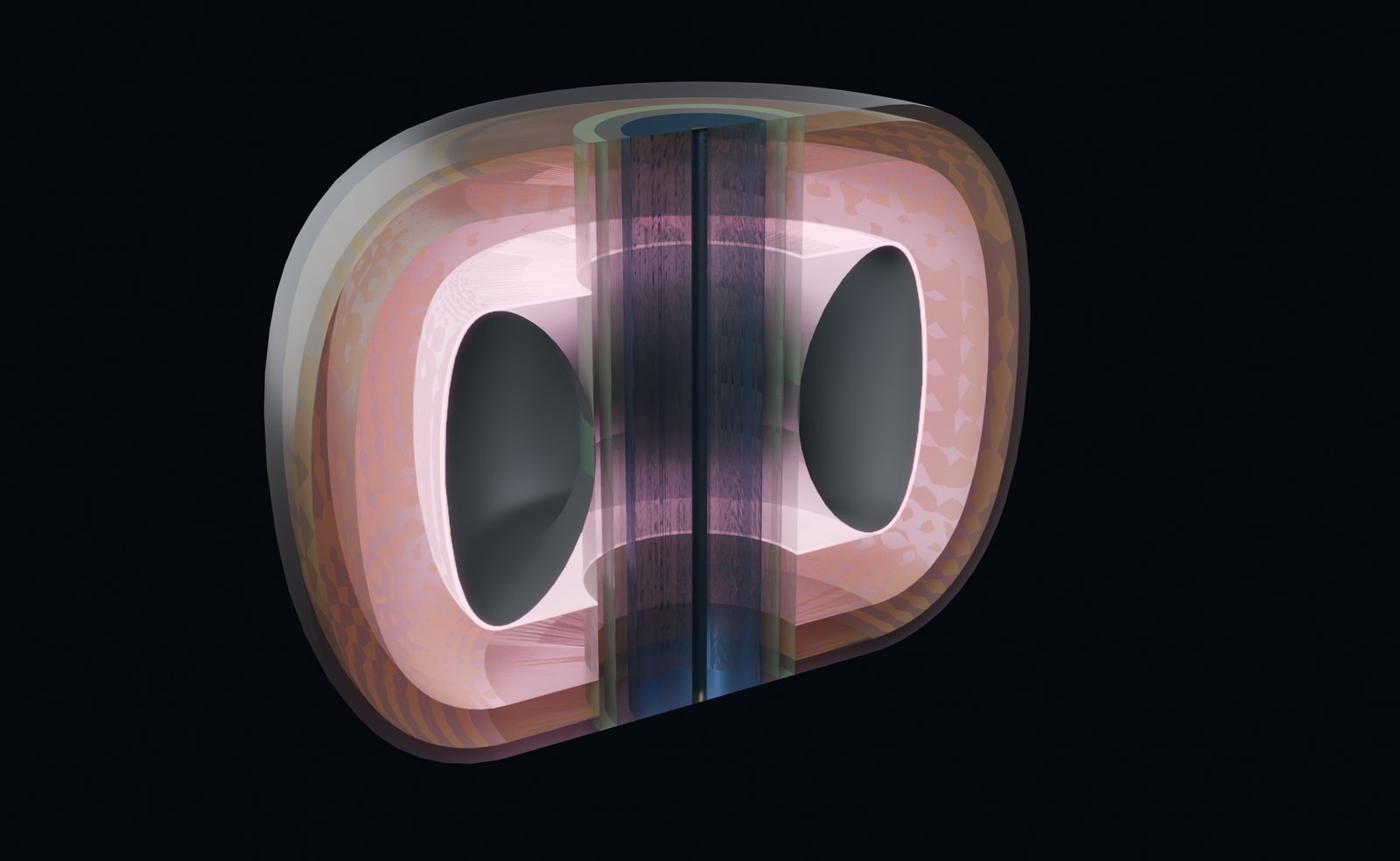
Fusion Waste, Stated Honestly
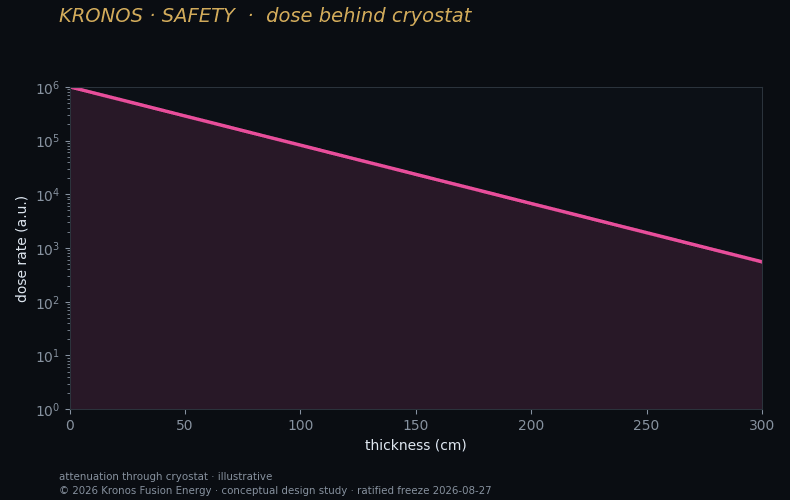
Fusion produces no long-lived high-level fuel waste, but neutron activation of structures is real; we describe both plainly.
What fusion does and does not produce
Fusion does not produce the long-lived, high-level spent fuel associated with fission. There is no chain reaction to run away and no actinide waste stream from the fuel. That is a genuine and important difference. But fusion is not waste-free, and saying so would be dishonest.
The real waste channel: activation
The breeder (Hyperion) is a D-T machine, and D-T fusion releases 14 MeV neutrons. Those neutrons activate the surrounding structure over time, making some components radioactive. The relevant waste is therefore activated structural material, not spent fuel. Its hazard is generally shorter-lived than fission high-level waste and depends strongly on which materials are chosen.
- No high-level spent-fuel waste stream
- Activated structures: real, material-dependent, generally shorter-lived hazard
- The burner has a much lower neutron fraction (5.44%), reducing activation relative to a D-T machine of similar output
Because the burner's D-3He reaction is largely aneutronic, only 5.44% of its energy appears as neutrons. This materially reduces its activation burden compared with the breeder — a structural advantage we can state, though the burner depends on scarce helium-3 as noted in helium-3 and the planet.
Choosing low-activation materials is an active design lever — see activation and materials choices and radiological honesty.