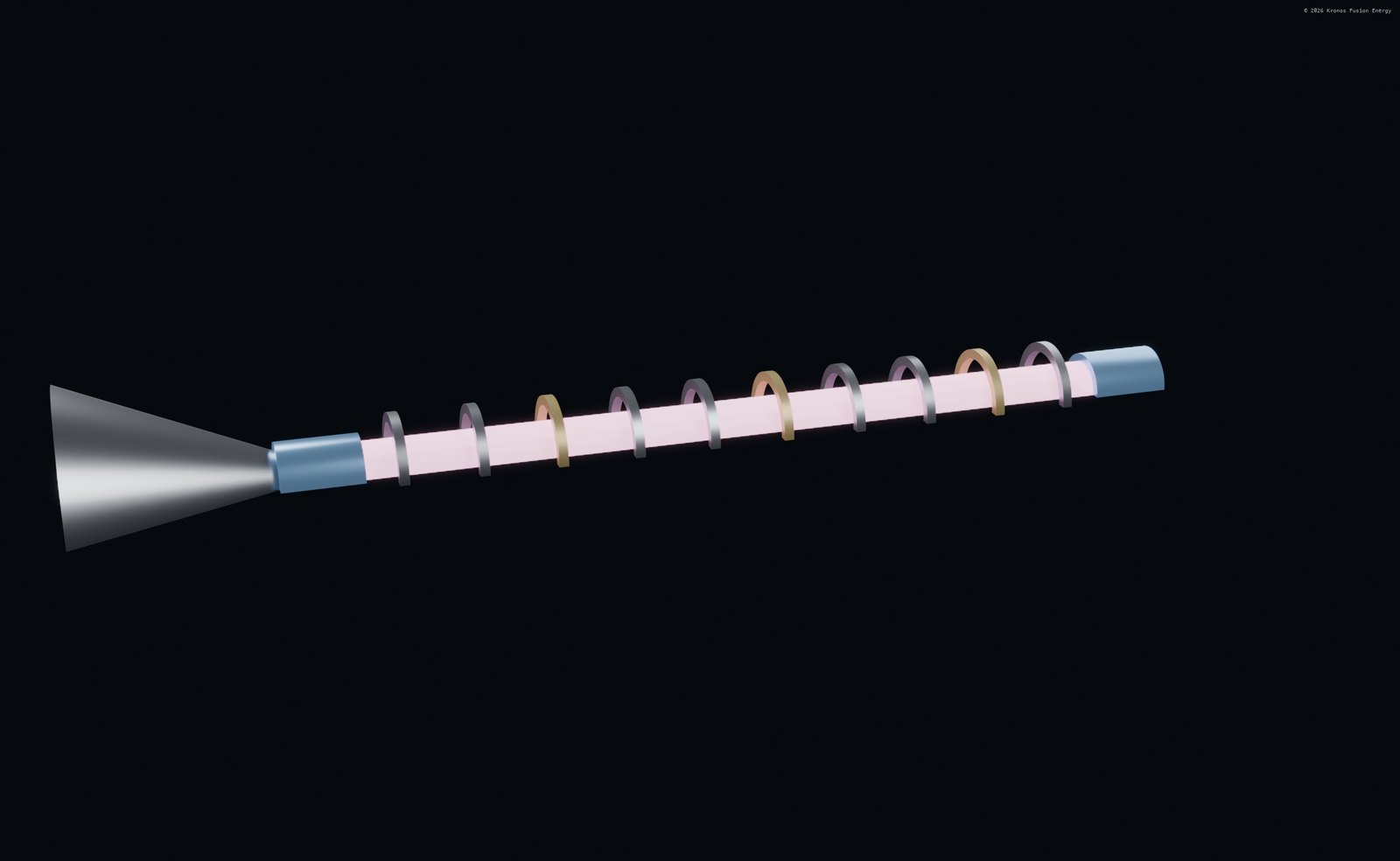
The Honest Gates
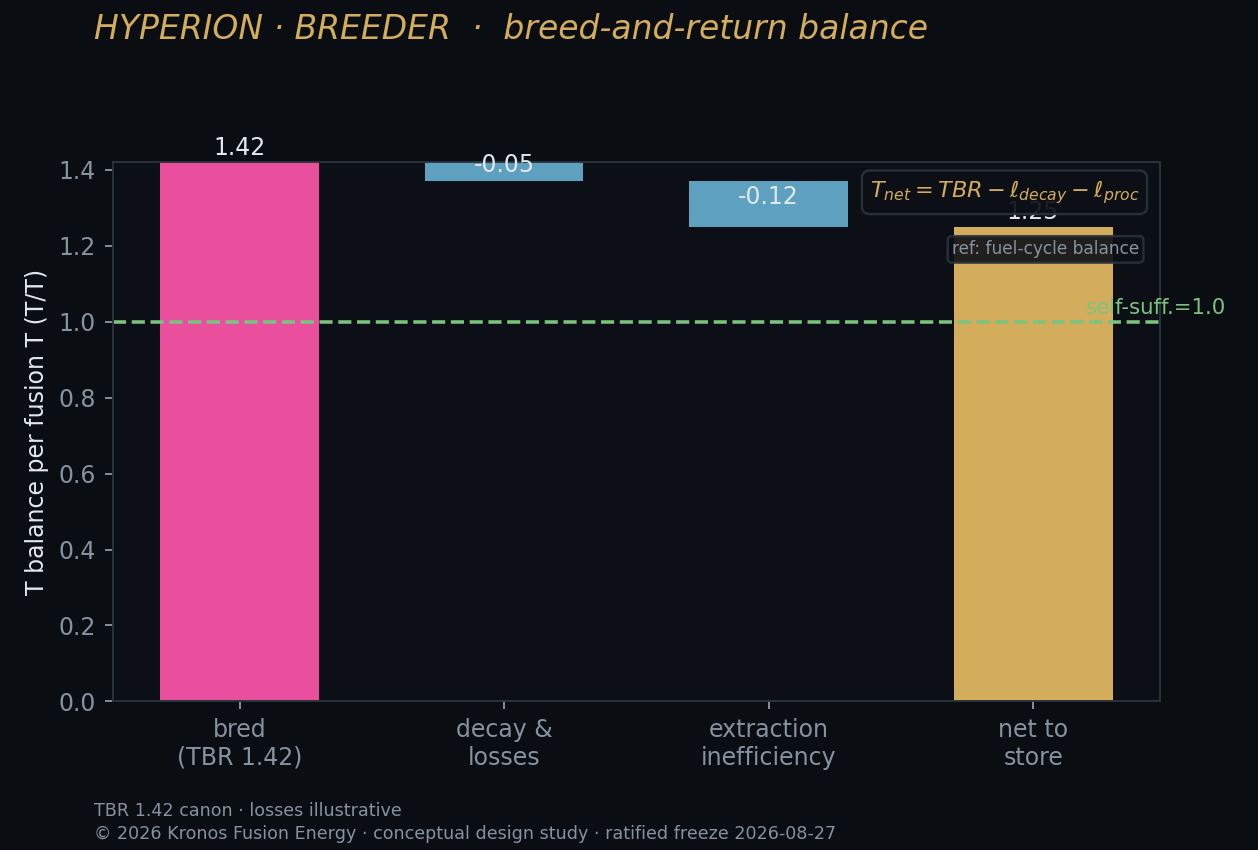
An honest gate is the stated line between what a model has solved and what only hardware can prove, and we publish every one of ours.
The line we refuse to blur
Kronos designs digitally before building, which produces two kinds of statement: results that follow from models we can publish and reproduce, and results that only real hardware can settle. An honest gate is the explicit boundary between them. Every quantitative claim is labeled by which side it sits on, and the gates are published as findings rather than hidden as risks.
The breeder's open question
On the breeder, the central gate is tritium self-sufficiency: the breeding ratio is treated as a design lever across 1.1, 1.5, and 1.8, and whether the machine breeds net-positive under realistic geometry is an open reconciliation. See the breeder open questions.
The burner's four gates
- Plug coil overstressed ~3–3.9x at the design bore — infeasible as specified.
- Operating regime 166–830x beyond any device — un-post-dictable today.
- Helium-3 demand ~400x domestic supply per commercial unit — gated on a fuel that doesn't yet exist at scale.
- Availability ~0.86–0.995 vs Tier III 0.99982 — 30–100x short on downtime.
Why a gate is a feature, not a confession
A gate is not an admission that the program is failing; it is evidence that the program is honest about its own state of knowledge. Any serious design study of an unbuilt machine will contain results a model cannot yet settle. The choice is only whether to name them or to let a reader discover them later. Kronos names them, with figures, so that the boundary between solved and unproven is drawn by us rather than by an eventual embarrassment.
These are physics facts, not economics, and never translated into cost. Publishing them is how a design study proves it actually tested itself. A program willing to state exactly where it is not yet right is a program worth checking where it claims to be.