The Open-Data Philosophy
We publish the inputs and outputs, not just the conclusions, because a result you cannot inspect the data behind is a result you have to take on faith.
Data first, conclusions second
A conclusion is the end of an argument; the data is the argument. Kronos publishes the data behind each paper so that a reader can reconstruct the reasoning rather than accept the headline. For a design and validation program, the data includes the parameter inputs, the intermediate results of the sweeps, and the outputs that become the figures in the paper.
What open data has to include to be useful
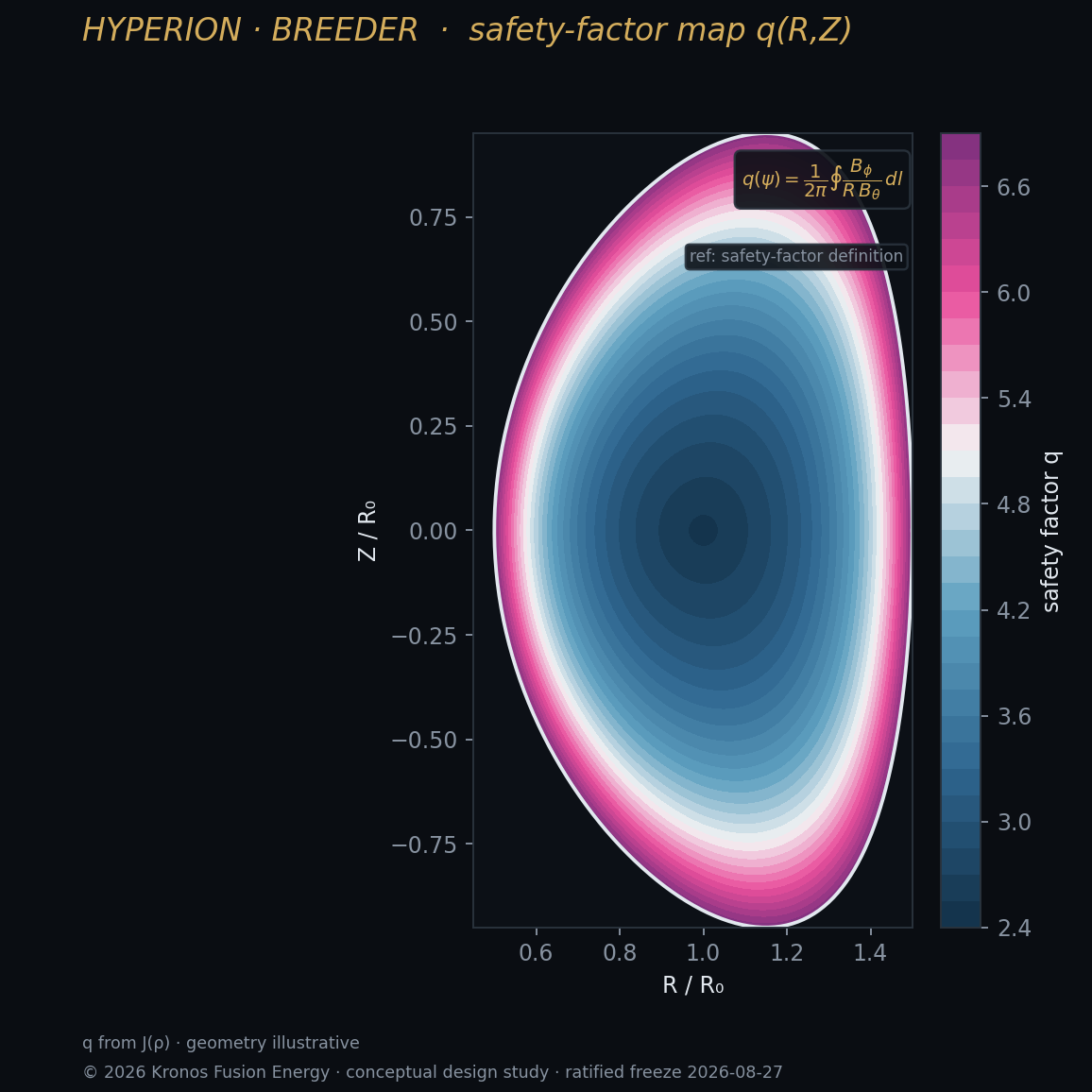
- The inputs: the exact parameter values that define a design point, such as the breeder's 9.66 MA plasma current and delta −0.30 triangularity.
- The provenance: which code version and environment produced each file; see version control and provenance.
- The checks: checksums so a reader can confirm the download matches the deposit.
- The scope: a clear statement that these are simulation outputs, not hardware measurements.
Open, but bounded
Open data does not mean everything. The deposits carry the physics record and deliberately exclude economics and any confidential material, per the firewall described in what we don't publish. The boundary is itself stated openly, so no reader is left guessing whether something was withheld.
Why this is the honest default
When only conclusions are published, disagreements cannot be resolved — two parties simply assert different numbers. When the data is public, a disagreement becomes a shared, checkable question. That is the entire point of the open-science strategy: to convert claims into things that can be settled by rerunning them.
We would rather publish a dataset that exposes a weakness than a conclusion that hides one.