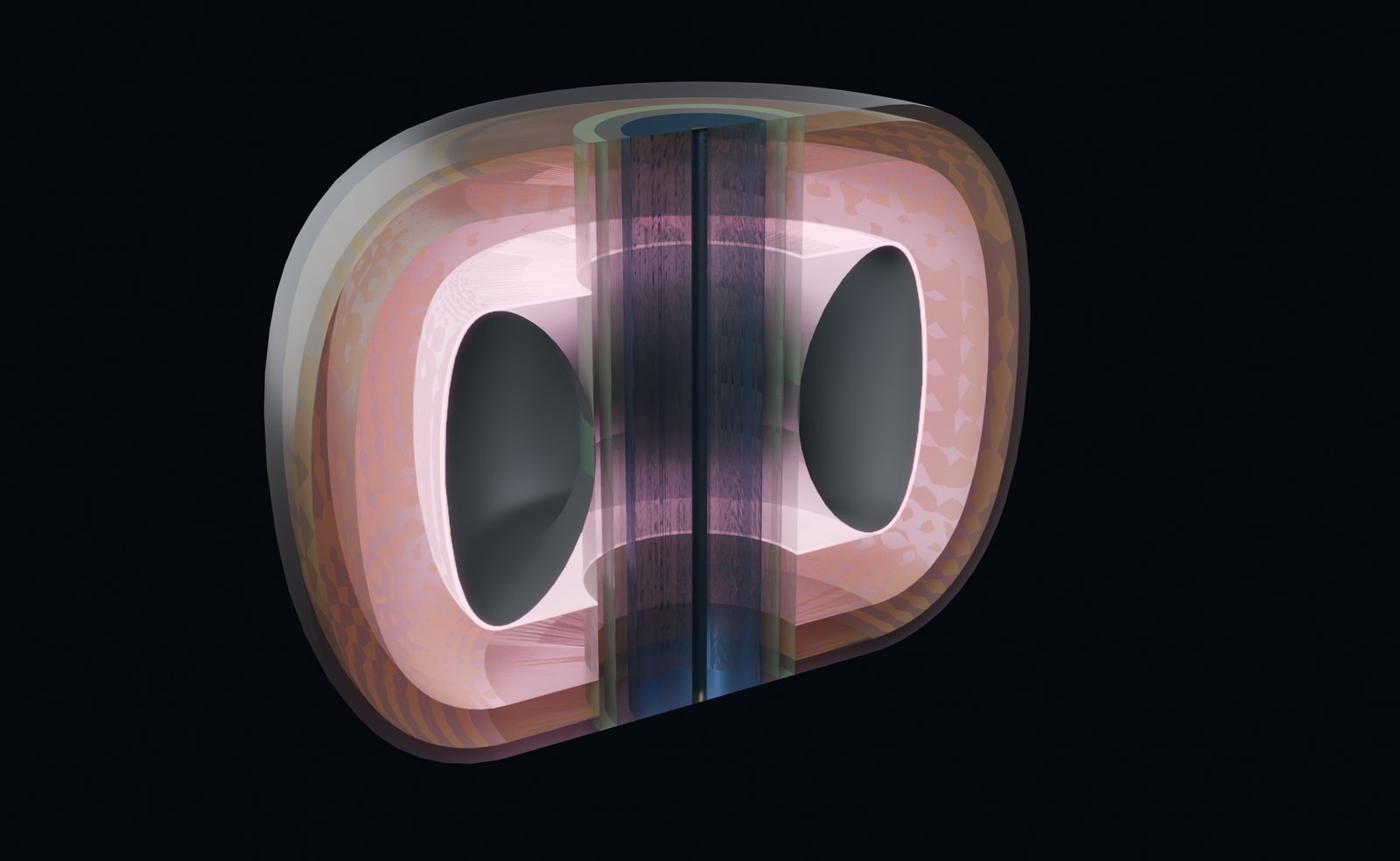
The Breeder Open Questions
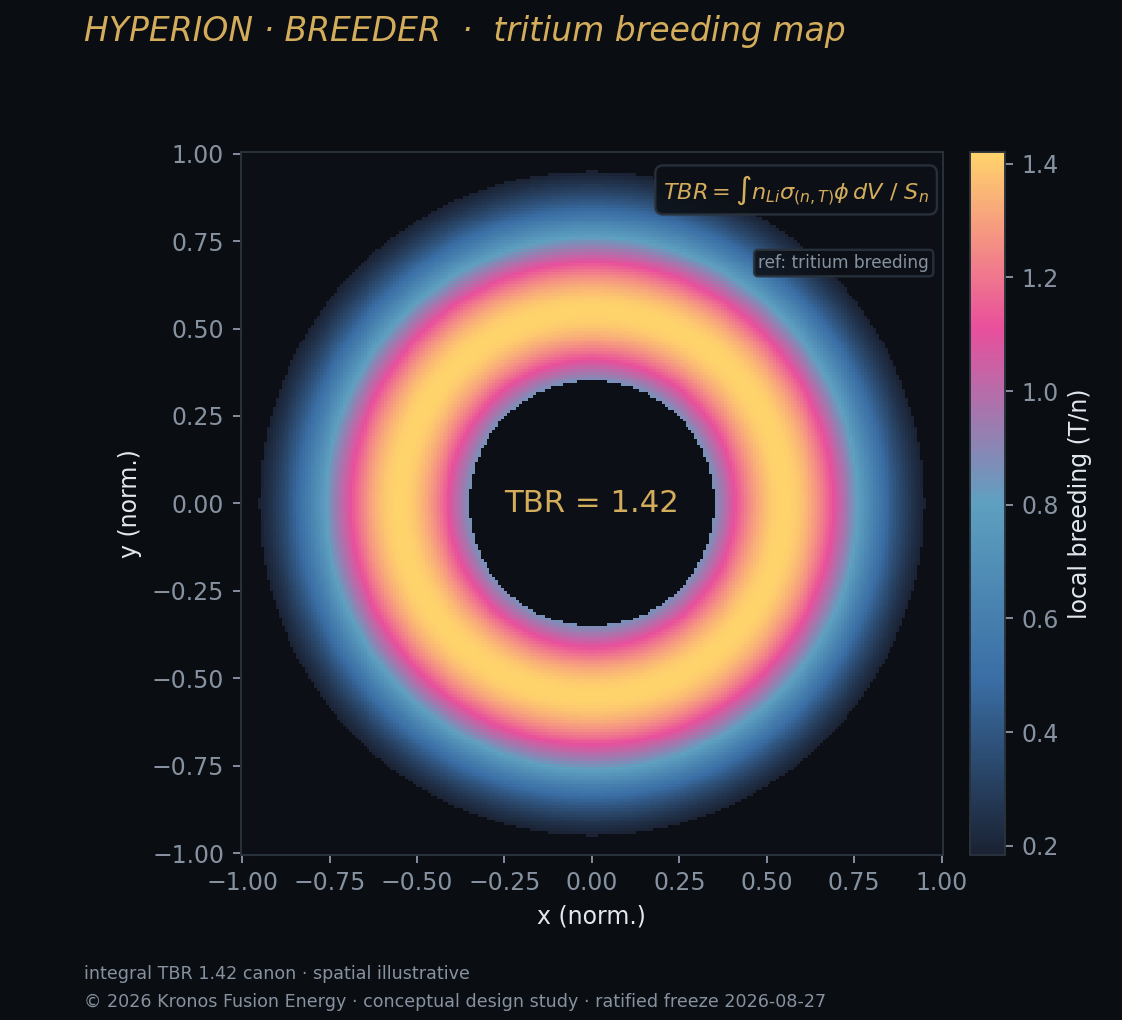
The breeder's central unknown is whether it breeds enough tritium to sustain itself once realistic geometry is included, and we keep that question open.
The self-sufficiency question
A deuterium–tritium machine consumes tritium, so a breeder must produce at least as much as it burns to be self-sustaining. Whether Hyperion does so is the breeder's central open question. Kronos treats the tritium breeding ratio as a design lever examined across 1.1, 1.5, and 1.8, rather than reporting a single settled figure, because the honest answer depends on assumptions still being reconciled.
Why the number is a lever, not a fact
- An idealized blanket can look net-positive, but ports, structure, and realistic three-dimensional geometry reduce achievable breeding.
- The distinction between a local breeding ratio and a net, machine-wide ratio is exactly where the reconciliation lives.
- Reporting a range of lever values keeps the uncertainty visible instead of hiding it inside one confident number.
The honest framing
The breeder gate is quieter than the burner's four, but it is stated with the same candor: net tritium self-sufficiency under realistic geometry is not claimed as solved. It is an open reconciliation the design program is working, and it is published as such. See TBR as a design lever for how the lever is used.
When it gets answered
This is a question hardware helps settle. First-of-a-kind first tritium, around 2030, and the machines that follow are where the breeding picture moves from simulation to measurement. Until then the breeding ratio is a design and validation result, tied to the pre-registered predictions and the honest gates.
We do not claim the breeder closes its own tritium loop. We show the lever and keep the question open.