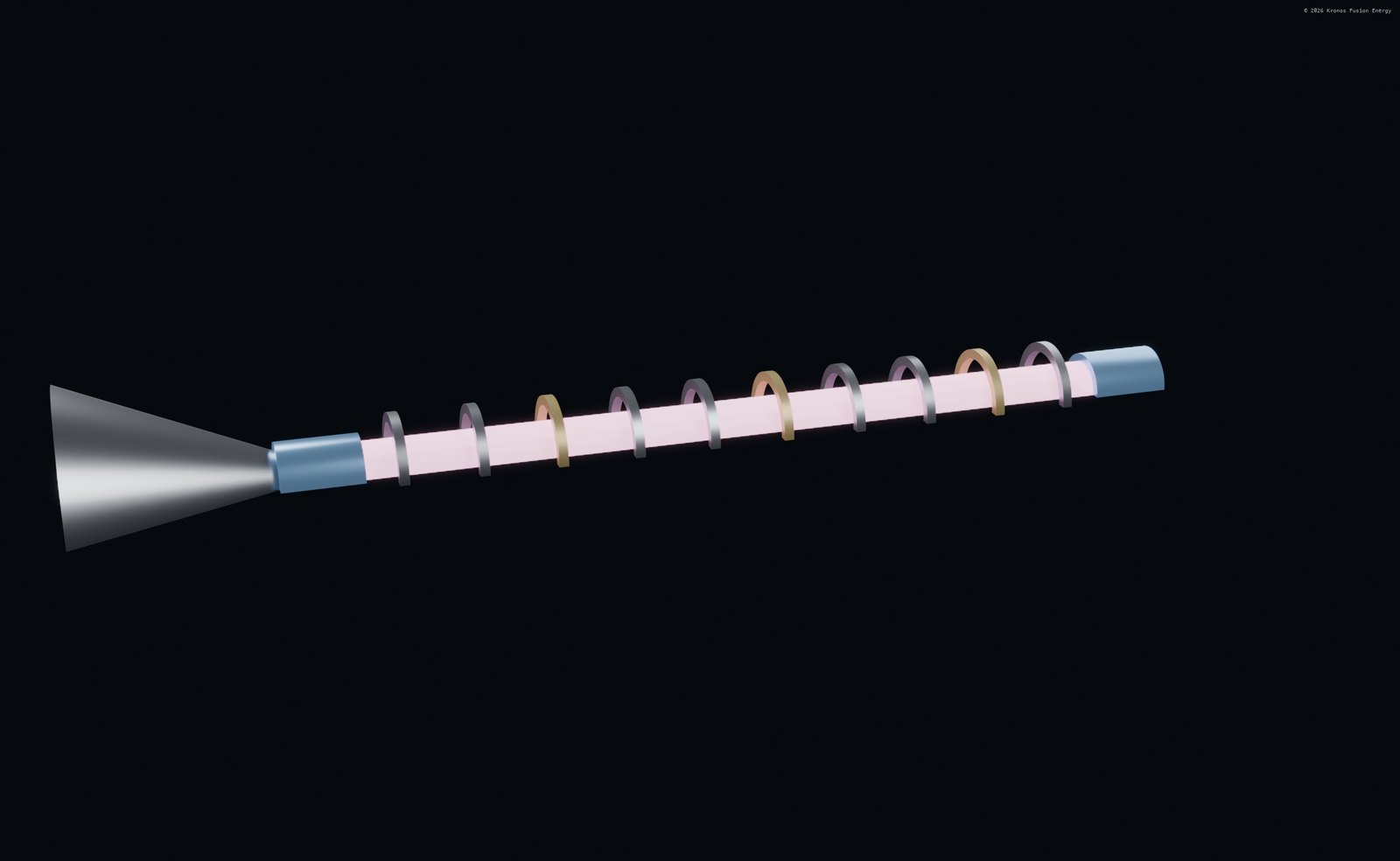
The Direct Energy Conversion Paper
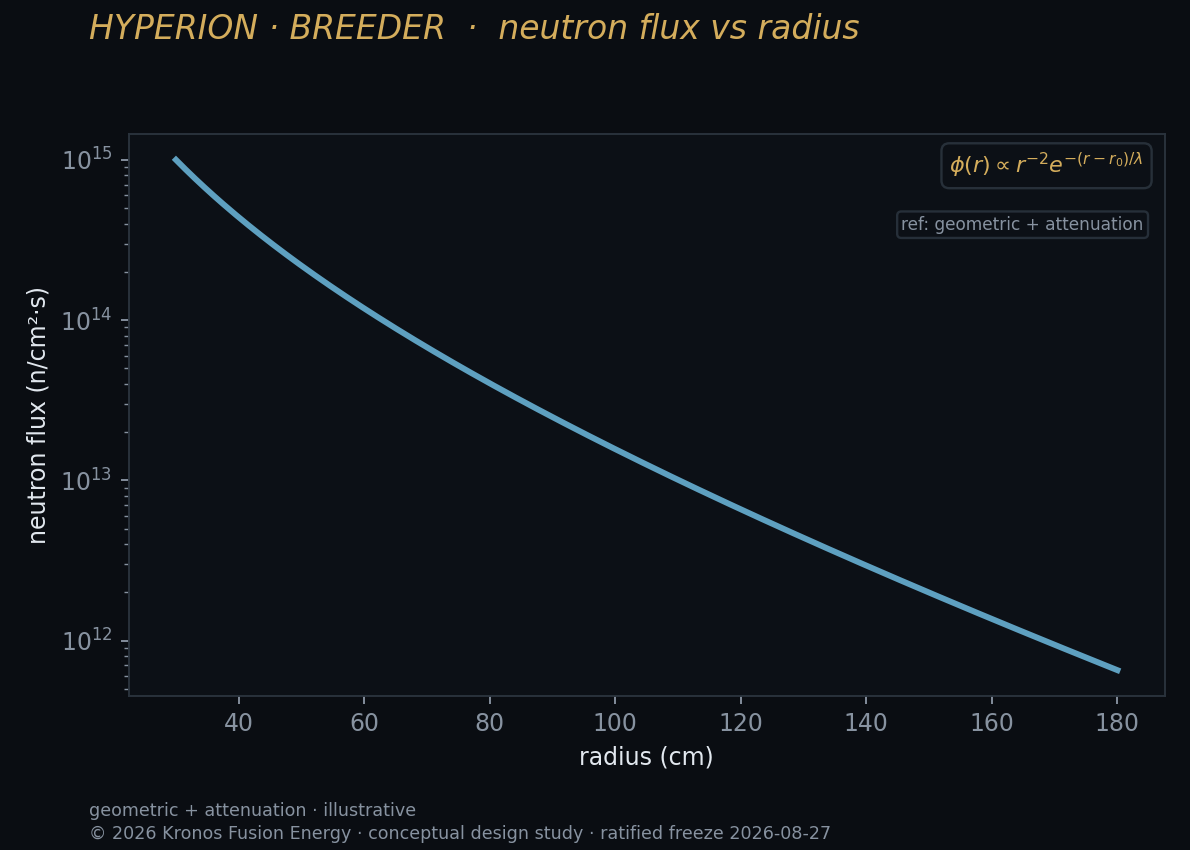
The burner's efficiency case rests on converting charged-particle energy directly to electricity, a physics claim published as its own paper.
What direct energy conversion is
A conventional plant turns fusion heat into steam and steam into electricity, paying a thermodynamic tax at every step. The burner instead relies on direct energy conversion (DEC): recovering the kinetic energy of charged fusion products as electricity without a thermal cycle. Because the deuterium–helium-3 reaction is largely aneutronic — a neutron fraction of about 5.44% — most of the energy is carried by charged particles that a direct converter can, in principle, collect.
Why it needs its own paper
DEC is central to why a tandem-mirror burner is worth studying at all, so its physics deserves separate, checkable treatment rather than a single line in the burner paper. The DEC paper documents the conversion concept and the assumptions behind it, so readers can test the efficiency case independently of the confinement case.
Honest scope
- DEC is a design and validation result, not a measurement from a built converter at these conditions.
- It does not resolve the burner's confinement gates — the plug coil and the operating regime remain the harder problems.
- It matters most precisely because the fuel is aneutronic, which is also why the fuel-supply gate exists.
The DEC paper and the burner paper are meant to be read together: one describes how energy would be extracted, the other describes why extracting it at scale is still gated. See the burner paper and the fuel-supply gate. The deposit and DOI (DEC) are on the DOI map.
Direct conversion is the burner's most attractive idea and, on its own, its least contested one — which is why it is published where it can be examined separately.