The Plug-Coil Gate
At the burner's design bore, the plug coil is overstressed by roughly three to four times its limit, so the machine is infeasible exactly as specified.
The gate, stated plainly
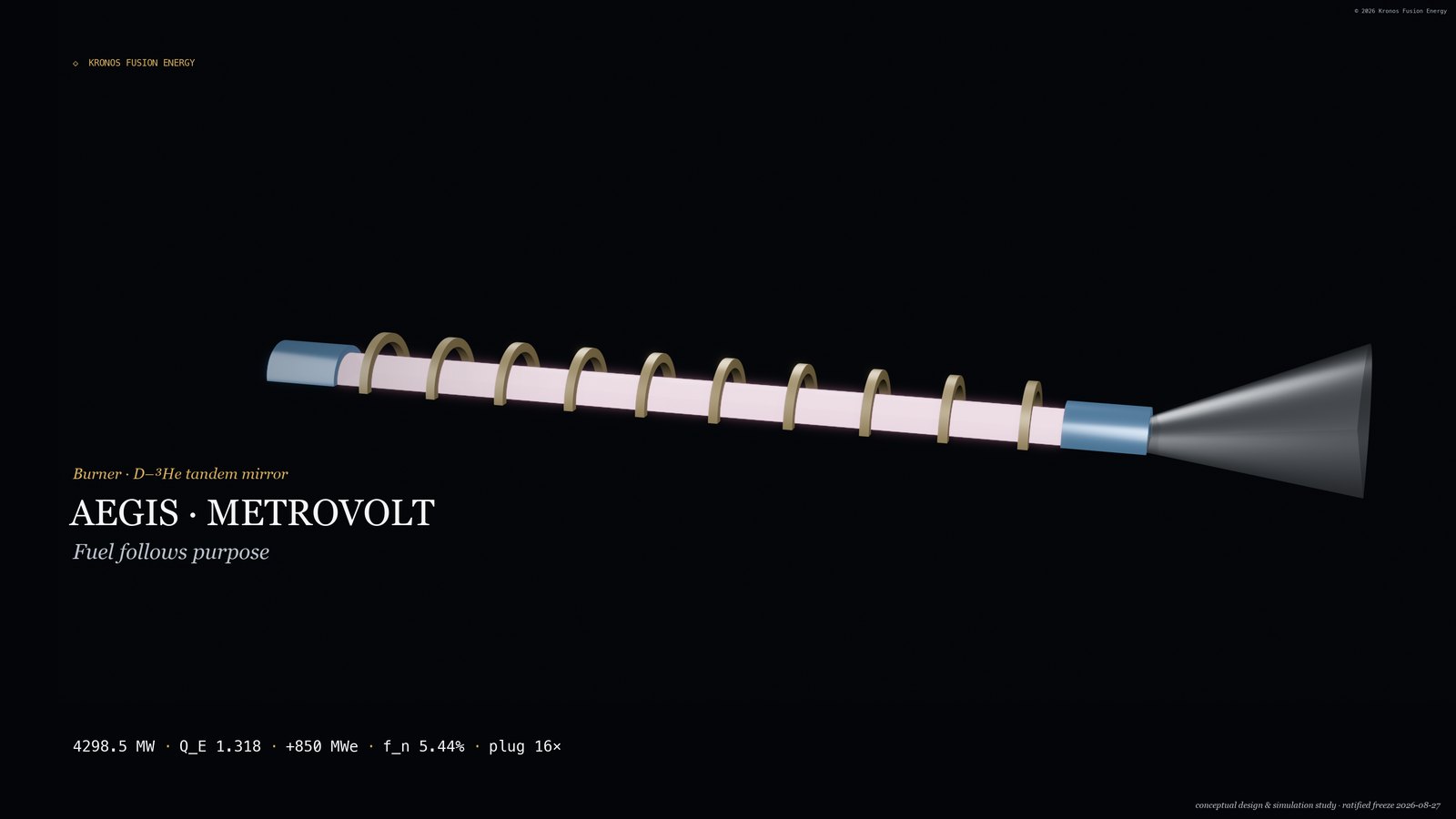
The burner relies on an extreme mirror field — a 26.49 T plug and a 17 T throat — to confine the plasma. Producing that field at the design bore places the plug coil under mechanical stress roughly 3 to 3.9 times what the conductor and structure can bear. At the geometry as specified, the coil cannot survive its own field. The machine is therefore infeasible as currently designed.
Why this is a structural fact, not a cost
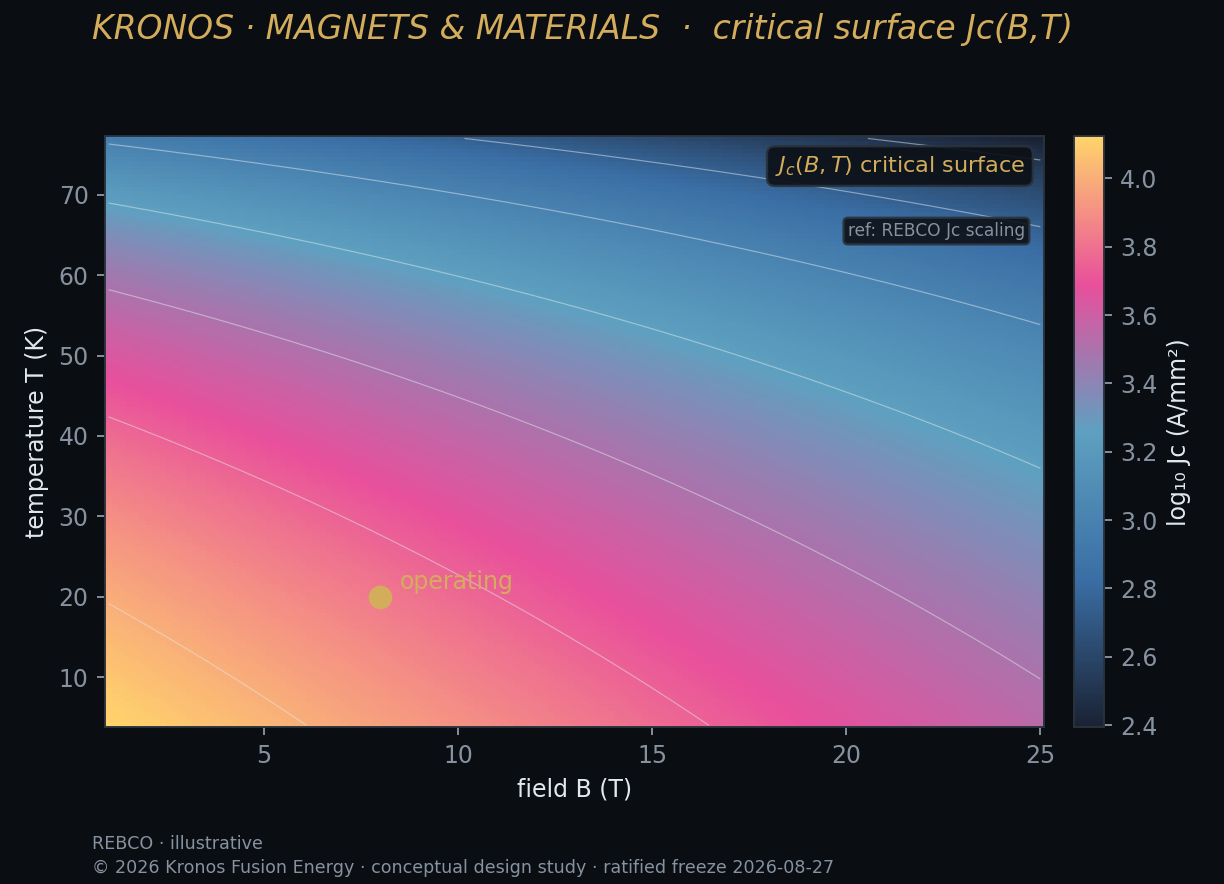
This gate lives in the mechanics of the magnet, not in any budget. A coil that is overstressed by three to four times fails structurally regardless of resources; no amount of anything makes an over-limit conductor hold. That is why the gate is stated as a stress ratio and never translated into an economic statement. See the REBCO magnet paper for the magnet basis.
What would have to change
- The bore, field, or coil configuration would need to change enough to bring the stress within limits.
- Any such change would ripple into confinement, and must be re-checked against the other three burner gates.
- None of this is claimed to be solved; it is stated as the open problem the design faces.
Why publish an infeasibility
A design study that hides where its central component fails has not really studied it. Stating the plug-coil gate tells any honest reader that the burner, as specified, is a target rather than a working design — and points precisely at the physics that must move. See the other gates from the honest gates.
The coil, not the marketing, is the limit — and we say so in the paper.