Low-Neutron, Not Aneutronic
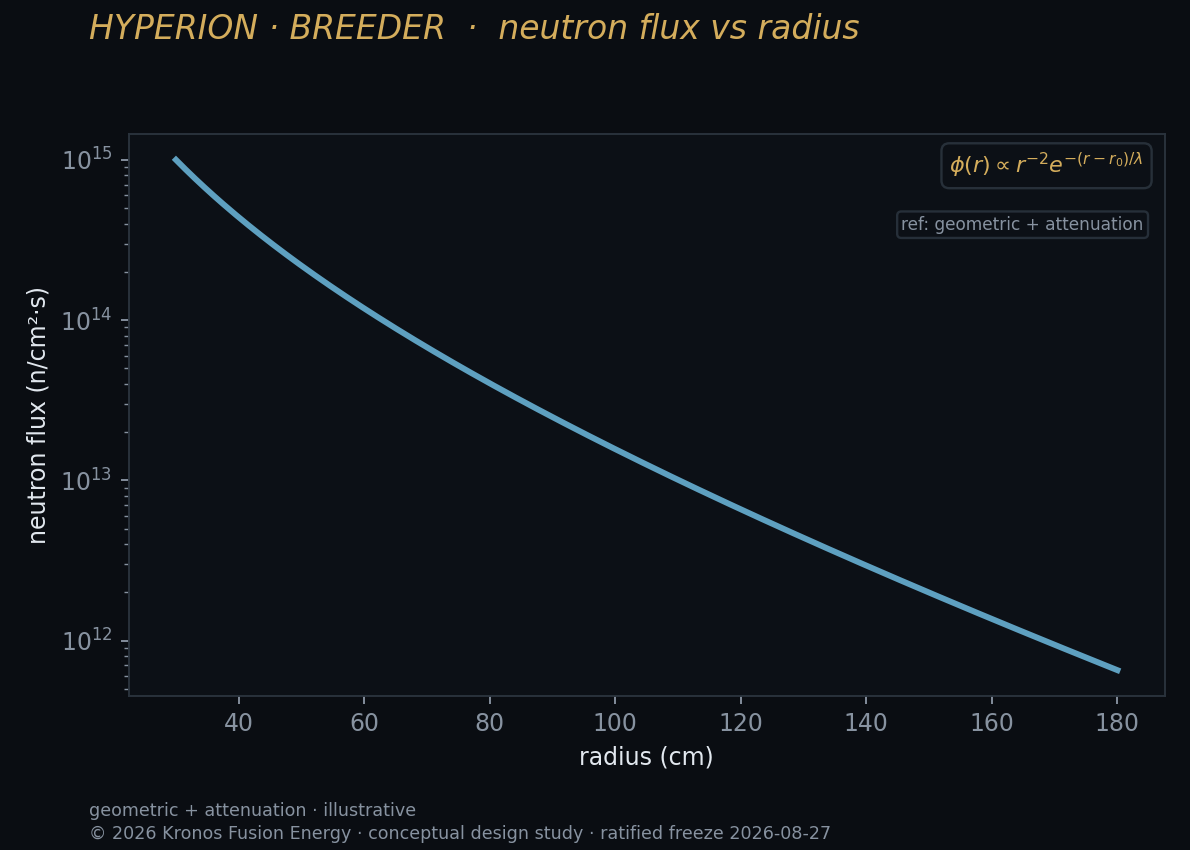
The burner (Aegis / MetroVolt) runs D-3He at a 5.44% neutron fraction — low-neutron, not aneutronic. Kronos never uses the word aneutronic.
A precise word for a real property
D-3He fusion is often marketed as 'aneutronic', meaning without neutrons. That is not accurate. Even a pure D-3He plasma produces neutrons from unavoidable D-D side reactions, and any real device carries some deuterium-deuterium activity. The Kronos burner design carries a neutron fraction of 5.44% of fusion power. That is low, and it is not zero.
Why the distinction is load-bearing
Calling a machine aneutronic implies no neutron shielding, no material activation, and no neutron-driven component wear. A 5.44% neutron fraction means all three still matter, just less than in a D-T machine. Shielding and lifetime engineering are still required. A reader who believed 'aneutronic' would size those systems wrong.
What low-neutron does buy
- A large majority of fusion energy appears as charged particles, enabling direct energy conversion
- Lower neutron flux than D-T means reduced activation and longer component life
- Less tritium handling in the burner than in the breeder
Low-neutron is a genuine advantage of the D-3He burner. It is strong enough that we do not need to exaggerate it into 'aneutronic'. The honest word is more useful, because engineers can act on it.