Traceability: Every Number Has a Source
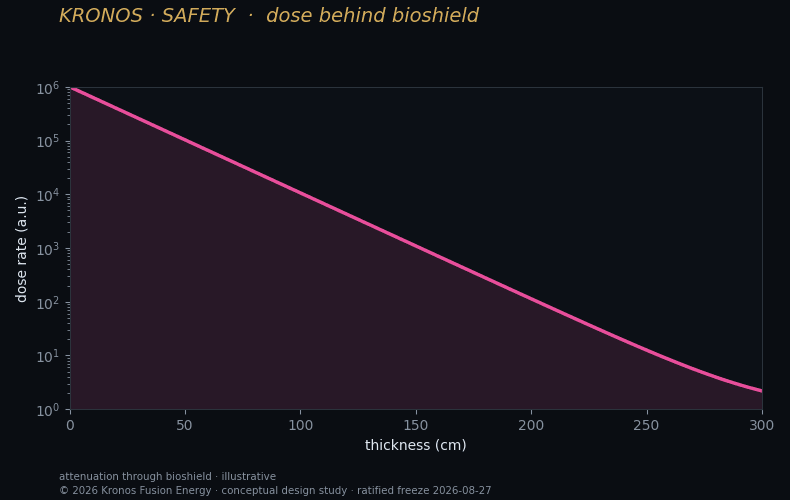
Any figure we publish can be traced back through the analysis to its inputs and the freeze it belongs to.
From headline to origin
Traceability means a reader can follow any published number backward: to the analysis that produced it, the inputs and constants it used, the code version that ran, and the dated freeze it belongs to. A number without this chain is an assertion; a number with it is evidence.
The chain we maintain
- Headline figure to the specific result file that computed it.
- Result file to the code version and pinned environment.
- Inputs and constants to their sources, with values and dates.
- The whole set to the dated design freeze it belongs to.
- The freeze to the public deposit and its permanent identifier.
Why it matters more later than now
Traceability pays off across time. When FOAK first tritium arrives around 2030, a measurement is only useful against a prediction whose full provenance is known. If we cannot say precisely which inputs and which code produced the predicted number, we cannot say cleanly whether the measurement confirms or refutes it.
It also protects against a subtle failure: a number that everyone quotes but no one can source. Such orphan figures accumulate authority they never earned. Traceability kills them, because a figure that cannot be traced cannot be published, no matter how familiar it has become. Maintained consistently, traceability makes the entire body of work behave like a single, queryable object: pick any published figure, and the path from headline to origin is already laid out for whoever wants to check it.