Structural Standards: Stating When Limits Are Exceeded
A structure either stays within its material limits or it does not; when our analysis shows a limit exceeded, we say so plainly.
Limits are not negotiable
A load-bearing component has limits set by its material and geometry: stresses, temperatures, and cycles it can survive. Structural rigor means computing the actual loads, comparing them against those limits with a margin, and treating an exceeded limit as a failure of the design rather than a number to explain away.
The magnets are the hard case
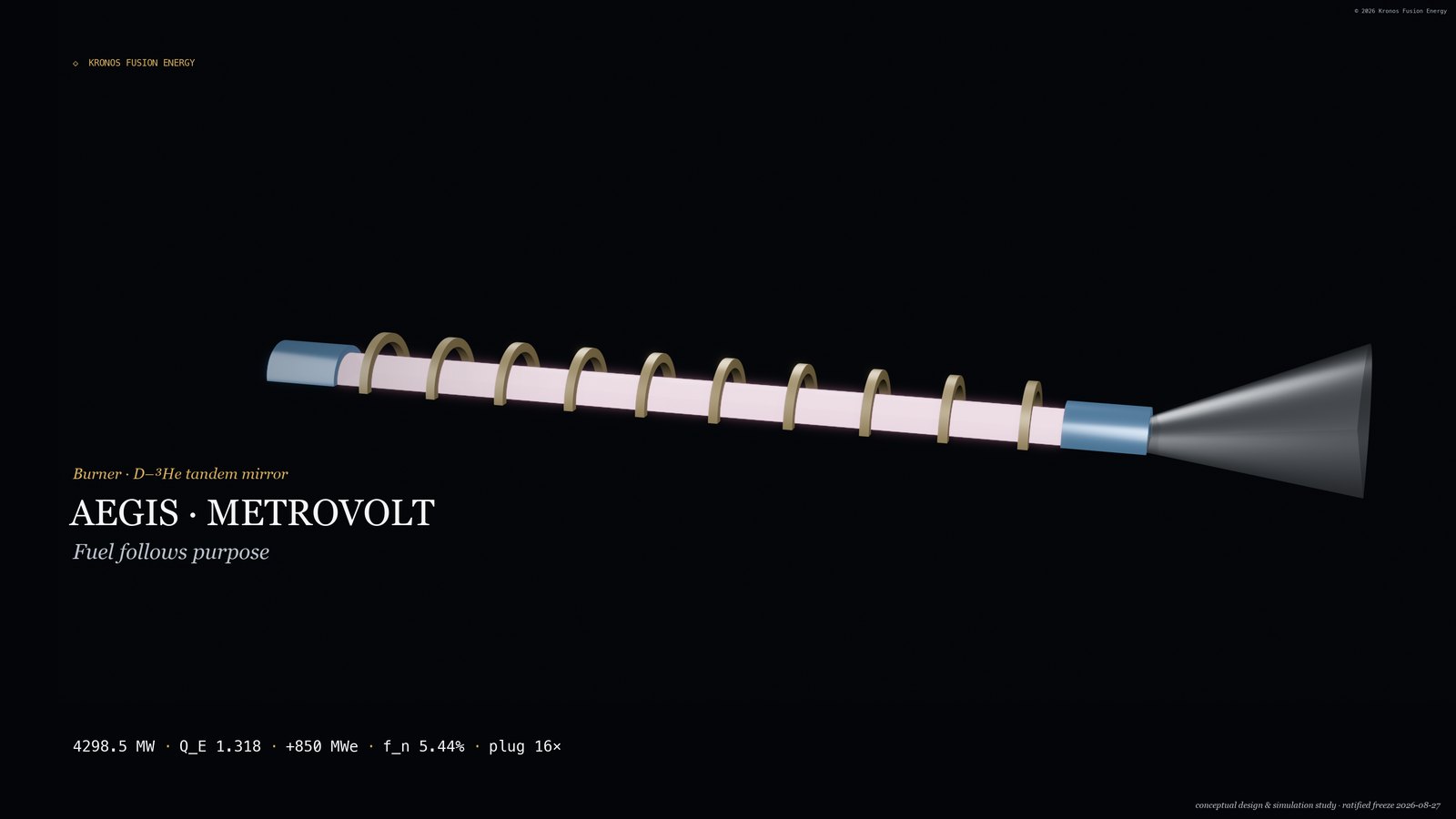
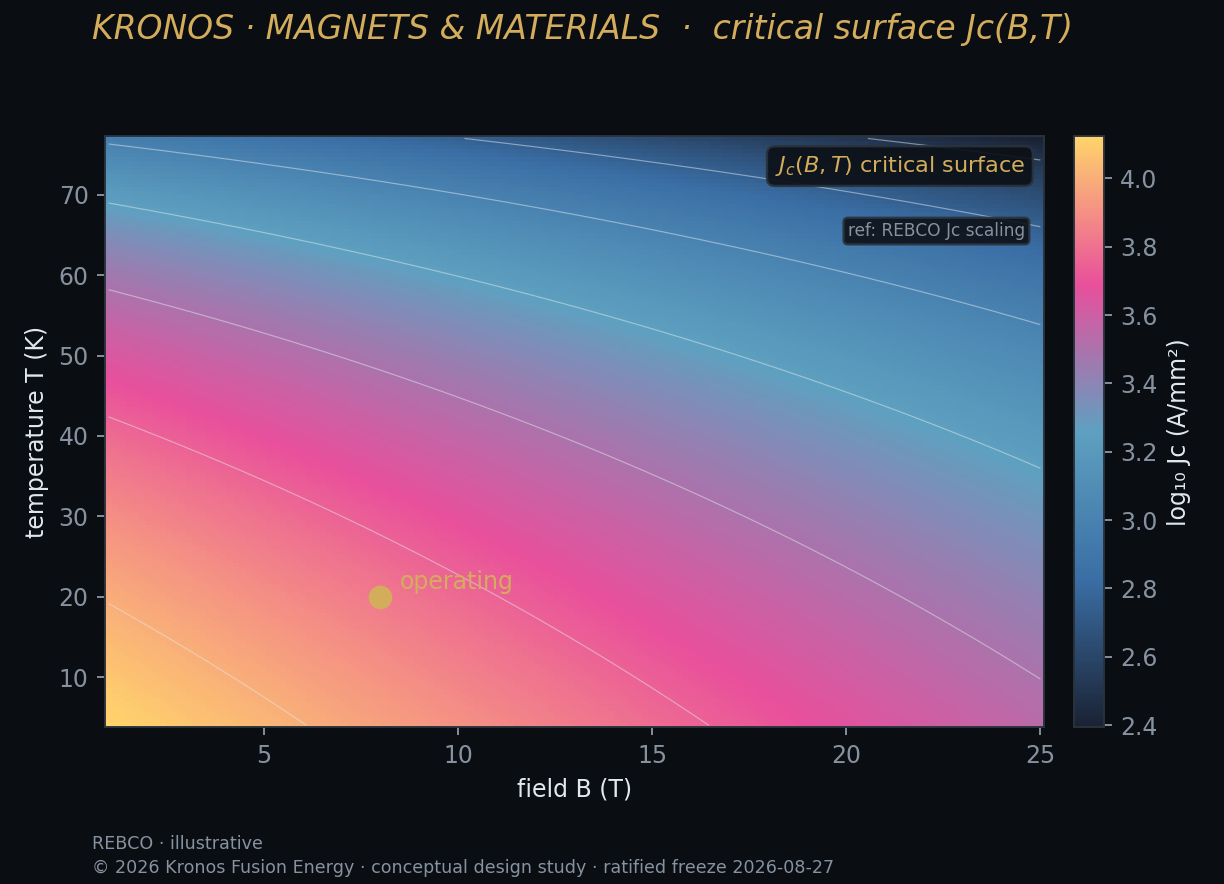
Fusion magnets carry extreme electromagnetic loads. The breeder (Hyperion) reaches a peak field of 16.84 T (8 T on-axis), and the burner (Aegis / MetroVolt) specifies a 26.49 T plug and 17 T throat. High fields mean high forces, and the structure must hold them. Reporting the field without reporting whether the structure survives it would be a half-truth.
An honest failure, reported
For the burner plug coil, our own analysis finds it overstressed by roughly 3-3.9x at the design bore. That is a clear structural verdict: not buildable as specified. We publish it because the alternative -- quoting the field and staying silent on the coil -- is precisely how impressive-sounding designs mislead. A field is only real if something can hold it.
Structural standards keep the physics honest against the world. A plasma parameter that requires an impossible magnet is not an achievement; it is a constraint we have to solve before the number means anything, and naming the constraint is the first step. Reporting an exceeded limit costs us a cleaner story and buys the reader something more valuable: the assurance that when we do say a structure closes, the statement was reached by the same unflinching accounting that produced the failures we published.