Monte Carlo and Variance Reduction
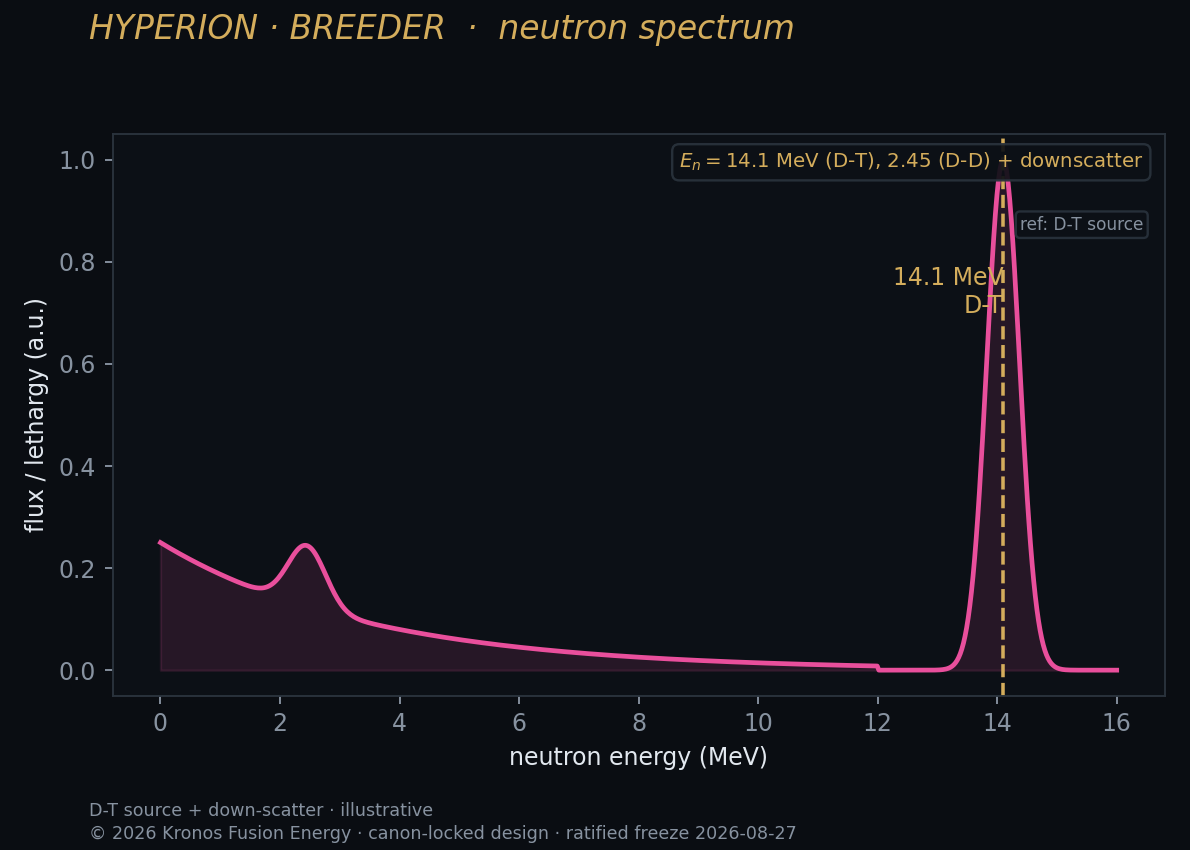
Monte Carlo integrates the high-dimensional problems fusion poses - neutron transport and uncertainty propagation - and variance reduction makes it affordable.
Estimation by sampling
Monte Carlo estimates integrals and expectations by random sampling, with error that falls as one over the square root of sample count regardless of dimension. That dimension-independence is why it is the method of choice for neutron transport in the breeder blanket, for propagating parameter uncertainty through the twin, and for the sampling inside Bayesian UQ.
Monte Carlo estimator:
  I = E_p[ h(x) ] ~ (1/N) sum_i h(x_i),  x_i ~ p
  standard error ~ sigma_h / sqrt(N)   (independent of dimension)

Importance sampling (variance reduction):
  I = E_q[ h(x) p(x)/q(x) ],  x_i ~ q
  choose q to concentrate samples where h*p is large
Why variance reduction matters
Plain Monte Carlo converges slowly - halving the error needs four times the samples. For neutronics, where rare events (a neutron reaching a specific location) dominate a quantity of interest, this is prohibitive. Variance-reduction techniques get the same accuracy from far fewer histories, which is what makes the breeder's 14 MeV neutron transport and activation studies tractable offline.
# importance sampling estimator (schematic)
x = sample_from(q, N)
w = target_p(x) / q(x)              # importance weights
est = mean(w * h(x))               # unbiased for E_p[h]
ess = sum(w)**2 / sum(w**2)        # effective sample size check
Techniques in use
The stack applies importance sampling (bias draws toward rare, important events), stratification (partition the domain and sample each part), control variates (subtract a correlated known-mean quantity), and antithetic variates (paired negatively-correlated samples). For neutronics specifically, weight-window and splitting/Russian-roulette methods guide histories toward the tally region. Each preserves an unbiased estimate while shrinking variance.
- Convergence 1/sqrt(N), independent of dimension.
- Importance sampling: concentrate on rare, important events.
- Stratification, control variates, antithetic variates.
- Neutronics: weight windows and splitting toward the tally.
Monte Carlo results feed the twin's neutronics module and the Bayesian uncertainty estimates; variance reduction is what keeps these within the offline compute budget while preserving statistical rigor.