Licensing Posture of a Low-Neutron Plant
A low-neutron plant with a trace tritium inventory presents regulators with a bounded, trace-species source term rather than a bulk radiological process. That is a licensing conversation that can start from precedent — which is a schedule advantage as much as a safety one.
The science
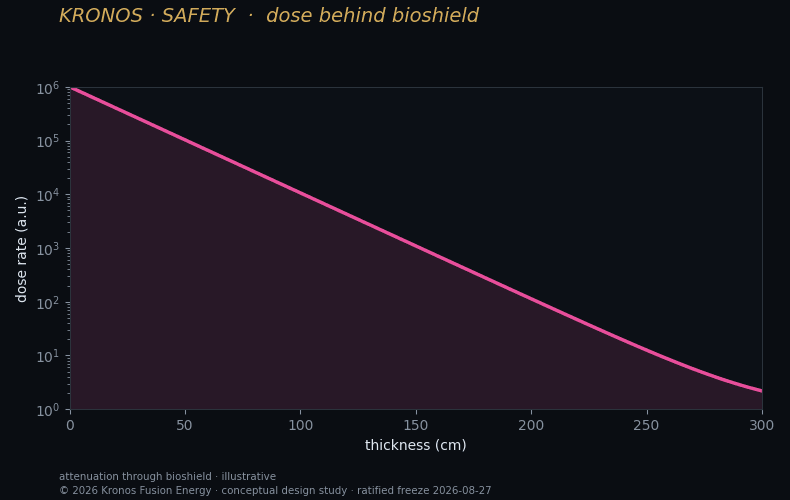
Licensing scales with the source term. The burner's sub-trace mobile-isotope inventory, absence of a breeding blanket, and low-level-waste decommissioning stream mean the plant is characterized by bounded, well-understood quantities rather than by the multi-kilogram tritium process a D-T plant must license.
Why it matters
Licensing timeline is often the real critical path for a first-of-a-kind. A plant whose source term sits inside practiced limits starts that path from precedent rather than from a novel bulk process — time-to-permit is part of the low-neutron dividend.
The numbers
| Source term | bounded trace species |
| Blanket | none |
| Waste | low-level-waste pathway |
| Conversation | starts from precedent |
| Advantage | time-to-permit |