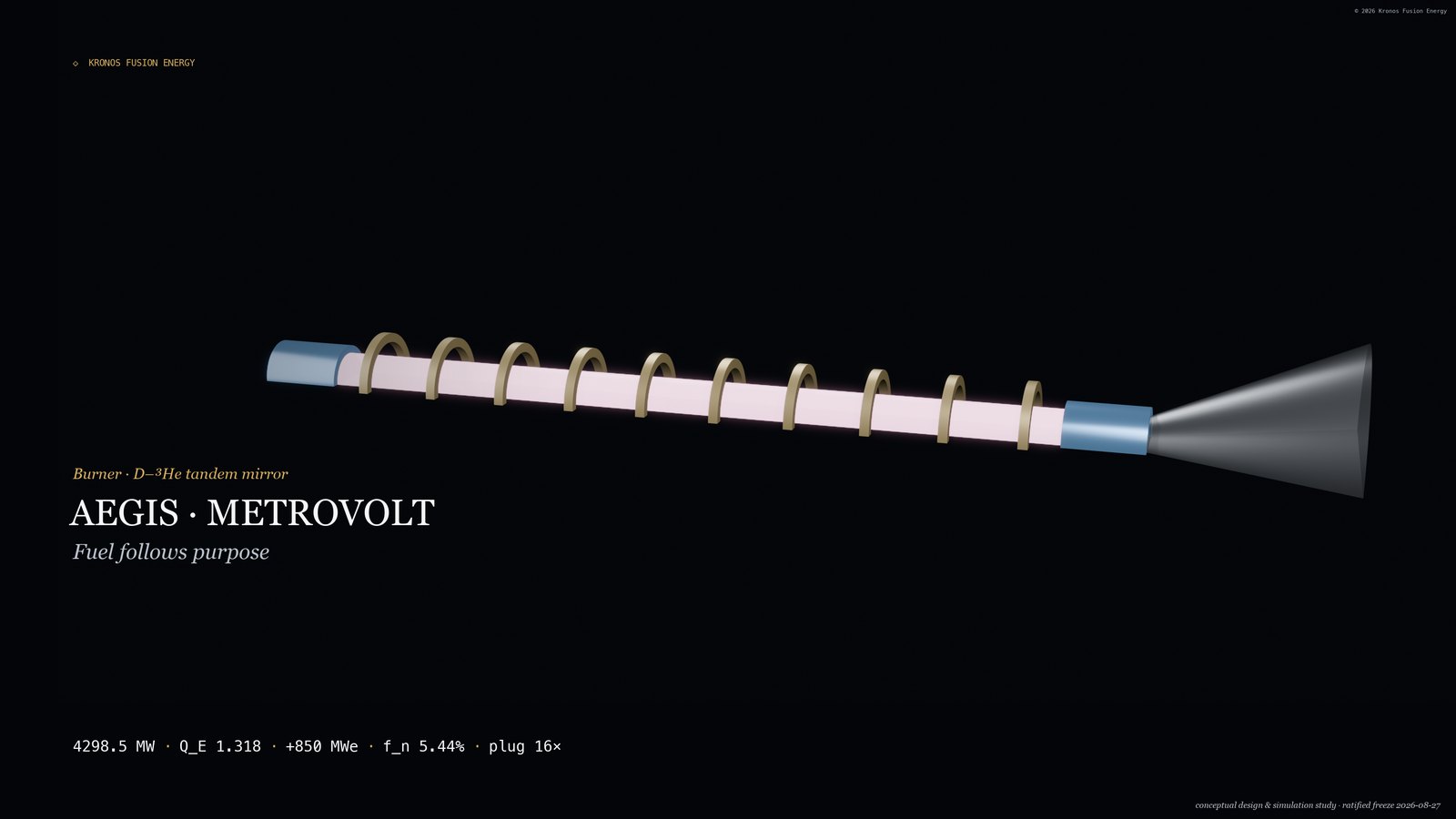
Named Gates, Not Hidden Assumptions
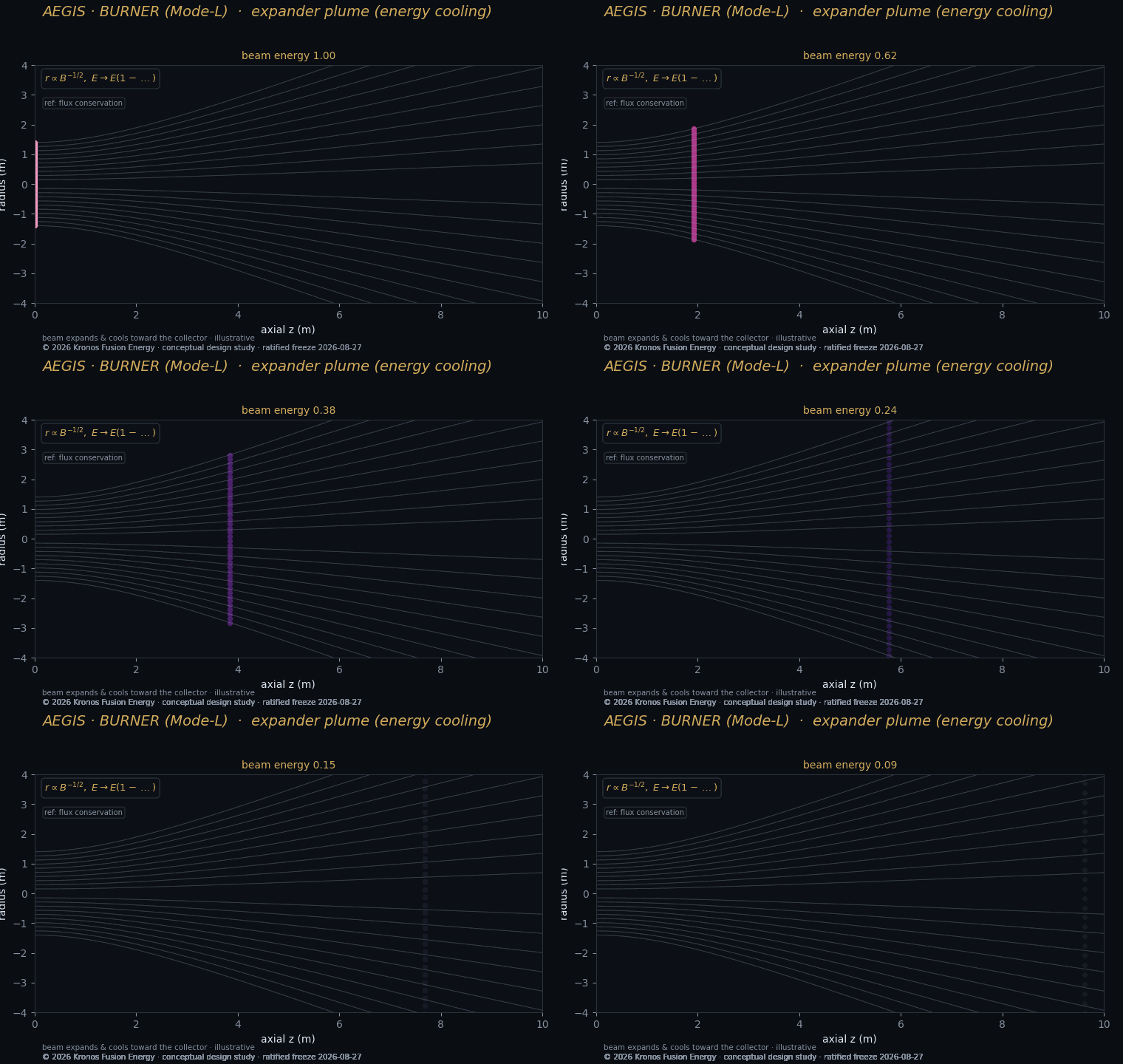
Rather than fold optimistic assumptions into its ledgers, Kronos names its gates: the burner's plug density ratio and electron direct conversion, the breeder's contracting instrument. A gate is a specific, testable thing that must be demonstrated — and each machine's gates are printed, not buried.
The science
A gate is different from a risk: it is a named requirement with a pass/fail condition. The burner's net electricity is gated on an end-plug density ratio of about 16 (347× GDT-measured) and on demonstrated electron direct conversion. The breeder's economics are gated on a government contracting instrument — a conversation, not an experiment. Each gate is stated where the reader can see it.
Why it matters
Naming gates tells investors and researchers precisely which demonstration de-risks the most value, and it keeps the baseline honest by refusing to assume the gate is already passed. A gated design is a design you can plan experiments around.
The numbers
| Burner gates | plug density ratio, electron DEC |
| Breeder gate | government contracting instrument |
| Gate definition | named, testable, pass/fail |
| Baseline | does not assume gates passed |
| Benefit | de-risking is targetable |