Tritium to the National Requirement
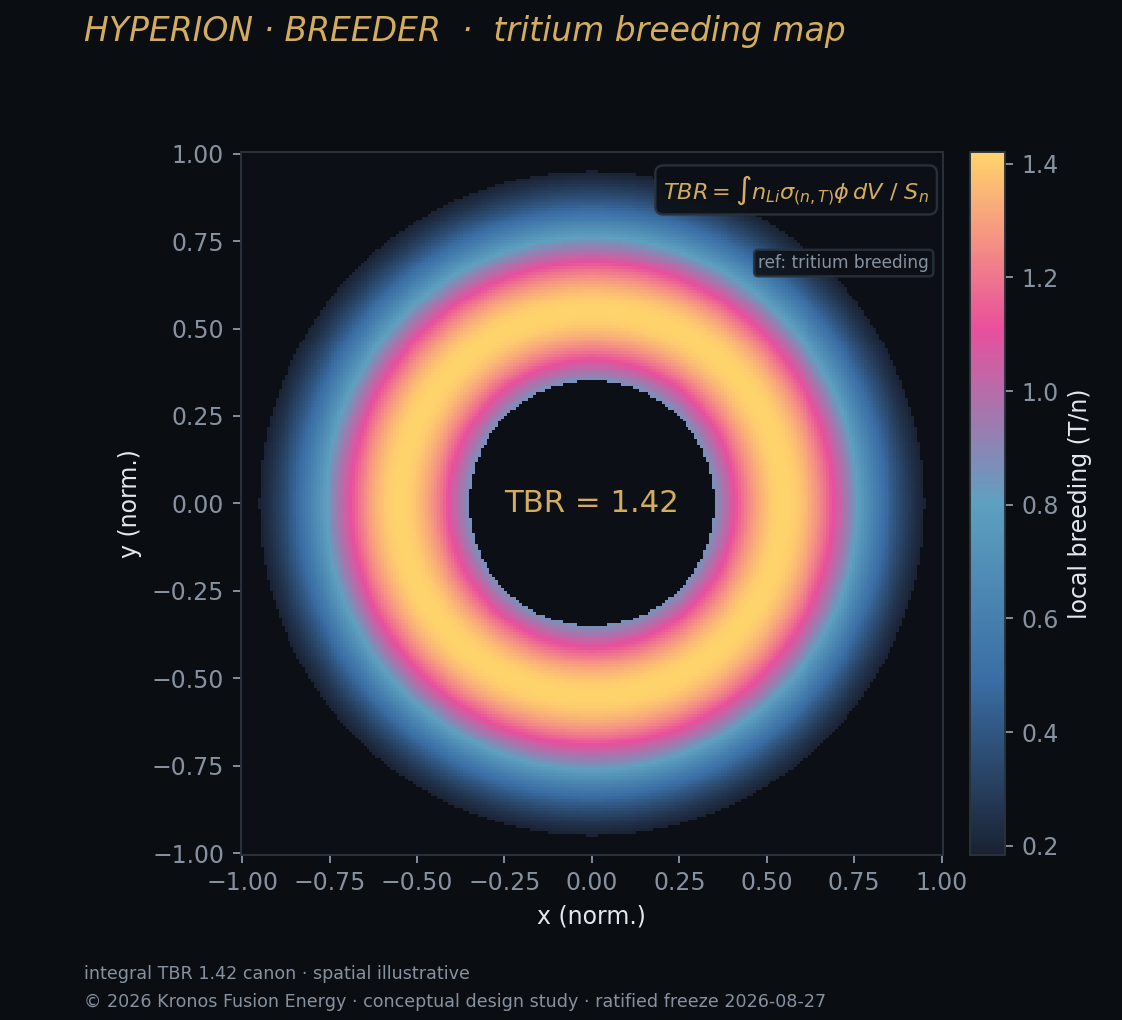
Hyperion's primary product is tritium, delivered to a national requirement the country cannot currently source at scale. The breeder is sized to that requirement — 1.87 to 4.0 kg per year — rather than to a physics maximum, because the requirement, not the optimum, is the point.
The science
Tritium is scarce and decays continuously, so any national stockpile needs replenishment. Hyperion's D-T machine, breeding at a ratio of 1.8, produces a tunable surplus in the 1.87-4.0 kg/yr band — sized by the breeding-ratio lever to meet a stated requirement rather than to maximize output.
Why it matters
Answering a genuine national supply gap is what gives the breeder a near-term purpose independent of the burners. It is the foundry's first product, and the machine is designed around delivering it reliably rather than spectacularly.
The numbers
| Primary product | tritium |
| Output band | 1.87-4.0 kg/yr |
| Sized to | national requirement |
| Breeding ratio | 1.8 |
| Purpose | near-term supply gap |