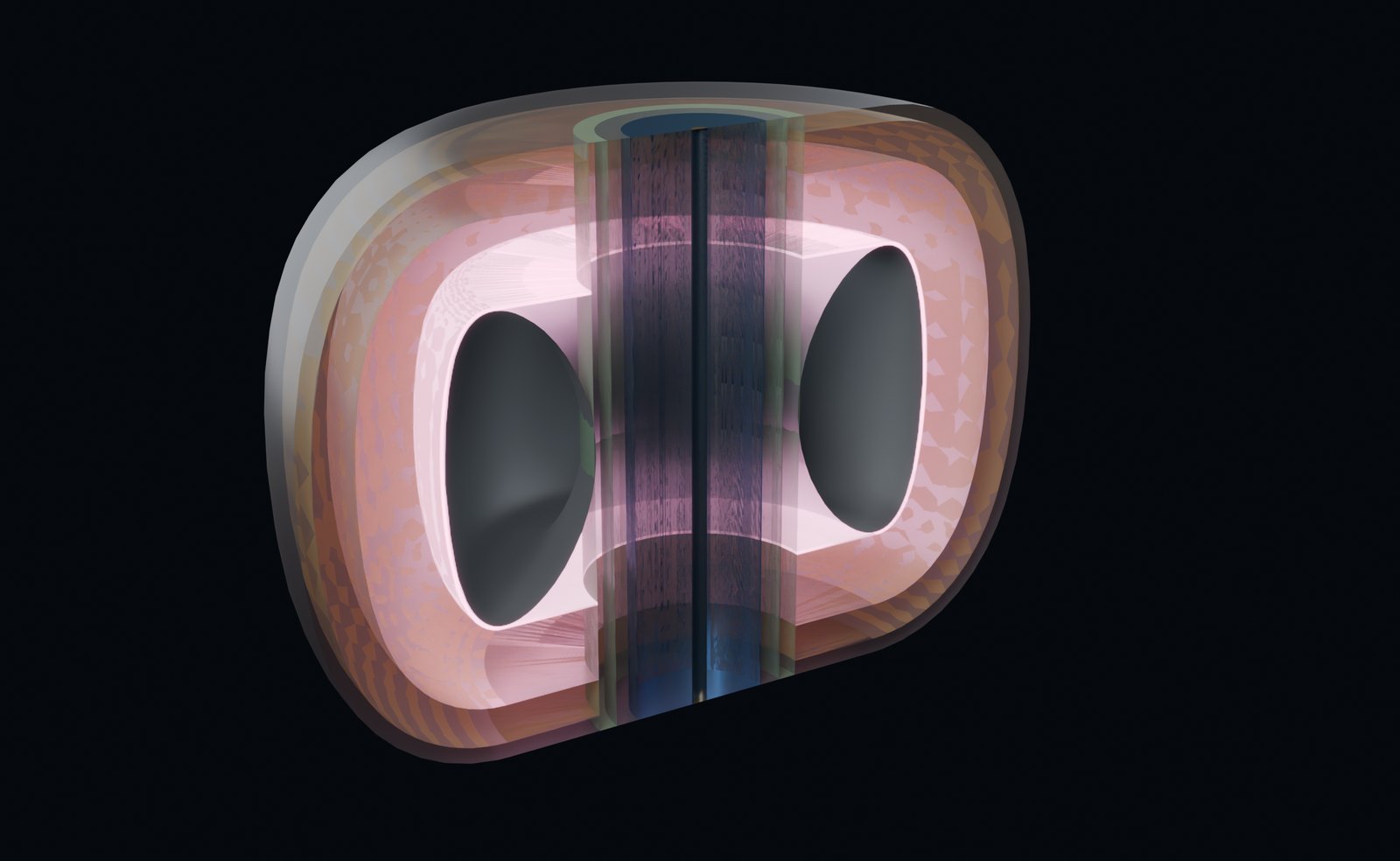
Fuel Follows Purpose, Not Platform
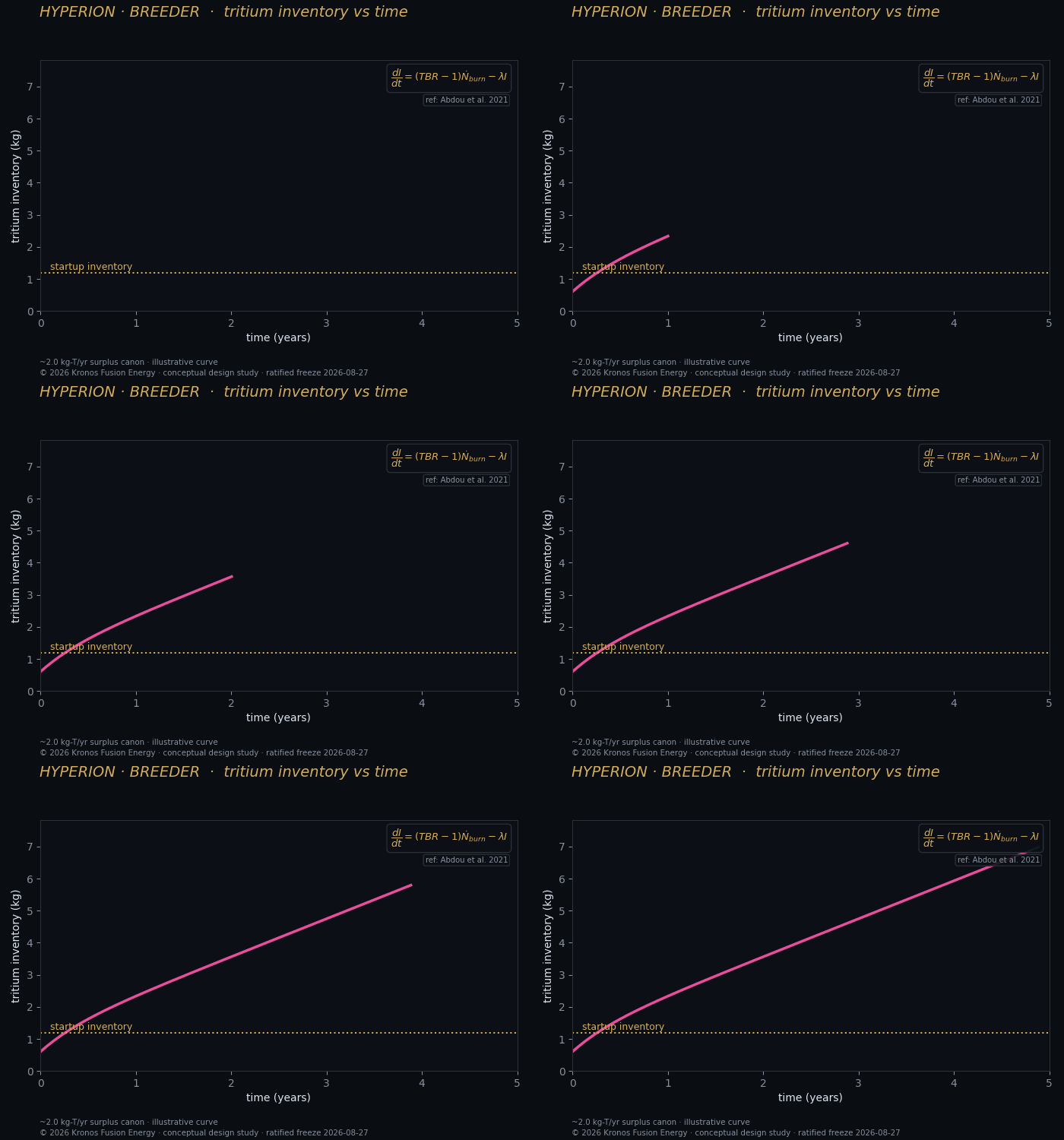
The breeder burns D-T and the burners burn D-3He, and the reason is a single rule: fuel follows purpose, not platform. The fuel cycle is where that rule becomes concrete — one machine makes the scarce isotope, the others consume it.
The science
Hyperion's purpose is to make materials, so it burns the most reactive, most neutronic fuel: D-T. The burners' purpose is clean electricity, so they burn the low-neutron, charged-particle fuel: D-3He. The cycle links them — the breeder's tritium decays to helium-3, which the burners need — so the rule is not just a slogan but a supply chain.
Why it matters
A family whose fuel choices are each justified by mission, and whose fuel cycle physically connects them, reads as a strategy rather than a set of unrelated machines. The rule is what makes the sequencing — breeder first, burners after — inevitable rather than arbitrary.
The numbers
| Rule | fuel follows purpose, not platform |
| Breeder | D-T (materials, buildability) |
| Burners | D-3He (clean electricity) |
| Link | breeder tritium decays to burner He-3 |
| Consequence | breeder-first sequencing |