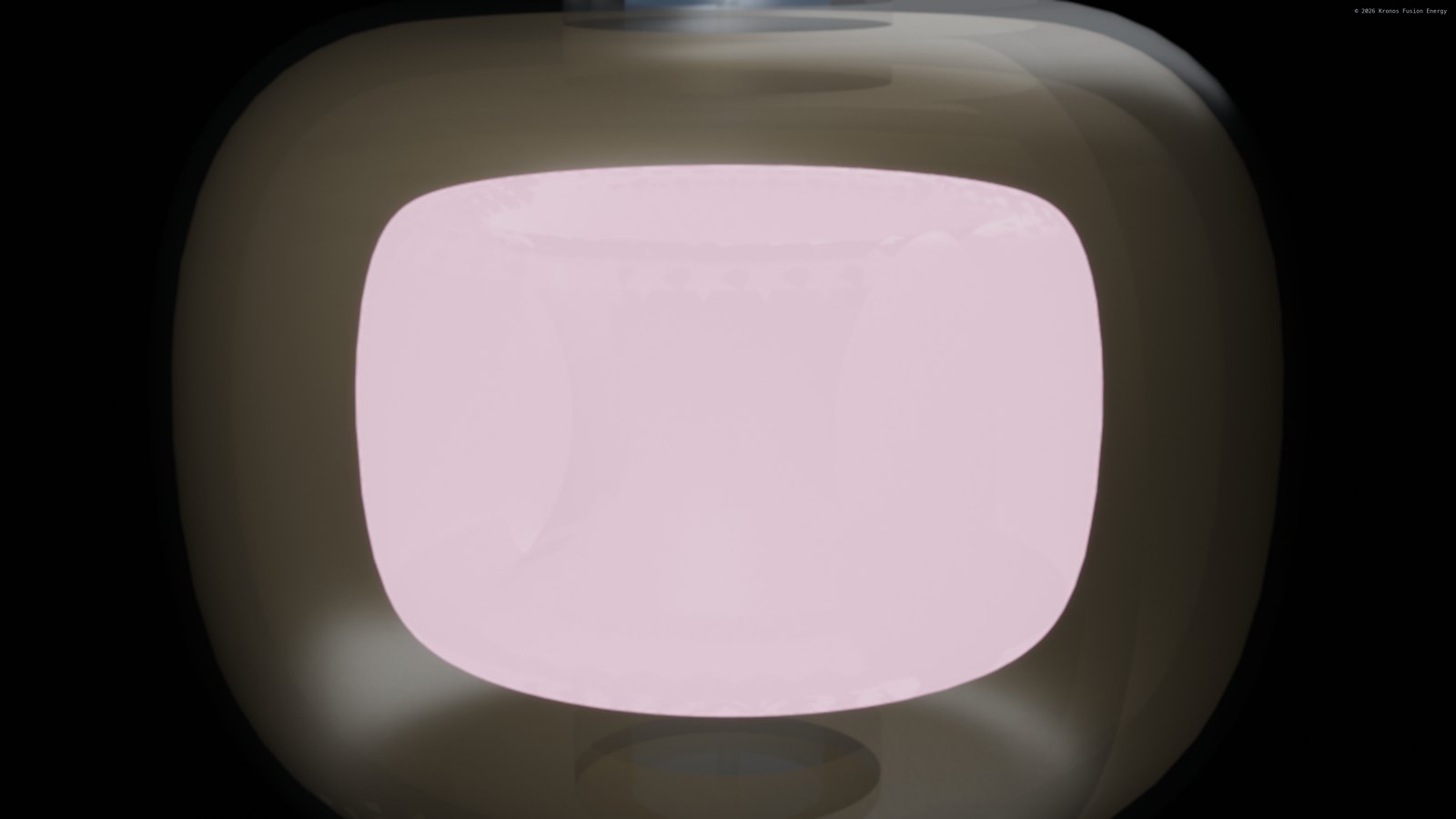
The Expander: Turning a Beam Into a Collectible Sheet
Between the ion-end throat and the converter sits the expander: a region where the field fans out from the 26.49 T ion-end throat down to about 0.5 tesla, spreading the dense exhaust beam so it can be collected without melting anything. That is a 53-fold expansion.
The science
Exhaust leaving the 26.49 T ion-end throat is far too concentrated to collect directly — about 195 MW/m² at the aperture. Letting the field drop from 26.49 T to 0.5 T is a 53x expansion, which cuts the end-wall load to about 3.7 MW/m². Only after this spreading can the direct converter handle the stream.
Why it matters
The expander is what makes direct conversion physically survivable: it converts an unmanageable beam into a collectible sheet. It is also an honestly-flagged stretch — no such end-expander spec exists yet, so the 53x ratio is stated as a requirement, not a solved value.
The numbers
| Ion-end throat field | 26.49 T (frozen A11) |
| Expansion | 53x (26.49 T -> 0.5 T) |
| Aperture load | ~195 MW/m² |
| End-wall load after expansion | ~3.7 MW/m² |
| Status | requirement; no spec exists (B30) |