Shielding a Quiet Machine
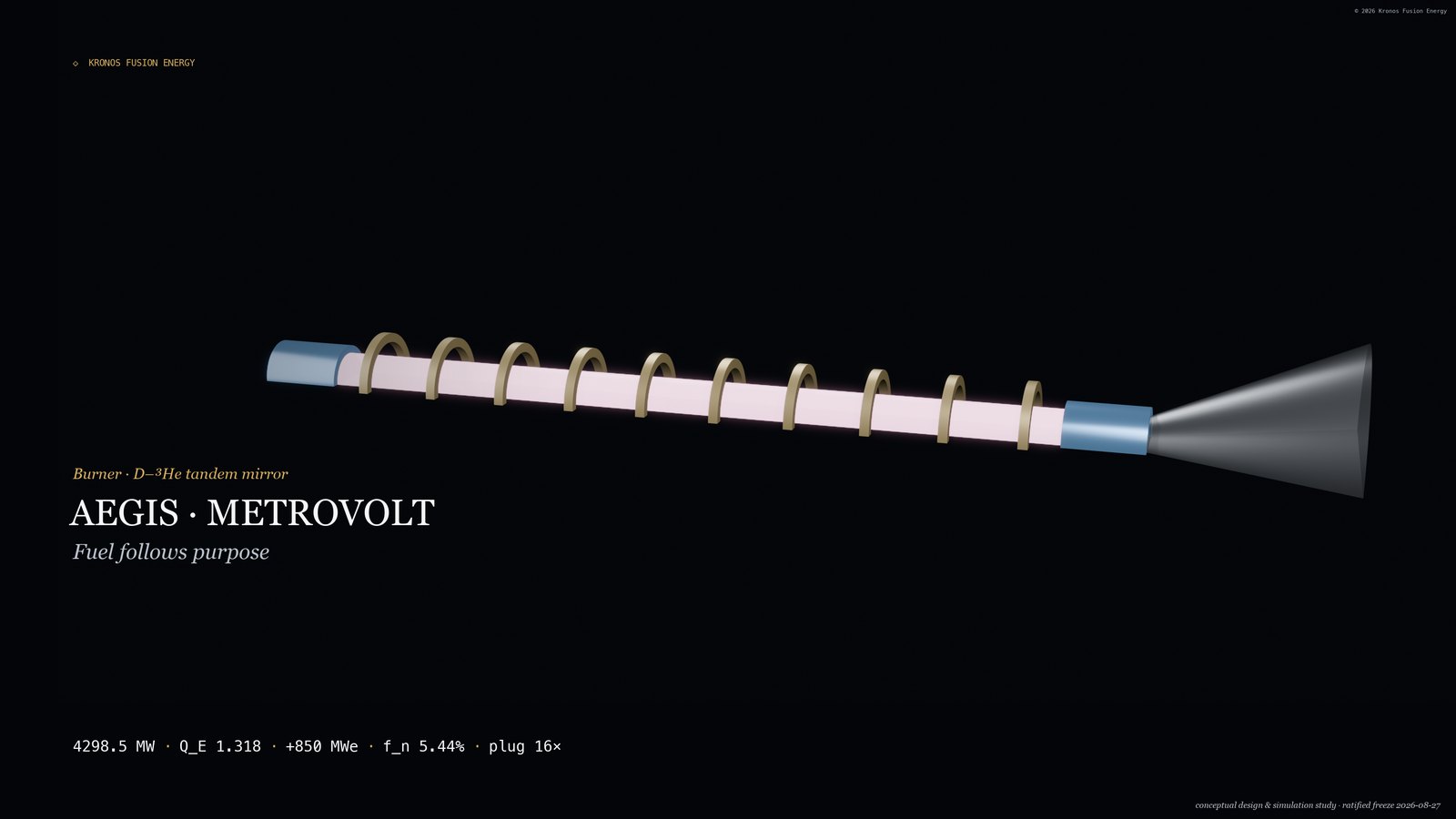
The burner's shielding requirement follows directly from its 5.44% neutron fraction: with roughly an order of magnitude fewer neutrons than a D-T plant, the shield is thinner and lighter, and more of the machine's mass and volume goes to producing and converting power.
The science
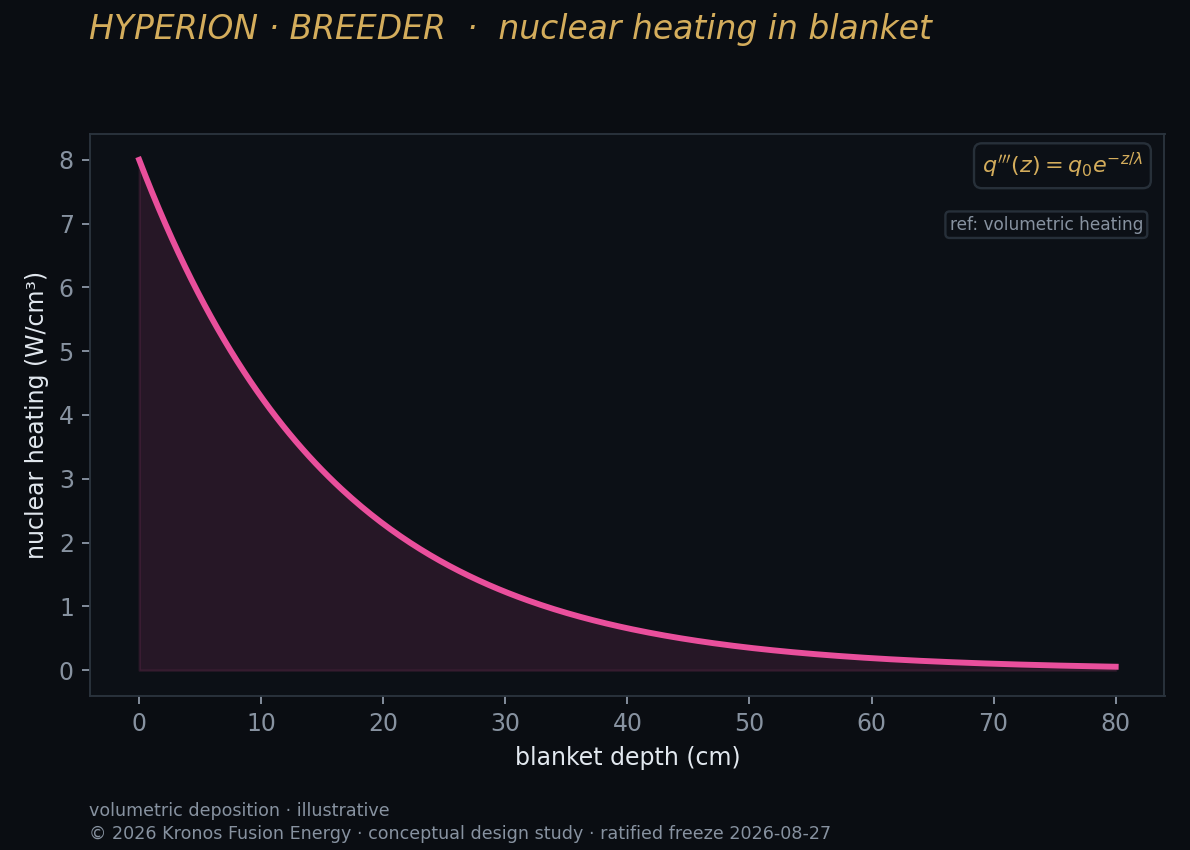
Shield thickness scales with the neutron flux it must attenuate. A low-neutron burner needs far less shielding mass than a D-T plant, which frees volume and reduces the activated inventory the shield itself would otherwise become. The gentle wall and the light shield are two faces of the same neutron budget.
Why it matters
Shielding is dead weight and dead cost — necessary, but not productive. Every meter of shield the low-neutron fuel deletes is volume returned to the converter and the plant. It compounds the compactness the mirror geometry already provides.
The numbers
| Shield driver | neutron flux (5.44% fraction) |
| Versus D-T | far thinner / lighter |
| Freed | volume and mass for power systems |
| Activated shield mass | reduced |
| Compounds | mirror compactness |