Tritium-Lean by Design: A Trace Species in the Burner
The burner holds tritium only as a fleeting D-D side product, bred and burned inside the plasma rather than stored. Its site inventory of the mobile radioisotope stays a trace quantity — a categorically different licensing conversation from a breeding-blanket plant.
The science
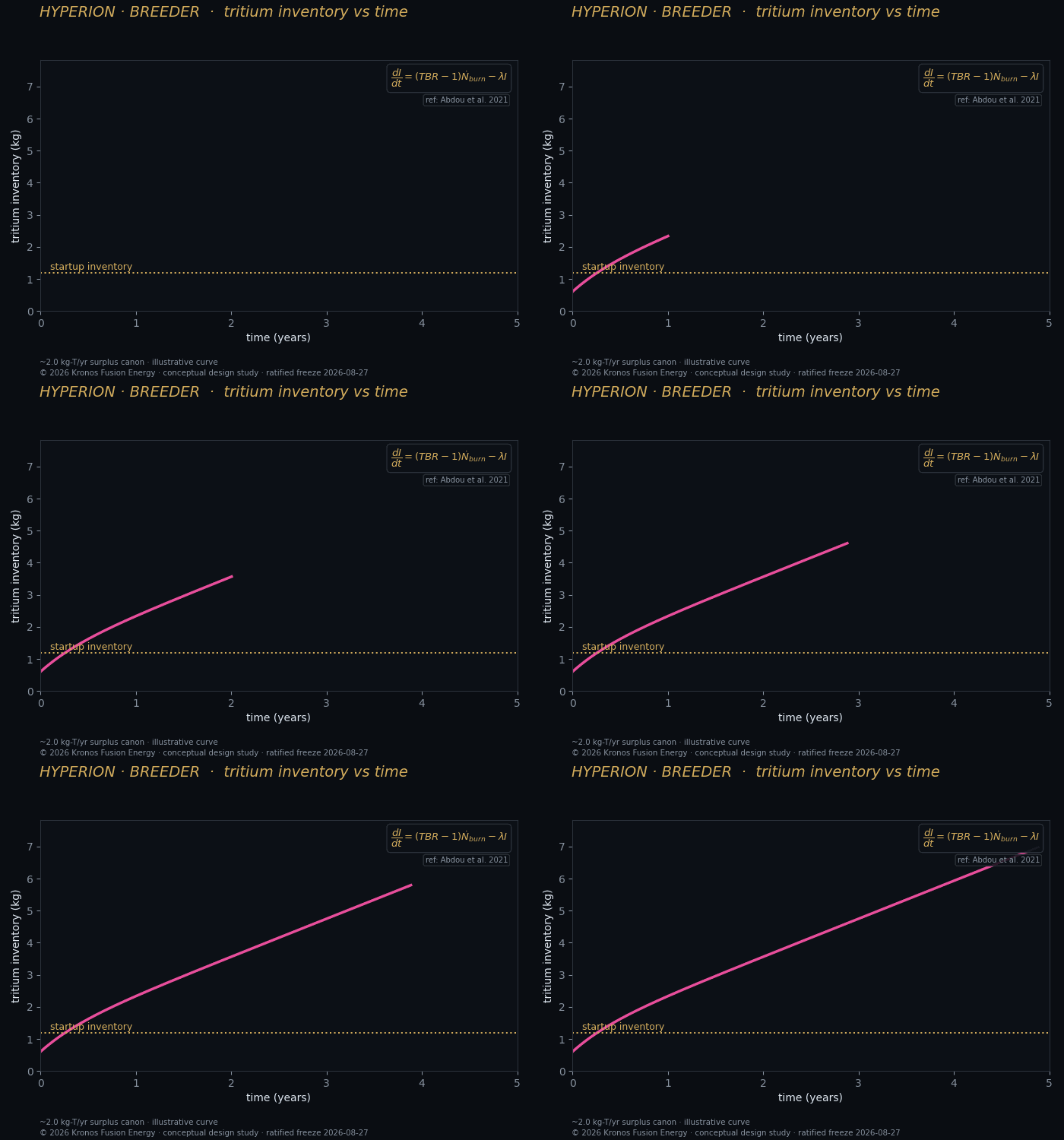
A D-T plant maintains multi-kilogram tritium inventories — its defining radiological source term. The burner's D-3He cycle produces tritium only as a transient D-D by-product, roughly 17% of which burns immediately, the rest decaying toward the helium-3 the plant wants. There is no bulk tritium process stream to store.
Why it matters
Communities and regulators price the worst case, and the worst case scales with inventory. A plant whose mobile-isotope inventory is a bounded trace — and falls with time by decay into fuel — starts the safety conversation from a different place. Tritium-lean is time-to-permit.
The numbers
| Burner tritium | trace, transient D-D by-product |
| Storage | none (no bulk stream) |
| Fate | ~17% burned; rest decays to He-3 |
| Source term | trace species |
| Contrast | D-T plant holds kilograms |