The Breeder Is Neutron-Rich on Purpose
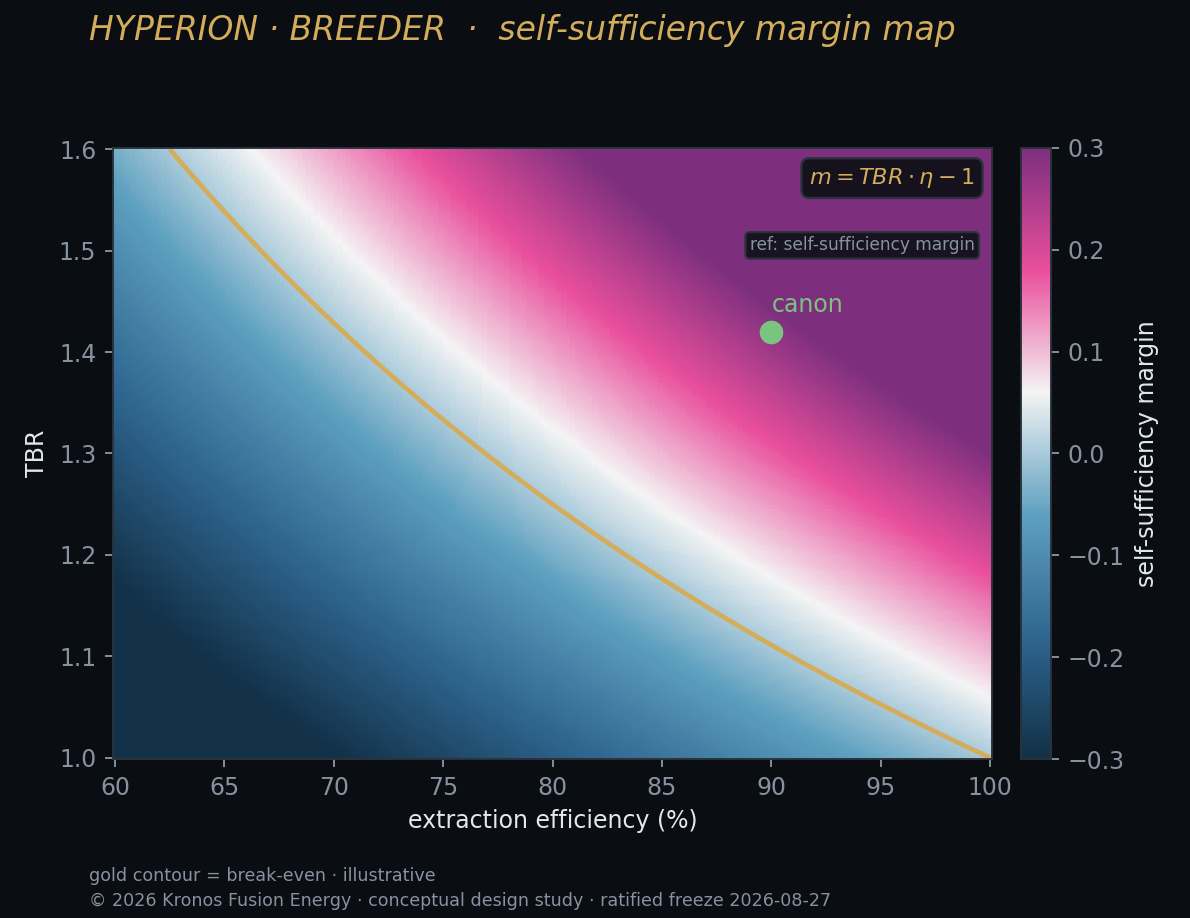
While the burner suppresses neutrons, Hyperion does the opposite: its D-T fill is chosen precisely because it makes 14 MeV neutrons at full rate. In a family defined by low-neutron power, the breeder is the deliberate exception, and for good reason.
The science
Hyperion's three product streams — tritium, helium-3, and neutrons — all depend on a neutron-rich D-T reaction. The blanket breeds tritium from the neutron flux, and the flux itself is a product for materials irradiation. Neutron richness is the breeder's whole point, so it uses the fuel that maximizes it.
Why it matters
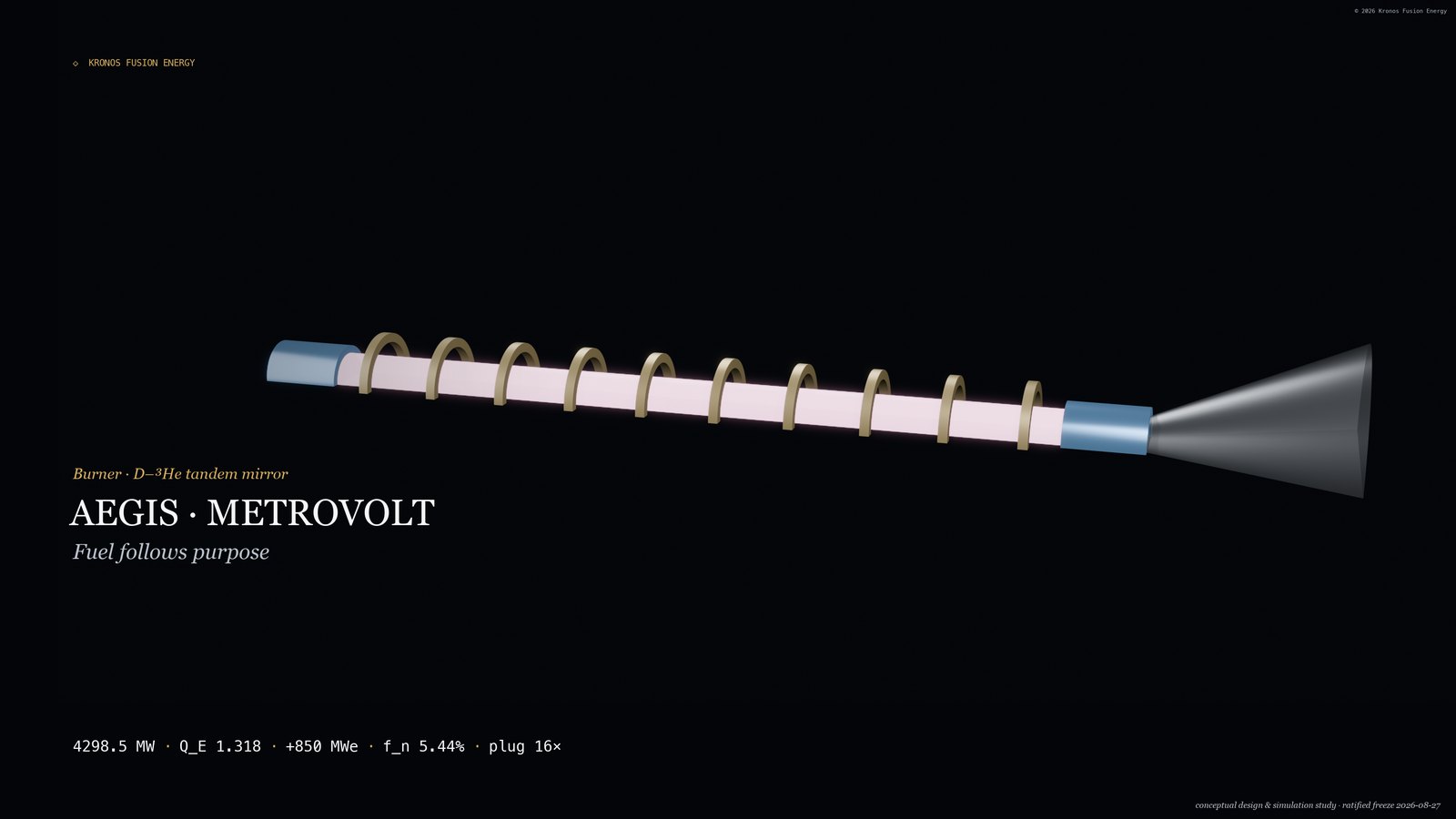
Understanding that the two machines want opposite neutron budgets is what makes the family coherent. The breeder's neutrons qualify the materials and breed the fuel; the burner's quiet cycle then turns that fuel into clean power. The contrast is the strategy.
The numbers
| Breeder fuel | D-T (neutron-rich) |
| Neutron energy | 14 MeV, full rate |
| Uses neutrons for | tritium breeding + materials qual |
| Burner | neutron-poor by design |
| Family logic | opposite budgets, matched to mission |