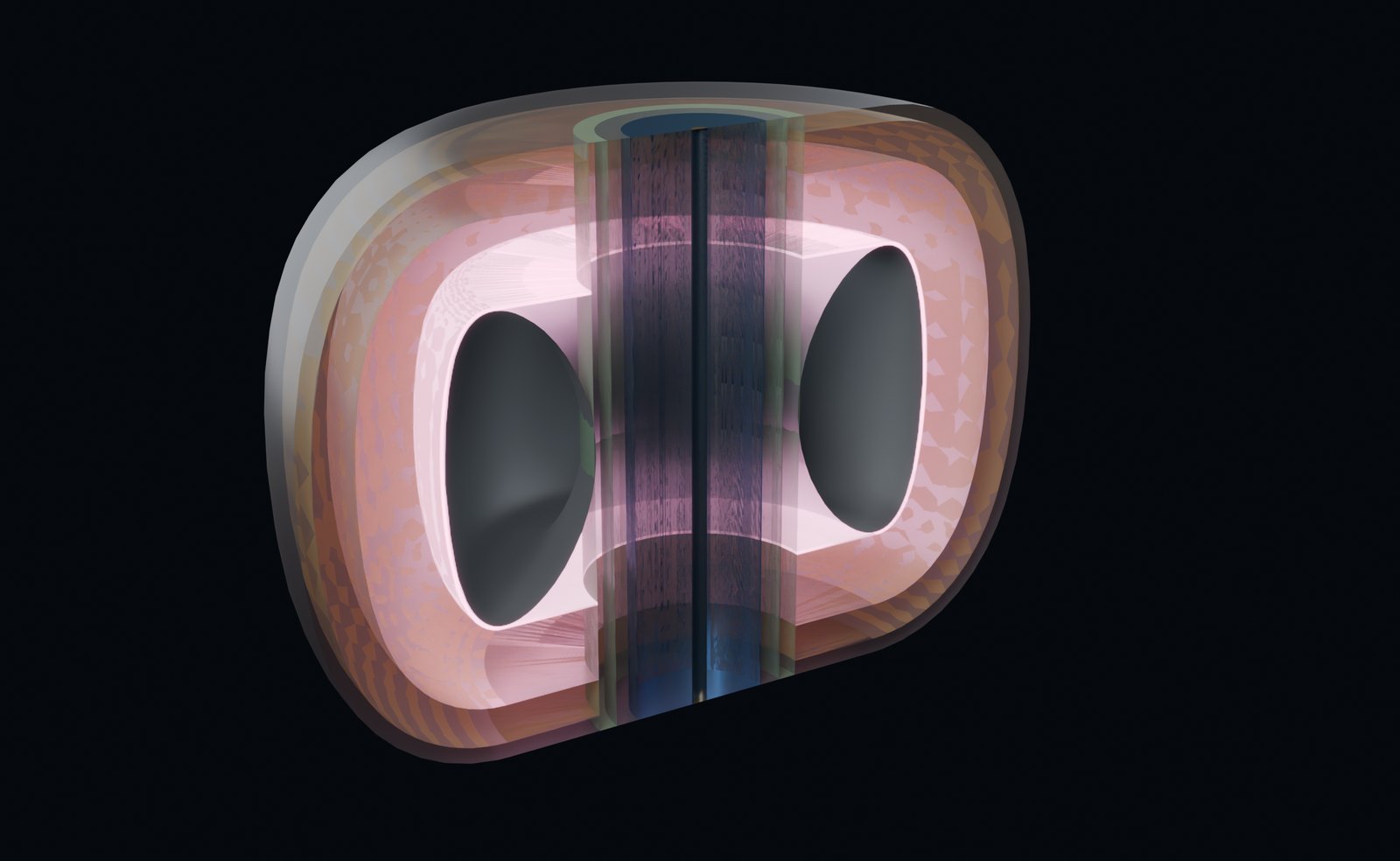
Two Neutrons, Two Purposes: 2.45 MeV Versus 14 MeV
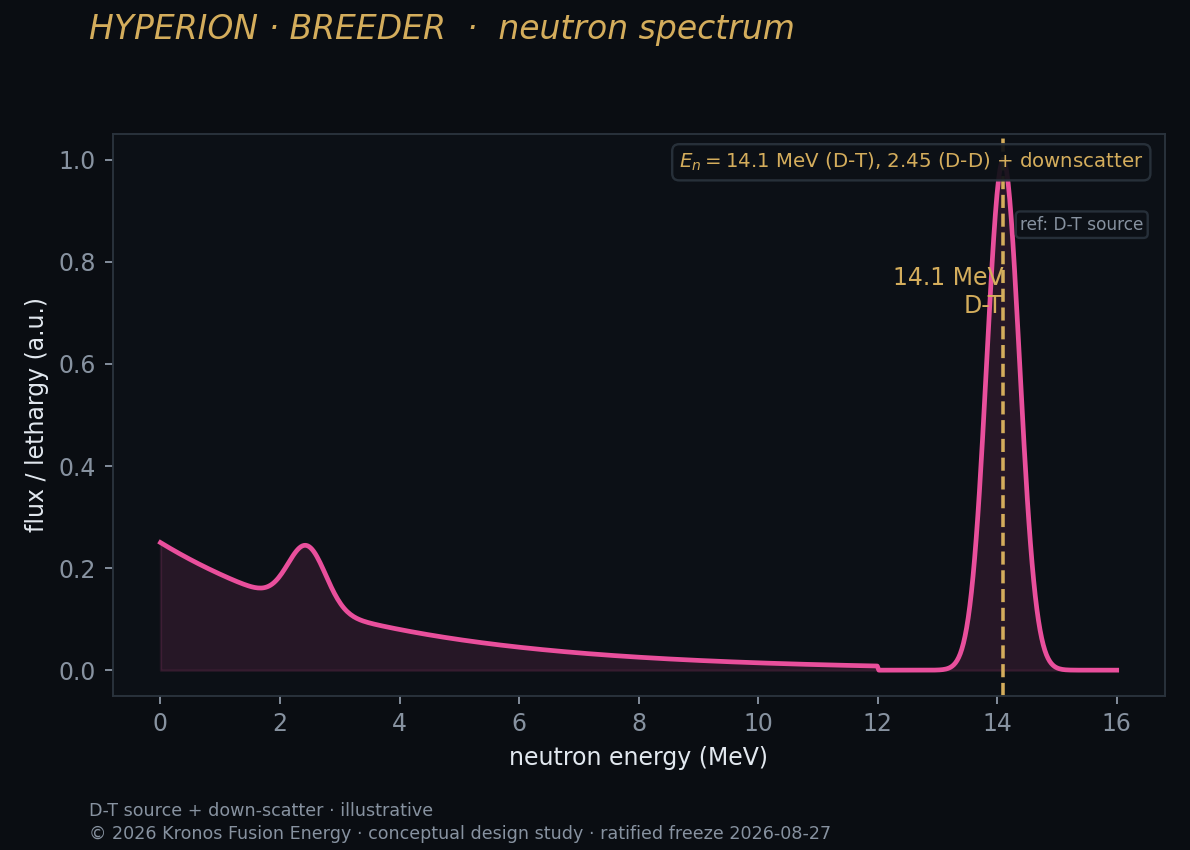
The burner makes mostly 2.45 MeV neutrons from D-D reactions; materials qualification needs 14 MeV fusion-spectrum neutrons. That mismatch is deliberate: the burner is built to suppress neutrons, so the irradiation job belongs to Hyperion's D-T fill, not to the mirror.
The science
The dominant neutron from a low-neutron D-3He mirror is the 2.45 MeV D-D neutron, useful for little and made in small quantity. The 14 MeV neutron that qualifies fusion materials requires a D-T reaction at rate — which is exactly what the breeder provides and the burner avoids.
Why it matters
This is the clean division of labor in the family: the breeder is deliberately neutron-rich to serve materials qualification, and the burner is deliberately neutron-poor to serve clean power. Each machine's neutron character is a design choice matched to its mission.
The numbers
| Burner neutron | mostly 2.45 MeV (D-D) |
| Qualification neutron | 14 MeV (D-T) |
| Burner role | suppress neutrons (clean power) |
| Breeder role | make neutrons (materials qual) |
| Division | fuel matched to mission |