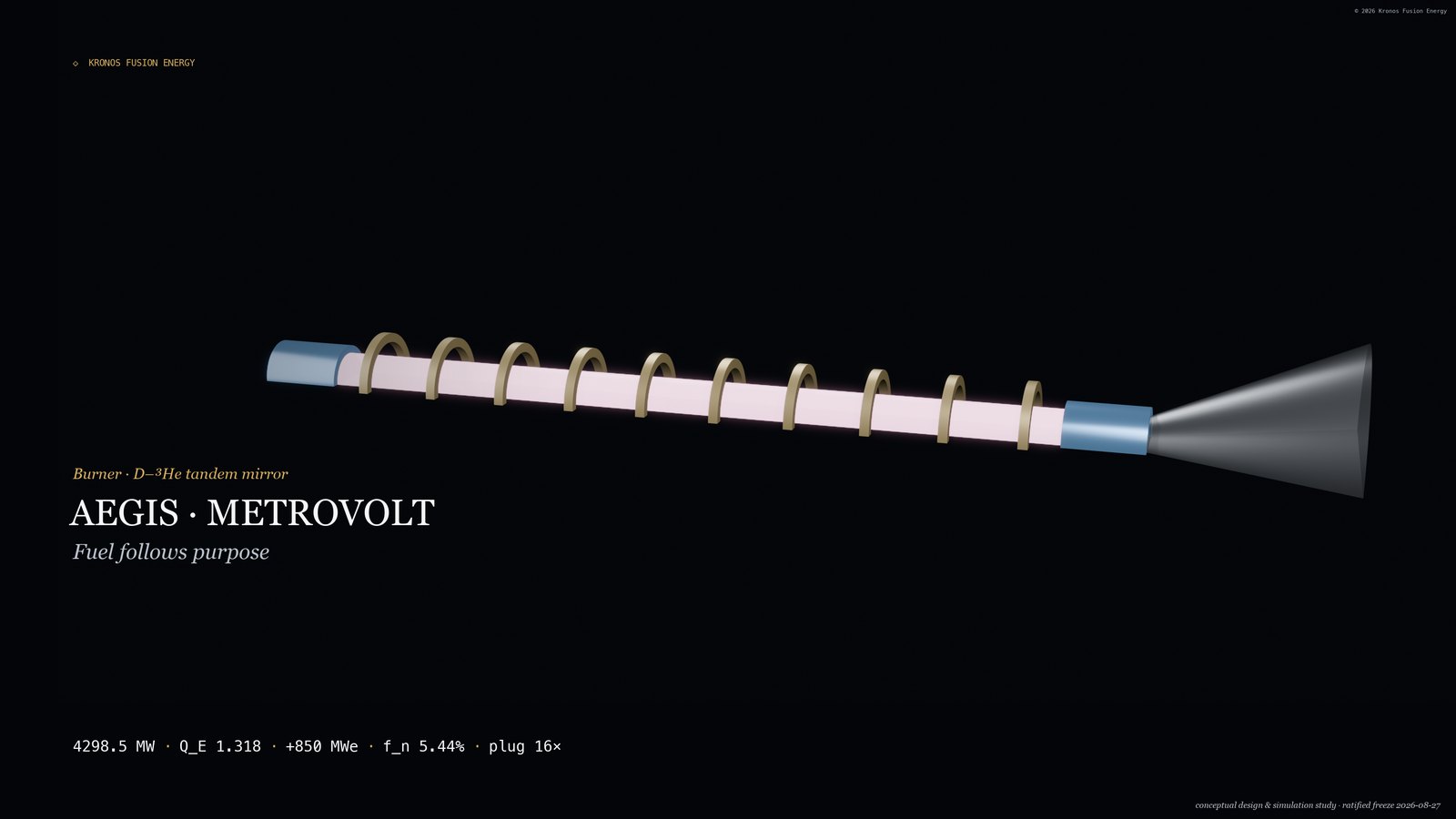
The Gentle Wall: Far Below the Breeder's Neutron Load
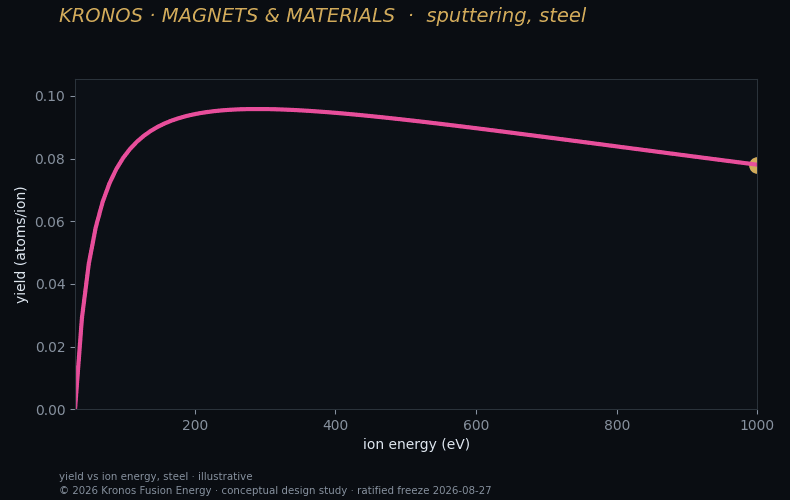
The burner's first wall sees a neutron load far below the breeder's frozen 1.966 MW/m² — a small fraction of it, because the burner runs at a neutron fraction of 5.44% against the breeder's neutron-dominated D-T budget. The low-neutron fuel turns the first wall from a scheduled consumable into plant infrastructure.
The science
Wall load is fuel chemistry made visible: at the burner's 5.44% neutron fraction, the flux of damaging neutrons reaching the wall is a small fraction of the breeder's 1.966 MW/m² and of a D-T machine's. The exact per-housing fleet ratio recomputes on this corrected design-point neutron fraction and is carried as provisional, not a frozen number.
Why it matters
A gentle wall is a maintenance strategy. A D-T plant replaces its wall and blanket on a cycle measured in months; a low-neutron burner is designed for a wall that lasts. That difference compounds into availability, which is what firm-power customers actually buy.
The numbers
| Burner neutron fraction | 5.44% (design point) |
| Breeder first-wall load | 1.966 MW/m² (frozen) |
| Burner first-wall load | far below the breeder (order of magnitude+) |
| Wall status | infrastructure, not consumable |
| Fleet ratio | recomputes on f_n 5.44% (provisional, not frozen) |