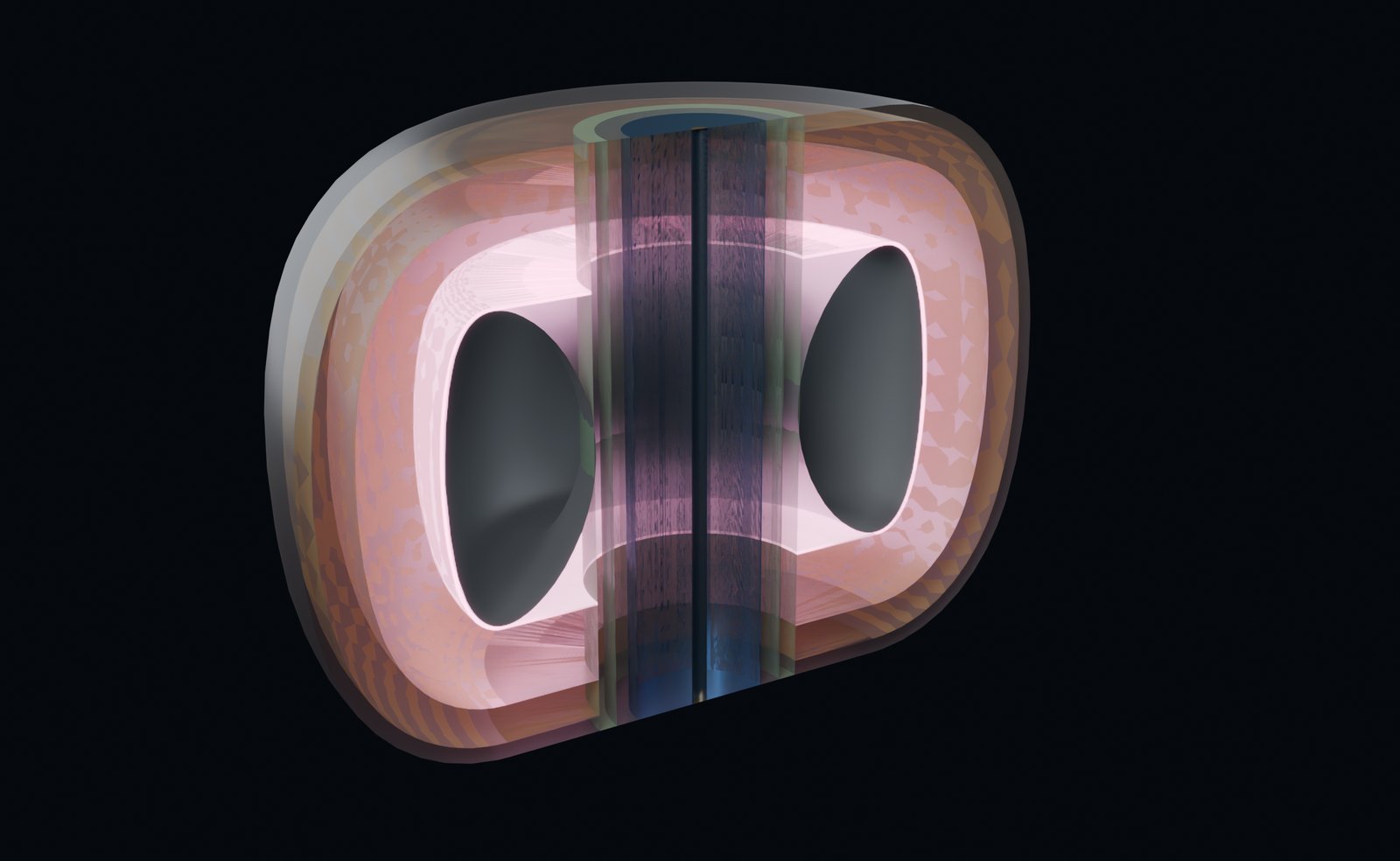
A Reproducible Closing Point, and the One Requirement It Rests On
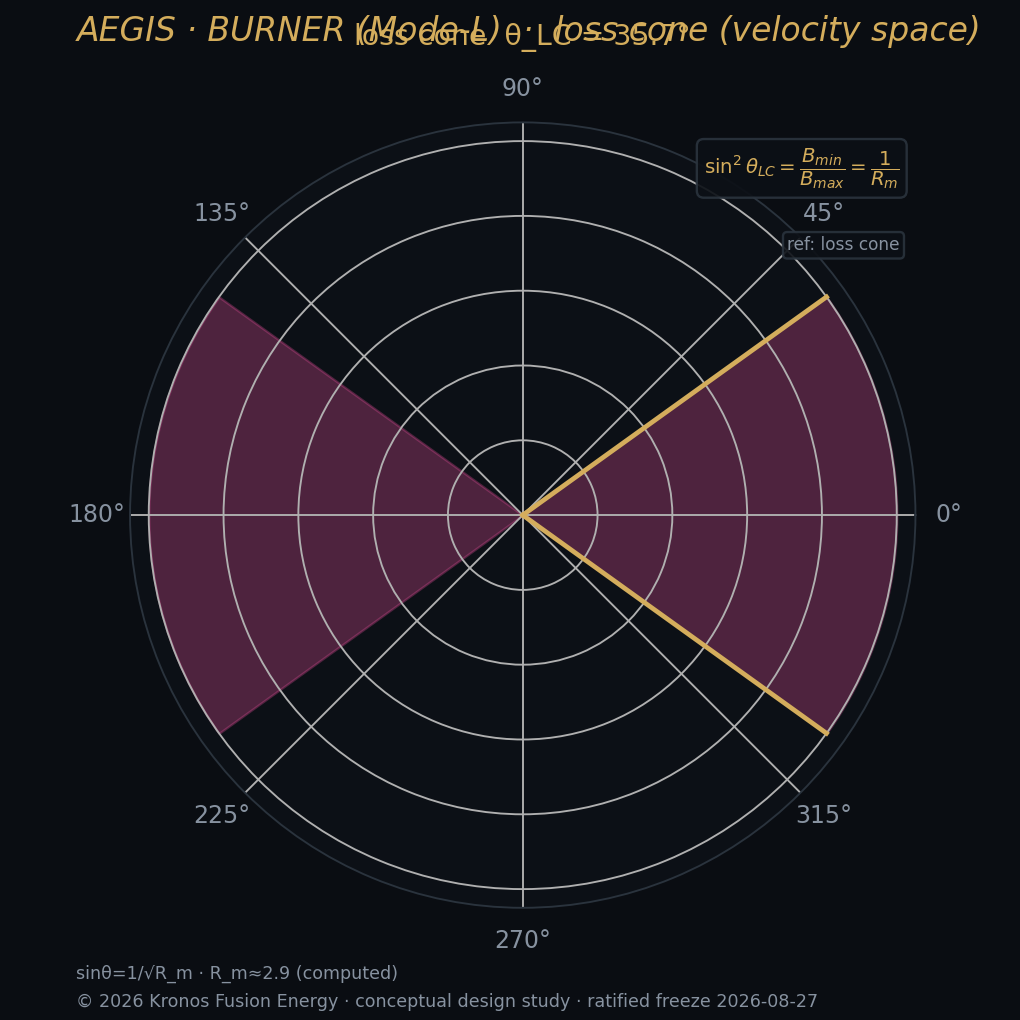
The burner's closing point is locked and reproduces from the deposit's own solver: engineering gain Q_E 1.31 at helium-3 fraction 0.30. It is also honest about its price. At the reference end-plug density ratio of 10 the machine does not close (Q_E 0.63, net -160 MWe); reaching Q_E 1.31 needs a plug density ratio near 16, a condition specified but not demonstrated.
The science
On the locked config the engineering gain is Q_E 1.31 and the neutron fraction 5.44%, both length-independent; net electric then scales with central-cell length (+104 / +850 / +2832 MWe at 55 / 440 / 1400 m). Closure is contingent on an end-plug density of 4.16×10²¹ per cubic metre — 347× above what the GDT mirror has measured. Earlier Q_E figures of 1.002, 1.191 and 1.825 did not reproduce from the code and are withdrawn.
Why it matters
A closing point you can rerun, that names the one hard thing it assumes, is worth more than a flattering number that does not reproduce. The physics gives a reproducible net-positive point; whether it can be built hinges on the plug density, which the record flags as the single largest open item rather than booking it as solved.
The numbers
| Design-point gain Q_E | 1.31 (reproducible, length-independent) |
| Neutron fraction | 5.44% |
| Reference n_p/n_c=10 | does NOT close (Q_E 0.63, -160 MWe) |
| Closure condition | plug ratio ~16 (347x GDT), not demonstrated |
| Withdrawn | Q_E 1.002 / 1.191 / 1.825 (non-reproducible) |