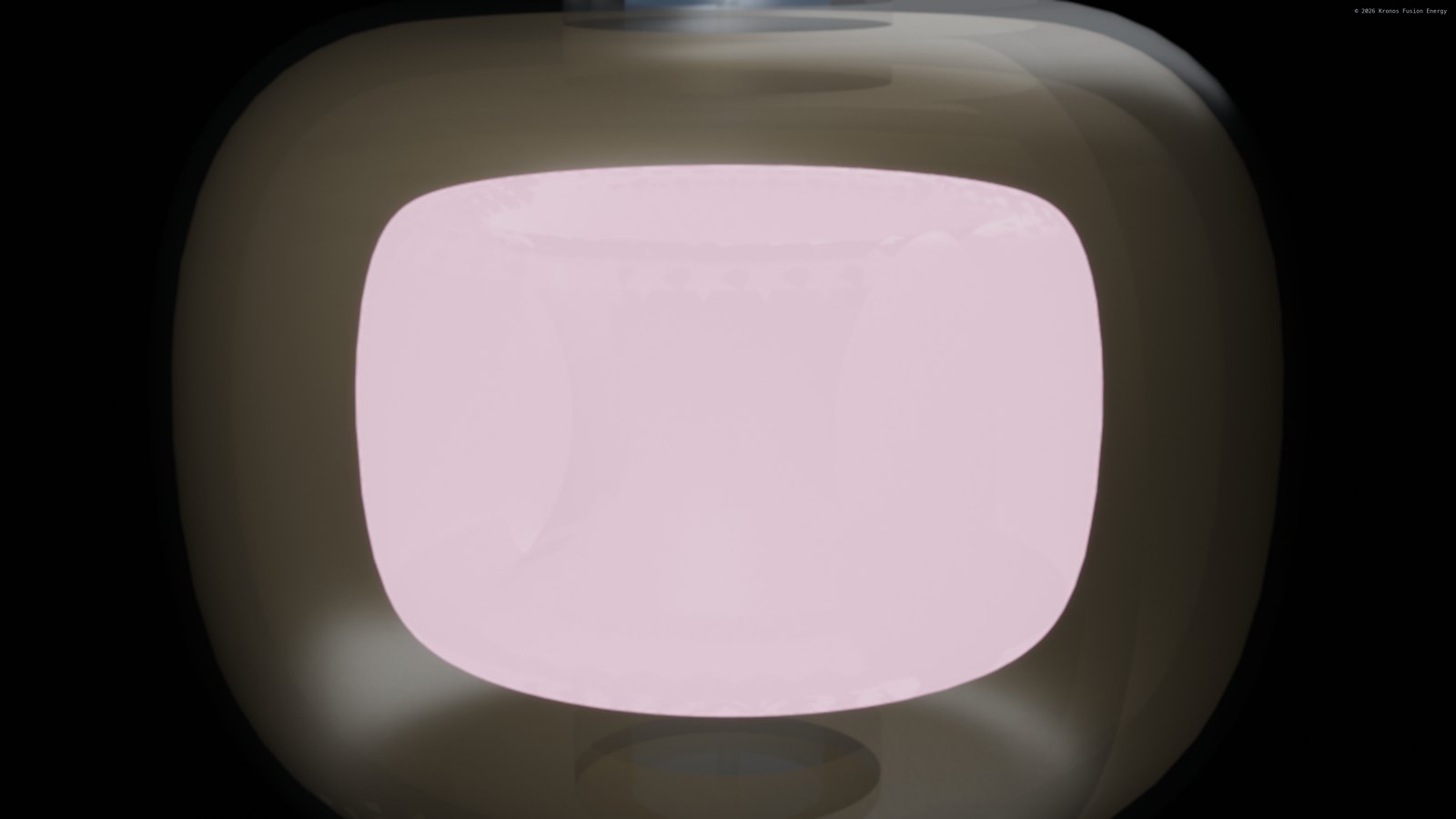
One Generator, Two Housings: Aegis and MetroVolt
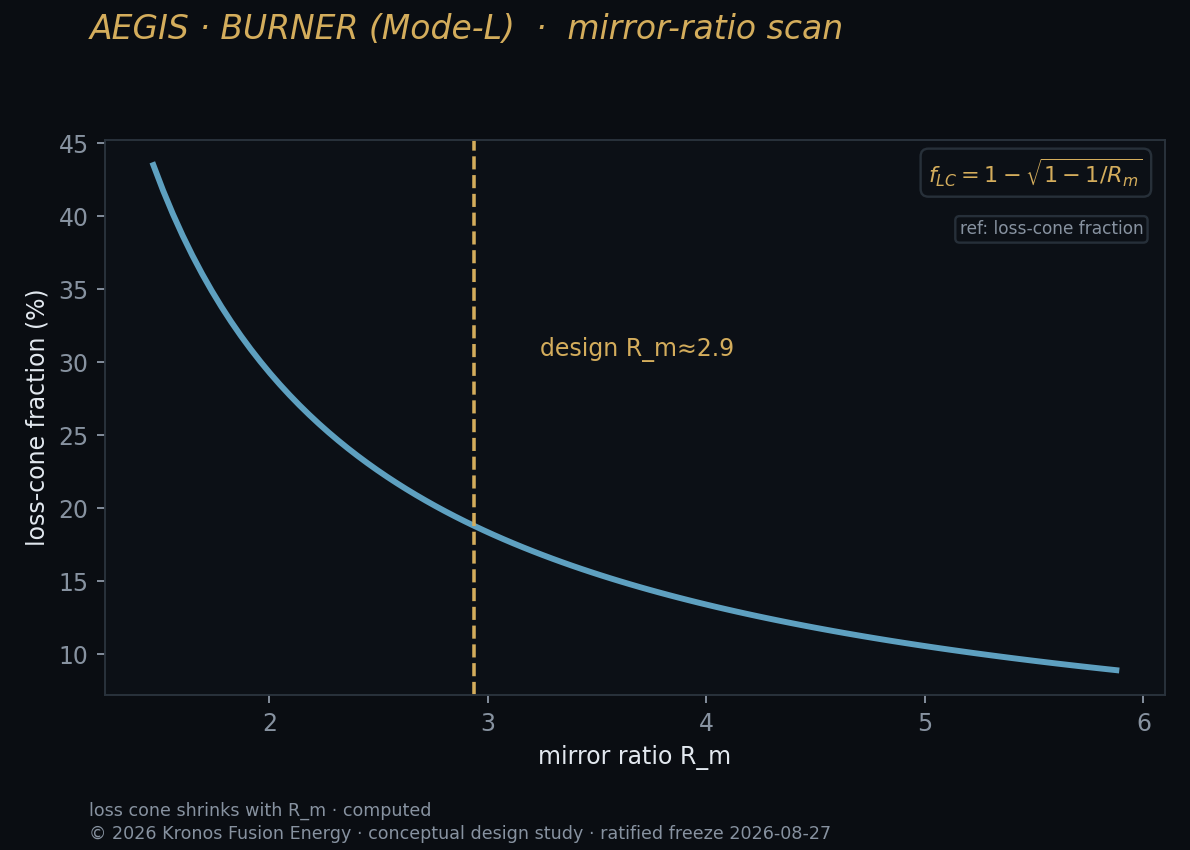
Aegis (fixed defense installations) and MetroVolt (data-center campuses) are a single generator in two configurations. The physics, the fuel, the gates are identical; only the length, the siting, and the customer differ.
The science
Both are deuterium-helium-3 magnetic mirrors with direct energy conversion. Because the mirror's central-cell length sets machine size at essentially no cost to closure, the same physics point serves a shorter defense housing and a longer data-center housing by lengthening the cell, not by changing the concept.
Why it matters
Treating the burner as one machine in two housings means every physics result — confinement, neutron budget, converter performance — is shared. A gate cleared for Aegis is cleared for MetroVolt, which is why the programme develops them together.
The numbers
| Aegis | fixed-site defense housing (shorter cell) |
| MetroVolt | data-center housing (longer cell) |
| Shared | D-3He mirror, DEC, all physics gates |
| Difference | length, siting, market |
| Scaling rule | length sets size, not closure |