KRONOS FUSION ENERGYWHITEPAPER 017 / 104
Hyperion — The Breeder
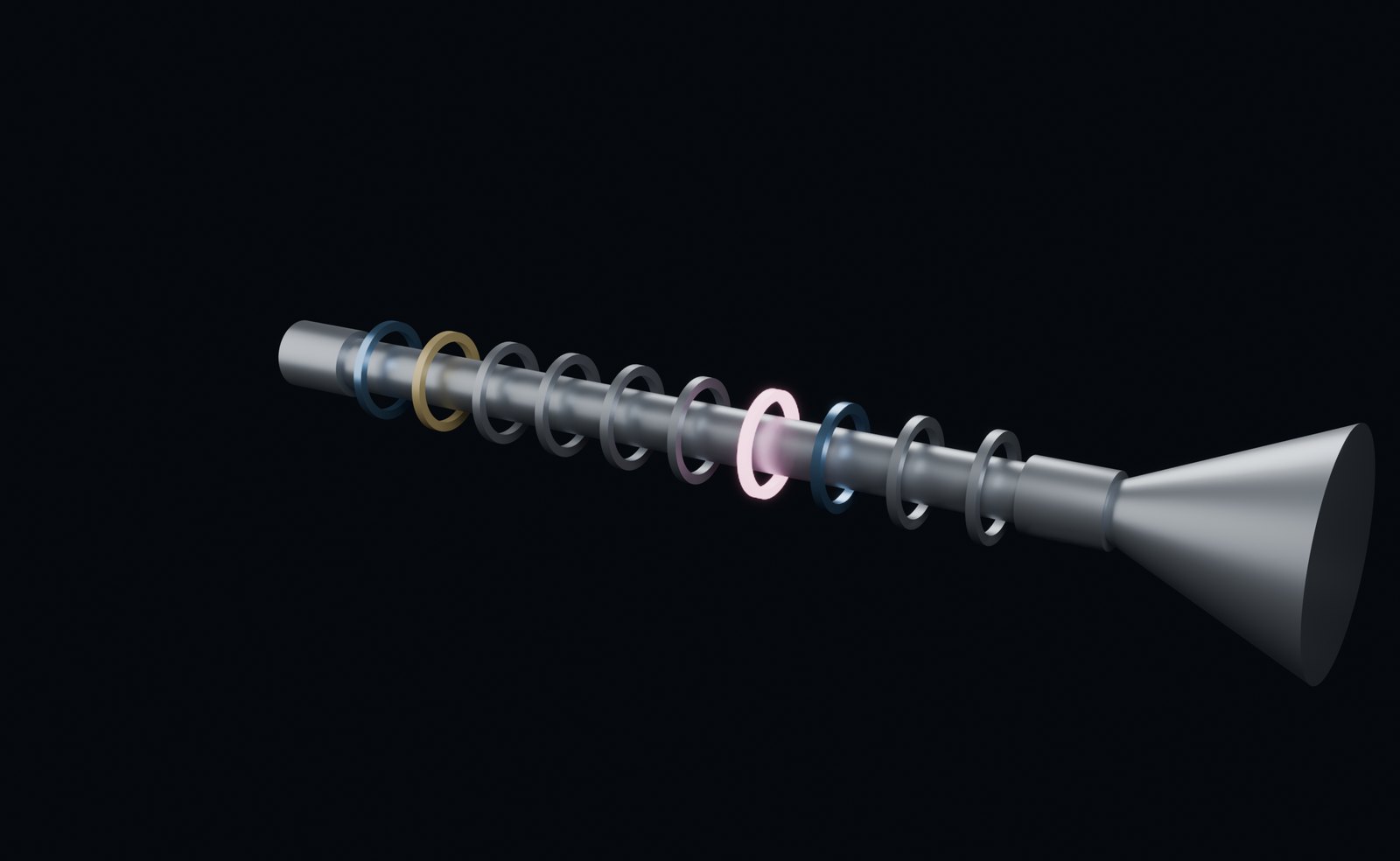
Inside Existing Practice: Hyperion's Tritium Inventory
The breeder's radiological posture is bounded by design to stay inside civil licensing practice.
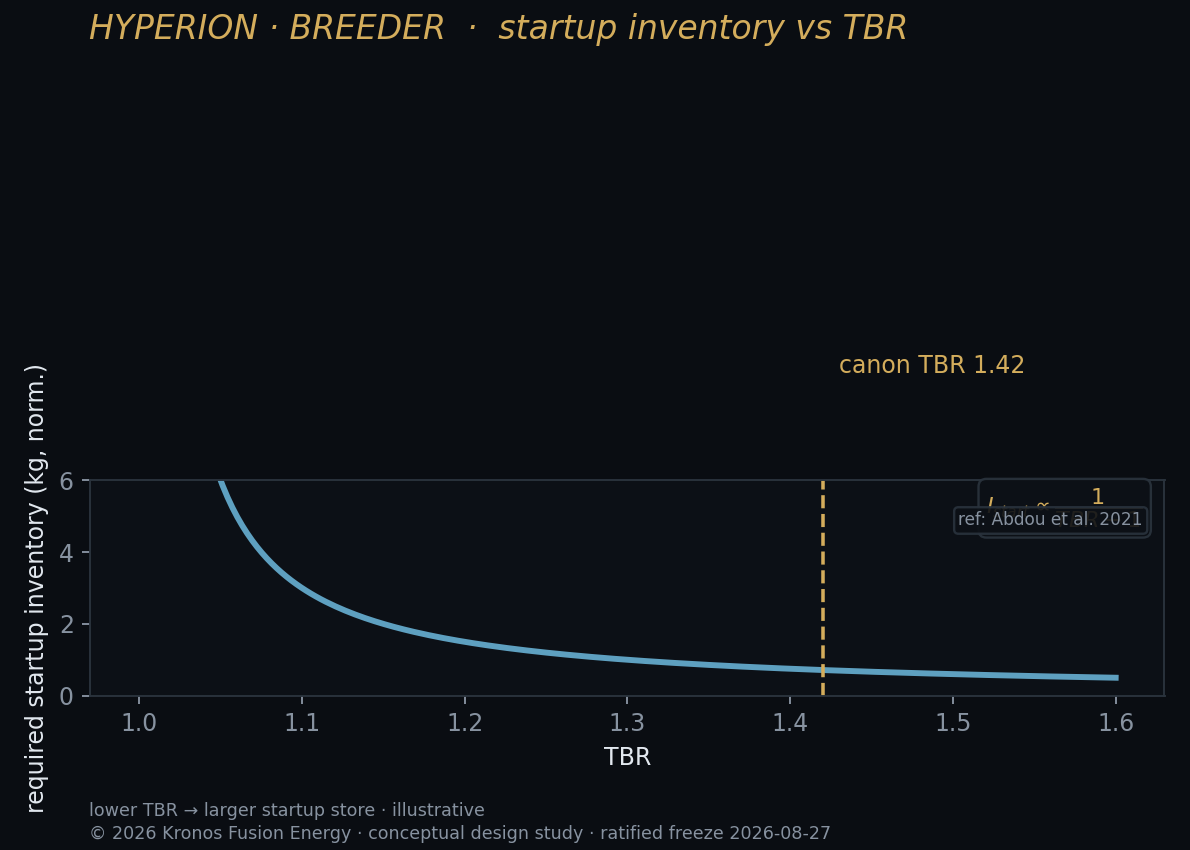
Hyperion is sized so its on-site tritium inventory stays inside the envelope of existing civil licensing practice. That is a design constraint applied from the start, not a hope pinned on after the physics.
The science
Tritium inventory is the defining radiological source term of a D-T machine. By sizing Hyperion to a requirement rather than a maximum, and by moving bred tritium into product rather than accumulating it, the design keeps the standing inventory bounded within practiced limits.
Why it matters
Licensing timeline is often the real critical path for a fusion first-of-a-kind. A machine whose inventory sits inside existing practice starts that conversation from precedent, which is a schedule asset as much as a safety one.
The numbers
| Source term | on-site tritium inventory |
| Posture | inside civil licensing practice |
| Mechanism | requirement-sized, product-flushed |
| Benefit | licensing by precedent |
| Design stage | constraint applied from the start |
Straight answersThe inventory claim is a design rule verified in the mass-balance ledger; operational tritium accountancy at plant scale remains an execution item and is scoped as one.
Kronos is the fusion company that shows its work. Every figure here traces to the openly deposited Kronos simulation programme and design-point records (CC BY 4.0).
Read the series, run the code, check us. — All whitepapers
· Read the formal papers & open data
Building toward first construction in 2027 — isotopes first, electricity next. Quantitative values
are simulation-derived and carry the feasibility gates named in the text; superseded values are kept
in the record with era labels. This document is informational and is not an offer of securities.
© 2026 Kronos Fusion Energy, Inc. · Los Angeles, California.
← Back to the whitepaper library