KRONOS FUSION ENERGYWHITEPAPER 016 / 104
Hyperion — The Breeder
Fuel Follows Purpose: Why the Breeder Burns D-T
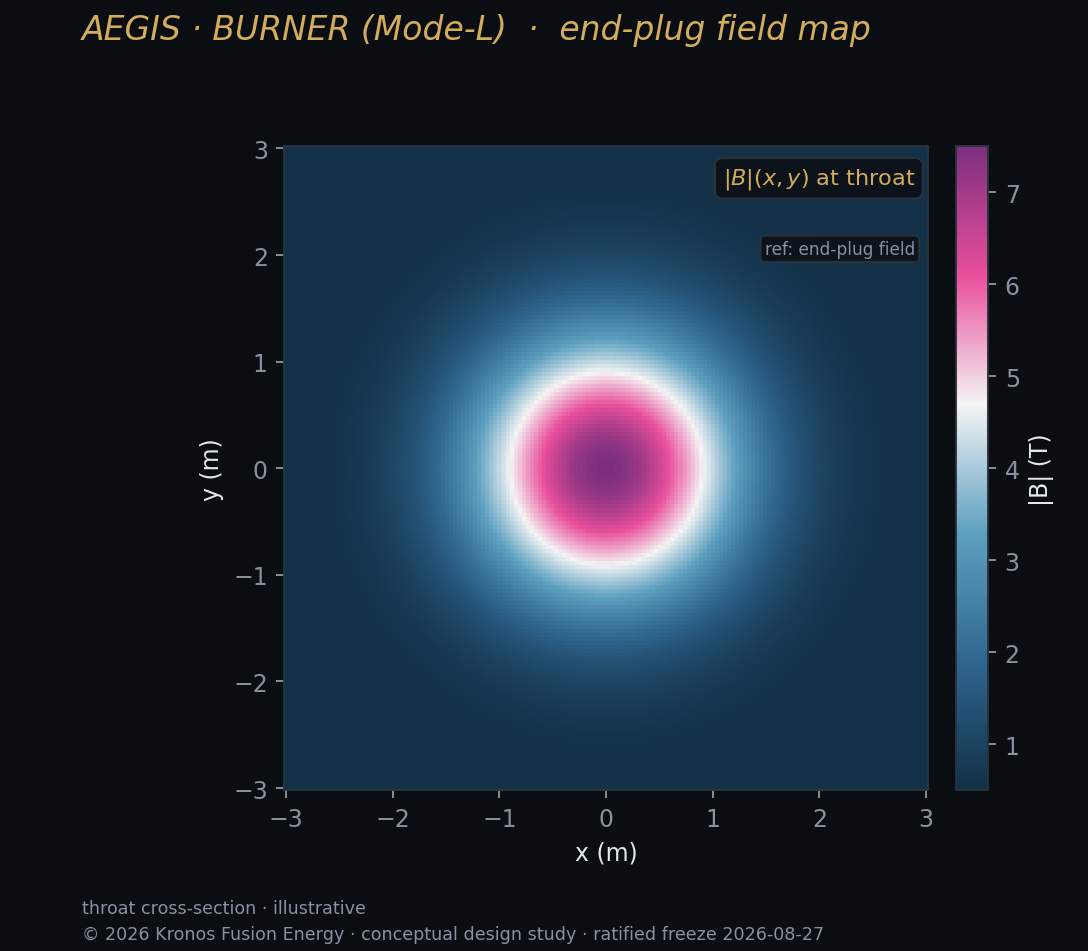
Hyperion and the burners run different fuels on purpose — each fuel chosen for what the machine must do.
Hyperion burns deuterium-tritium while Aegis and MetroVolt burn deuterium-helium-3. That is not inconsistency; it is the programme's governing rule — fuel follows purpose, not platform.
The science
A pressure-limited spherical tokamak wants reactivity, and D-T is the most reactive fuel; its high reactivity lets Hyperion reach its fusion conditions at a much lower plasma current than a less reactive fuel would need. Buildability wins, so the breeder burns D-T. The burners, whose product is clean electricity, choose D-3He to suppress neutrons.
Why it matters
Matching fuel to mission is why one company can field both a neutron-rich foundry and a low-neutron generator without contradiction. The rule keeps each machine honest about why it burns what it burns.
The numbers
| Breeder fuel | D-T (reactivity, buildability) |
| Burner fuel | D-3He (low-neutron electricity) |
| Rule | fuel follows purpose, not platform |
| Why D-T for the breeder | highest reactivity -> lower current |
| Why D-3He for the burner | suppresses neutrons |
Straight answersThe two fuel choices are deliberate and documented; neither machine is a compromise of the other. The rule is stated so the family reads as a strategy, not a hedge.
Kronos is the fusion company that shows its work. Every figure here traces to the openly deposited Kronos simulation programme and design-point records (CC BY 4.0).
Read the series, run the code, check us. — All whitepapers
· Read the formal papers & open data
Building toward first construction in 2027 — isotopes first, electricity next. Quantitative values
are simulation-derived and carry the feasibility gates named in the text; superseded values are kept
in the record with era labels. This document is informational and is not an offer of securities.
© 2026 Kronos Fusion Energy, Inc. · Los Angeles, California.
← Back to the whitepaper library