KRONOS FUSION ENERGYWHITEPAPER 006 / 104
Hyperion — The Breeder
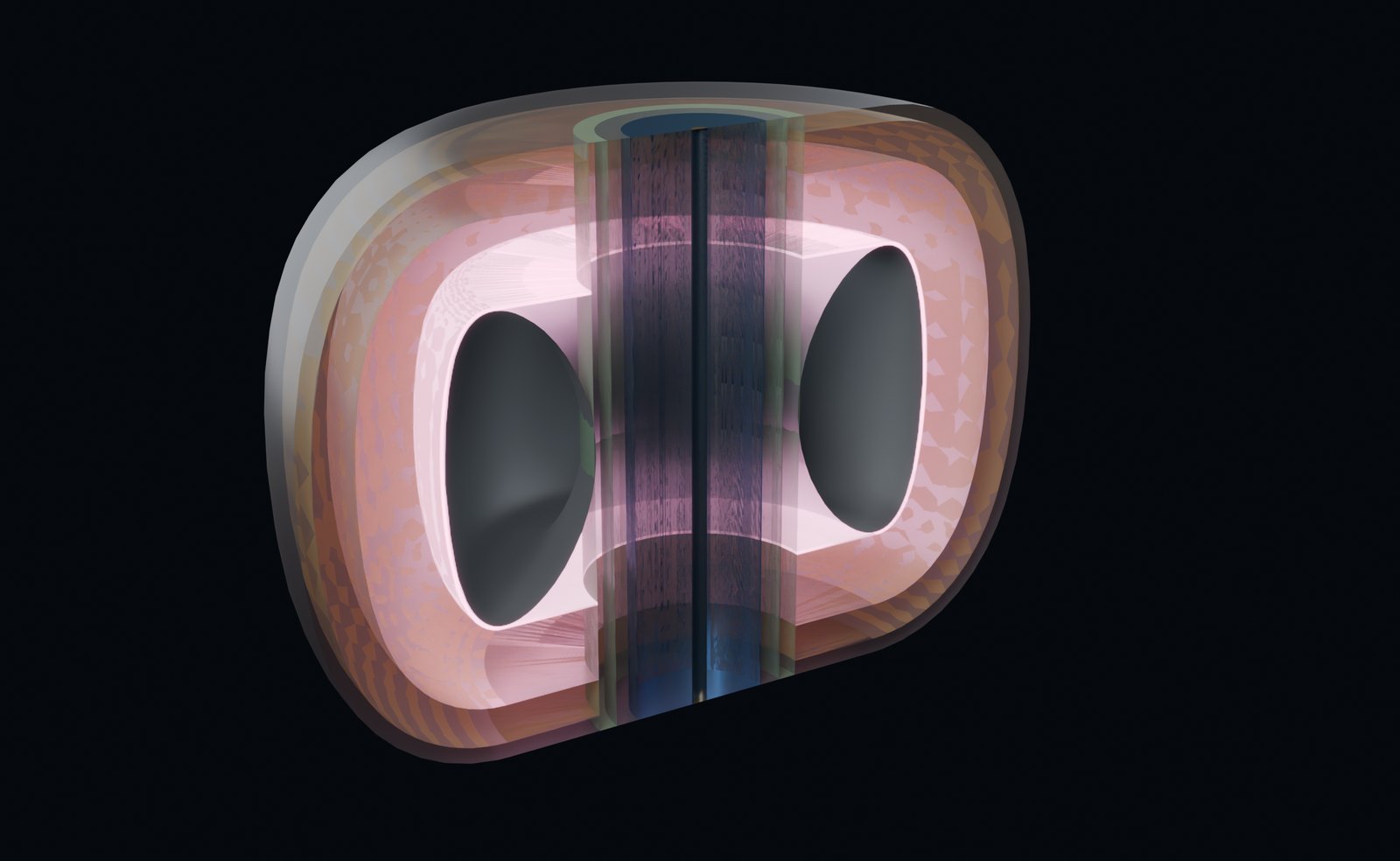
Denser Than SPARC: Heating Power Density as the Real Metric
How hard a fusion core works is measured per cubic metre, and Hyperion works hard.
Hyperion's heating power density is 2.37 MW/m³ — 2.22 times SPARC's — computed against built devices, not against a spreadsheet ideal. Power density, not raw megawatts, is the honest measure of how demanding a compact core is.
The science
A small machine that makes real fusion power necessarily runs a high power density. Benchmarking Hyperion against SPARC — a device under construction with published parameters — keeps the comparison anchored to hardware people can point at, rather than to an unbuilt reference.
Why it matters
Power density sets the thermal and materials duty of the core. Stating it against a real machine tells reviewers exactly how far beyond demonstrated practice Hyperion reaches, and in which direction the engineering has to work.
The numbers
| Heating power density | 2.37 MW/m³ |
| Versus SPARC | 2.22x |
| Benchmark | built / under-construction devices |
| Fusion power | 85.0 MW |
| Metric role | true measure of core duty |
Straight answersA high power density is a demand on cooling and materials, stated plainly. It is computed against SPARC's published figures so the multiple can be re-derived by anyone.
Kronos is the fusion company that shows its work. Every figure here traces to the openly deposited Kronos simulation programme and design-point records (CC BY 4.0).
Read the series, run the code, check us. — All whitepapers
· Read the formal papers & open data
Building toward first construction in 2027 — isotopes first, electricity next. Quantitative values
are simulation-derived and carry the feasibility gates named in the text; superseded values are kept
in the record with era labels. This document is informational and is not an offer of securities.
© 2026 Kronos Fusion Energy, Inc. · Los Angeles, California.
← Back to the whitepaper library