Feature Engineering Overview
Validated, normalized channels are combined into physics-meaningful features — instantaneous Q, core pressure map, magnet strain deltas — that the AI layer consumes.
From clean signals to meaning
Feature engineering is where the fabric stops reporting sensors and starts reporting physics. It fuses validated, normalized channels into quantities the twin and the copilots reason with: the instantaneous fusion gain, the core pressure map, magnet strain deltas, quench precursors, and machine-specific features like end-plug density for the burner. Each feature is a defined, versioned transform, not an ad hoc script.
Principles
- Physics-grounded: every feature has a definition tied to a measurable quantity, not a black-box statistic.
- Multi-modal: features fuse several diagnostics so a single dead channel cannot corrupt them.
- Traceable: each feature records the channels, calibration, and normalization it used.
- Quality-tagged: a feature carries the minimum data-quality score of its inputs (see scoring).
The headline features
- Instantaneous Q: fusion power over input power, computed live (see instantaneous Q). Design point Q_sci 3.076 at 85.0 MW for the breeder.
- Core pressure map: the 2-D pressure distribution in flux coordinates (see pressure map).
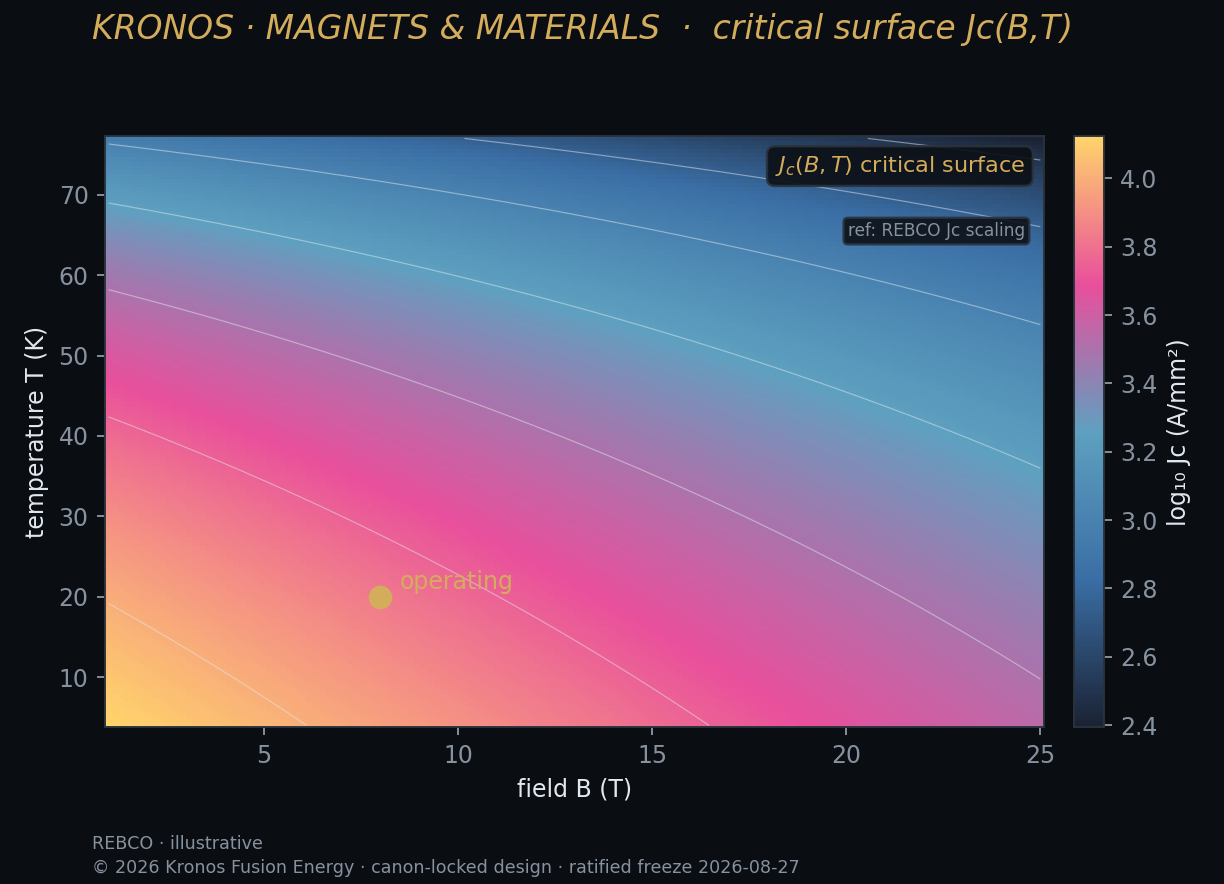
- Magnet strain deltas: change in REBCO strain against the preload baseline (see strain deltas).
- Quench and disruption precursors: sub-threshold signatures for the anomaly ensembles.
Online and offline parity
A feature must compute identically in the low-latency online path feeding control and in the offline batch path that builds training sets. The fabric enforces this parity (see online/offline parity) so a model trained on archived features behaves the same when fed live ones. Feature definitions are shared across the breeder and the burner, with machine-specific inputs bound at configuration time.