ELM-Free Regime Control
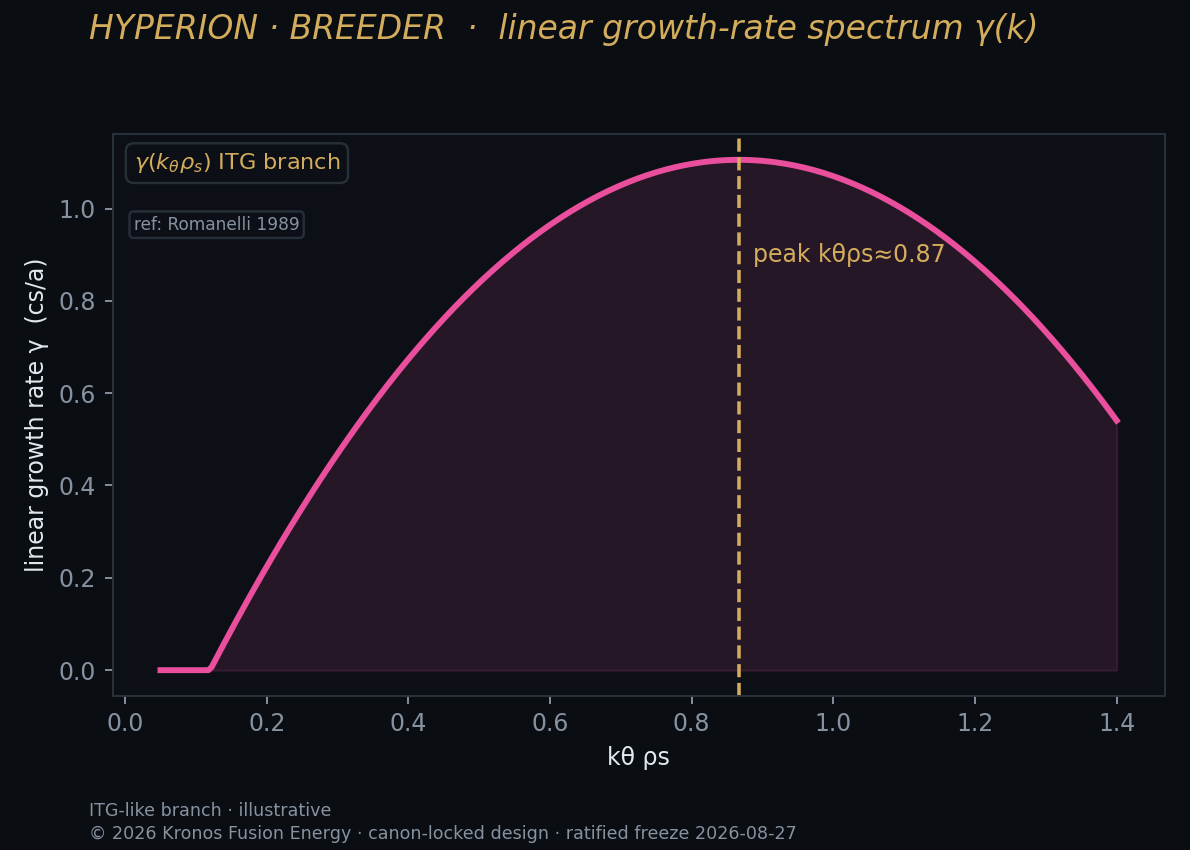
The negative-triangularity edge suppresses edge-localized modes; L1 monitors edge conditions to keep the breeder in the ELM-free regime it was designed for.
The ELM problem
Edge-localized modes (ELMs) are periodic edge instabilities that expel bursts of energy onto plasma-facing components. In high-confinement operation they can impose damaging transient heat loads on the divertor. The breeder's negative-triangularity design aims to access good confinement while avoiding the edge conditions that drive large ELMs — an ELM-free operating regime.
Control objective
L1's role is to keep the plasma inside that regime. This means holding the shape at δ = −0.30 and managing the edge pressure gradient and density so the edge does not cross into an ELMy state. The controller watches edge diagnostics for precursors that the regime is being approached at its boundary and adjusts fueling and shape to stay clear.
Edge monitoring
- Edge profile diagnostics (Thomson, ECE) for pressure gradient trends.
- Magnetics for edge MHD activity.
- Fueling and shape actuation to keep the edge in the safe window.
- Divertor loads watched via the thermal-protection loop.
Because the ELM-free regime is a physics operating point rather than a hardwired safety limit, its control is a quality-and-longevity objective: staying in it protects the divertor and preserves confinement. L3 models can predict drift toward the regime edge and pre-position the controls; L1 executes the corrections deterministically.
Why it protects hardware
An ELM-free edge means the divertor and first wall see steadier heat flux rather than damaging bursts, which is why edge control is tied to the plasma-facing thermal-protection loop and the divertor/expander control. Maintaining the regime is thus simultaneously a performance and a component-life strategy for the breeder.