Divertor and Expander Control
L1 manages the breeder divertor and burner end expander so exhaust heat and particles land on surfaces engineered to take them.
Handling the exhaust
Both machines must exhaust power and particles onto solid surfaces without exceeding material limits. The breeder uses a divertor at the X-point set by the shaping coils; the burner uses an end expander that fans the escaping flux over a large collector area. L1 controls the actuators that keep these exhaust regions within their thermal and particle envelopes.
Breeder divertor
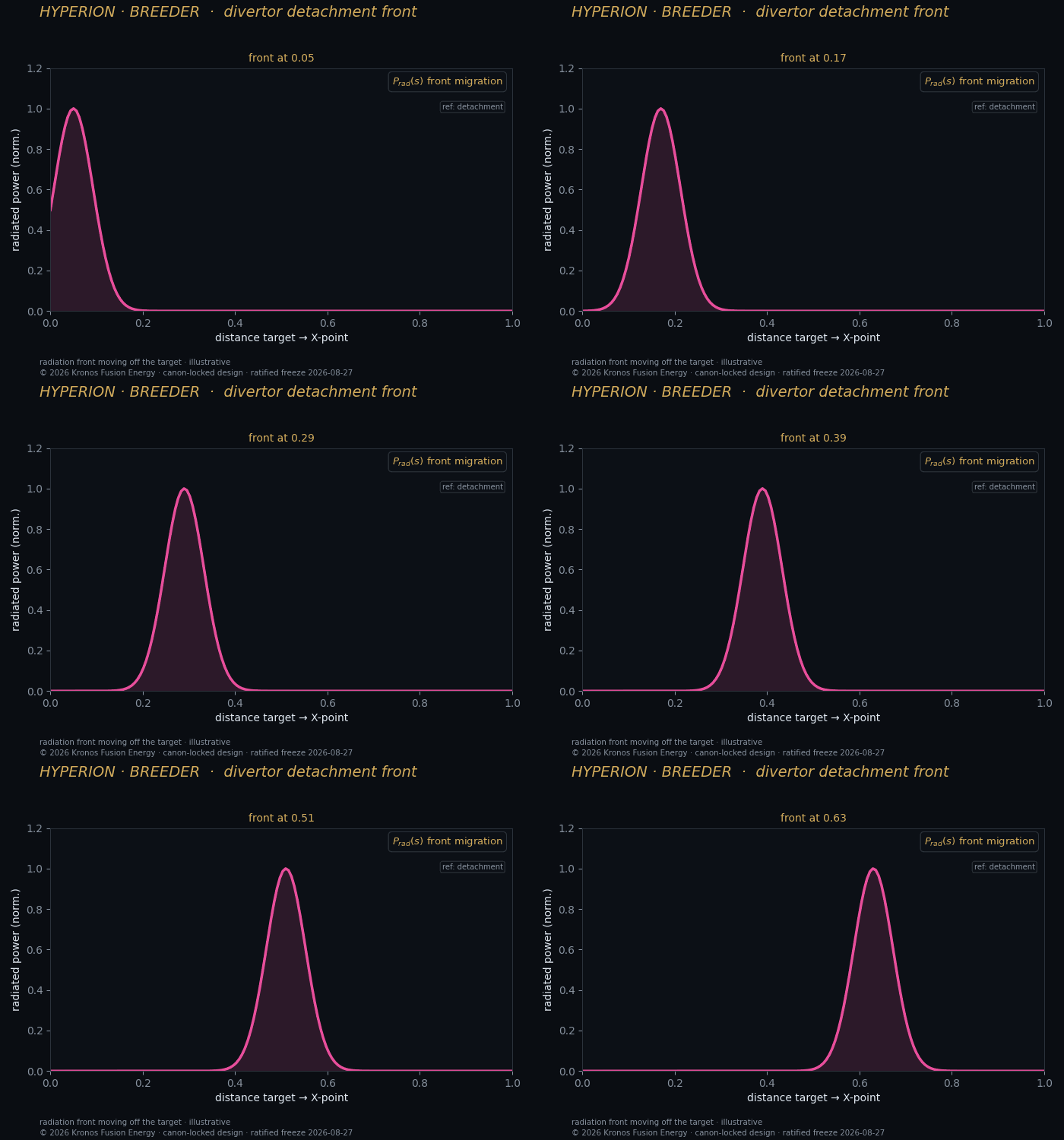
The divertor receives the scrape-off-layer power. L1 manages strike-point position (via the PF/shape system), impurity seeding (via gas valves) for radiative detachment, and neutral pressure, so peak heat flux stays within the target's limit. Detachment control — keeping the divertor plasma partially detached to spread heat — is a feedback task on radiated fraction and target temperature.
Burner expander
- Expander fans the mirror end-loss flux over a large area.
- Reduces peak heat and particle flux on the end collector.
- Interfaces with the DEC train that recovers escaping-ion energy.
- Monitored by the plasma-facing thermal-protection loop.
On the burner the expander is where axial end-loss meets hardware, and it is also where direct conversion collects. L1 coordinates expander conditions with the DEC loop so the same flux is both handled thermally and harvested electrically.
Protection coupling
Divertor and expander surfaces are watched by the plasma-facing thermal-protection loop; a rising surface temperature triggers fast mitigation (seeding, power reduction) before a limit is reached. Exhaust control thus sits between performance and protection: it keeps the machine productive while guarding the components that take its heat.