Disruption Simulation for the Breeder
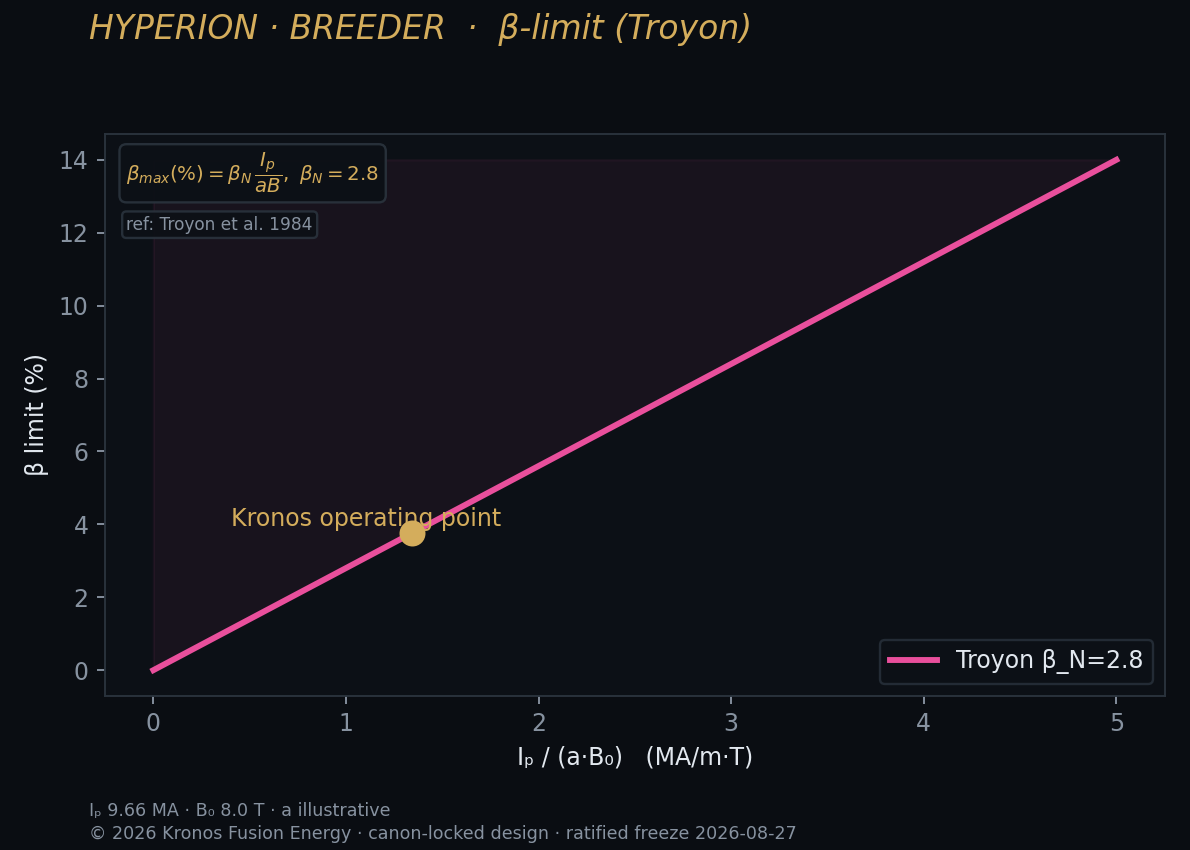
Simulating how Hyperion loses control so the twin can recognize precursors and the failsafe can act before damage occurs.
Studying failure to avoid it
A disruption is the sudden loss of plasma equilibrium and confinement in a tokamak, dumping stored magnetic and thermal energy into the structure. The breeder cannot afford uncontrolled disruptions, so L0 simulates them extensively: how they initiate, how fast they grow, and what signatures precede them. The goal is to make disruptions predictable and therefore avoidable.
The physics being modeled
Disruption simulation couples MHD instability growth, the thermal quench, the current quench, and, where relevant, runaway-electron generation. These solves are stiff and multi-scale, spanning fast MHD growth and slower current decay, which makes them among the more demanding coupled workloads on the reproducible core.
- Growth of tearing and locked modes toward a disruption
- Thermal quench energy deposition on plasma-facing components
- Current quench rate and induced vessel forces
- Vertical displacement events and halo currents
From simulation to precursor detection
The most valuable output is not the disruption itself but its precursors: the sub-threshold signatures in Mirnov coils, flux loops, and equilibrium drift that appear before the event. These labeled trajectories train the twin's anomaly-detection ensembles to flag a developing disruption early enough for the MPC agents to steer away.
There is a hard boundary here. The twin advises and the control plane steers, but the ultimate protection is the autonomous hardware failsafe at L1 that dumps a quench with zero AI dependency. Disruption simulation informs the AI layers and sets the thresholds, but it never becomes the sole line of defense; the failsafe is deterministic and independent.
Because the breeder is still design and validation until first tritium around 2030, these disruption studies run against simulated equilibria and synthetic diagnostics rather than real plasma. They are how Kronos builds a disruption-avoidance capability that is ready and validated before the first real pulse.