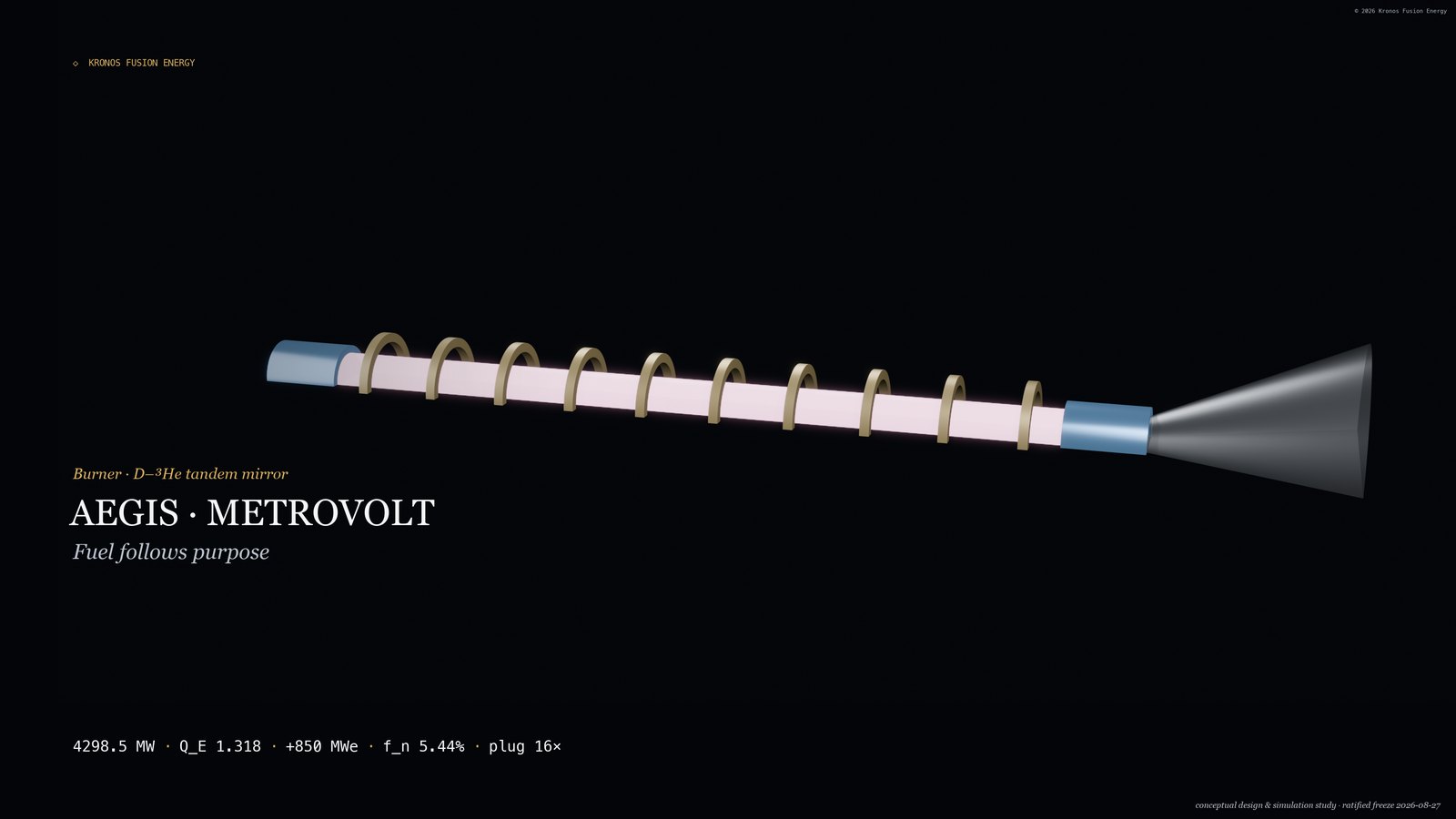
Plasma disruption.
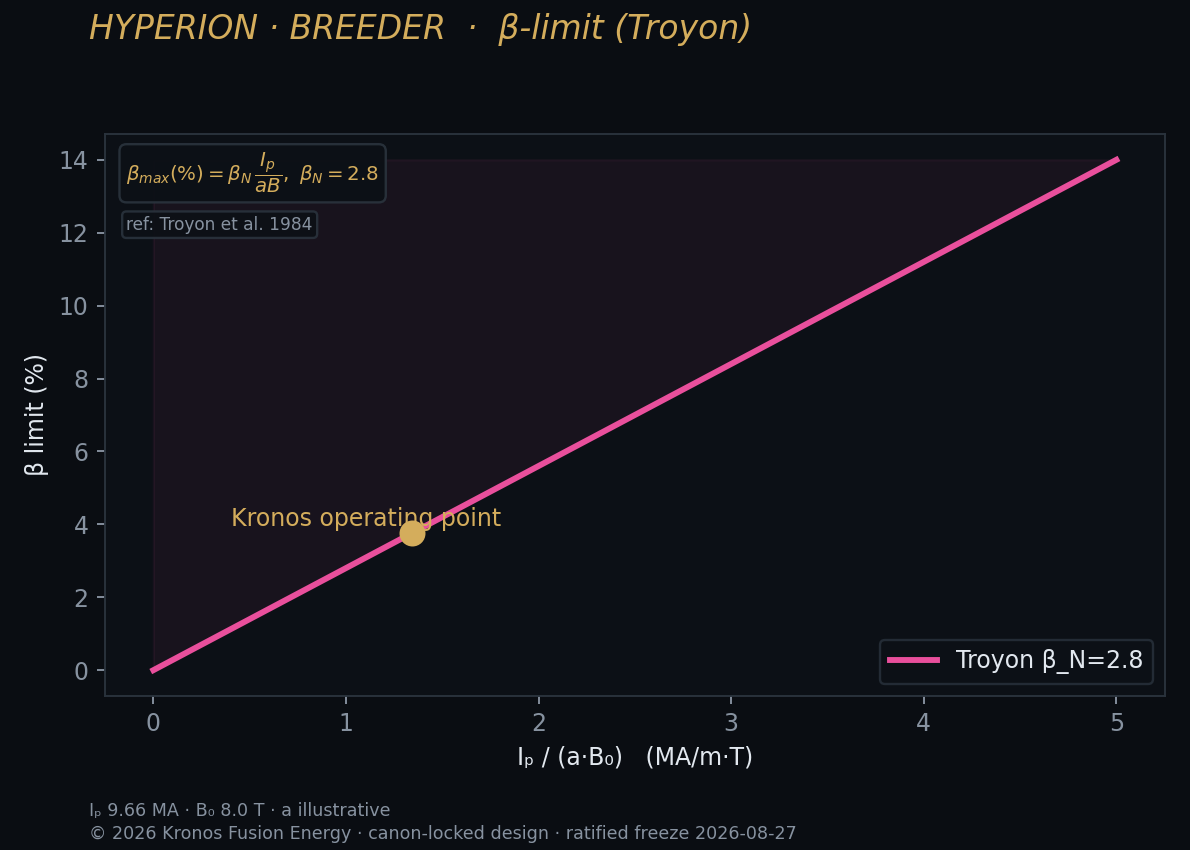
A disruption is a tokamak's worst routine hazard: confinement collapses and the plasma current crashes into the wall. One Kronos machine engineers against it — the other simply can't have one.
- What it is
- Sudden loss of confinement + current quench
- Risk
- Heat loads, forces, runaway electrons
- Breeder
- Manages disruptions (a tokamak)
- Burner
- Cannot disrupt — no plasma current
Because a tokamak stores energy in a large plasma current, losing control of that current is dangerous: a disruption collapses confinement in milliseconds, dumping heat and electromagnetic forces into the structure and possibly generating runaway electrons. The Kronos breeder, as a tokamak, must detect and mitigate them — a well-studied but real engineering task.
The burner removes the hazard by construction. With no plasma current and open field lines, there is nothing to disrupt — no current to quench, no runaway channel. It is one of the structural safety advantages of the mirror approach, and it is why the burner's failure modes look different from a tokamak's.