Learn › Questions people ask
FAQ · Products
How do MetroVolt and Aegis differ?
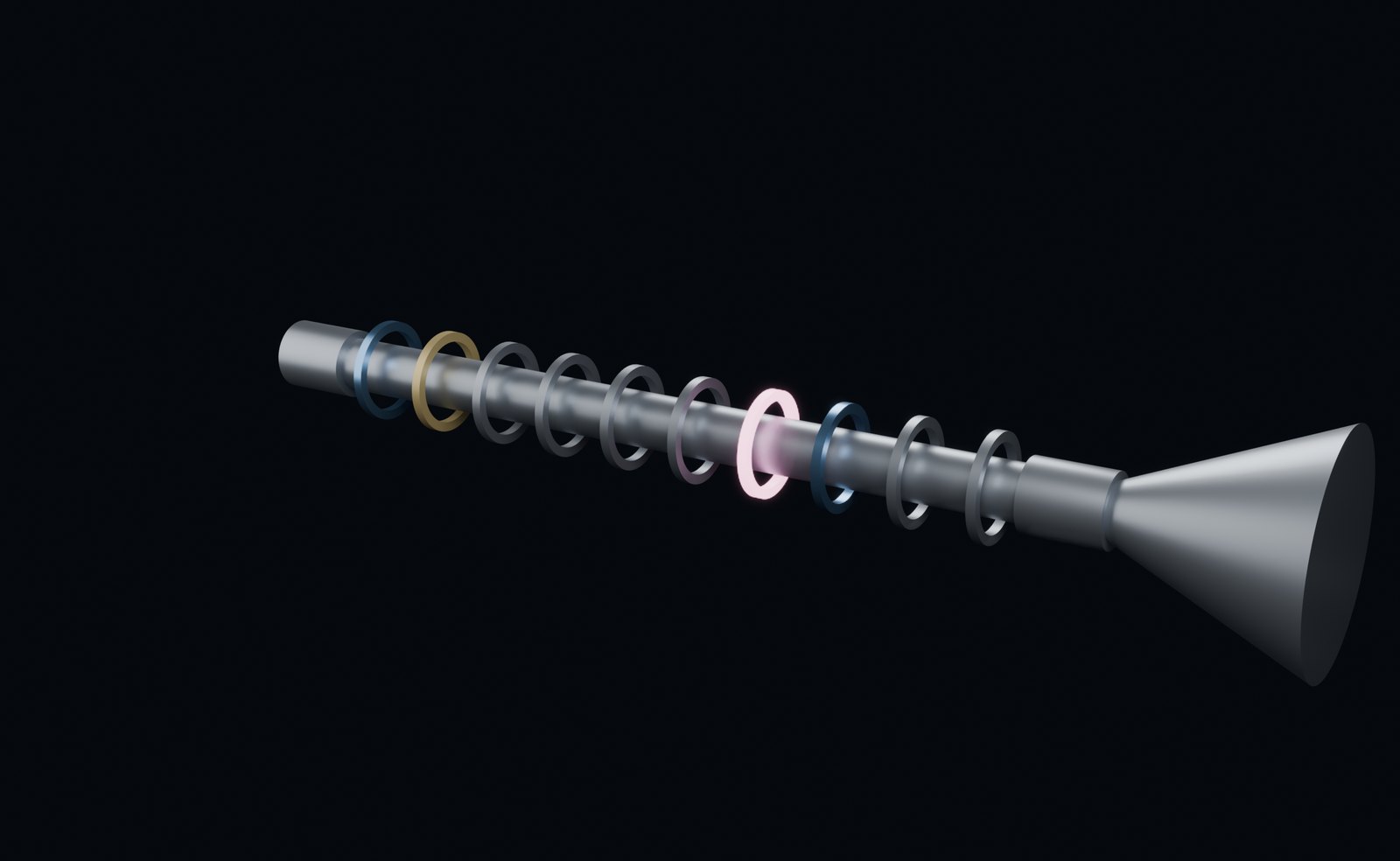
They are not two reactors — they are one burner built at two lengths, for two markets. The physics is identical; the size, the siting, and the customer differ.
- Same
- D–³He tandem-mirror physics · Q_E 1.31 · f_n 5.44%
- Aegis
- ≈ 440 m · +850 MWe · fixed defense installations
- MetroVolt
- ≈ 1400 m · +2832 MWe · cities & data centers
- Different
- Length, siting, market — not physics
Both machines are the Kronos tandem-mirror burner. Because the burner's net power scales with length while its gain and cleanliness do not, one design serves two very different jobs simply by being built longer or shorter.
| Aegis | MetroVolt | |
|---|---|---|
| Central-cell length | ≈ 440 m | ≈ 1400 m |
| Net electric | ≈ +850 MWe | ≈ +2832 MWe |
| Siting | Fixed-site installations | Cities, data-center campuses |
| Market | Defense / forward power | Commercial baseload |
Proving the closing physics once proves both, since they share it. Aegis is a fixed-site installation (the shipboard case is closed as not feasible); MetroVolt is the grid-scale machine.
Shared caveatBoth inherit the burner's plug-density requirement. Length does not relax it.