Learn › Questions people ask
Question
What is a fusion reactor made of?
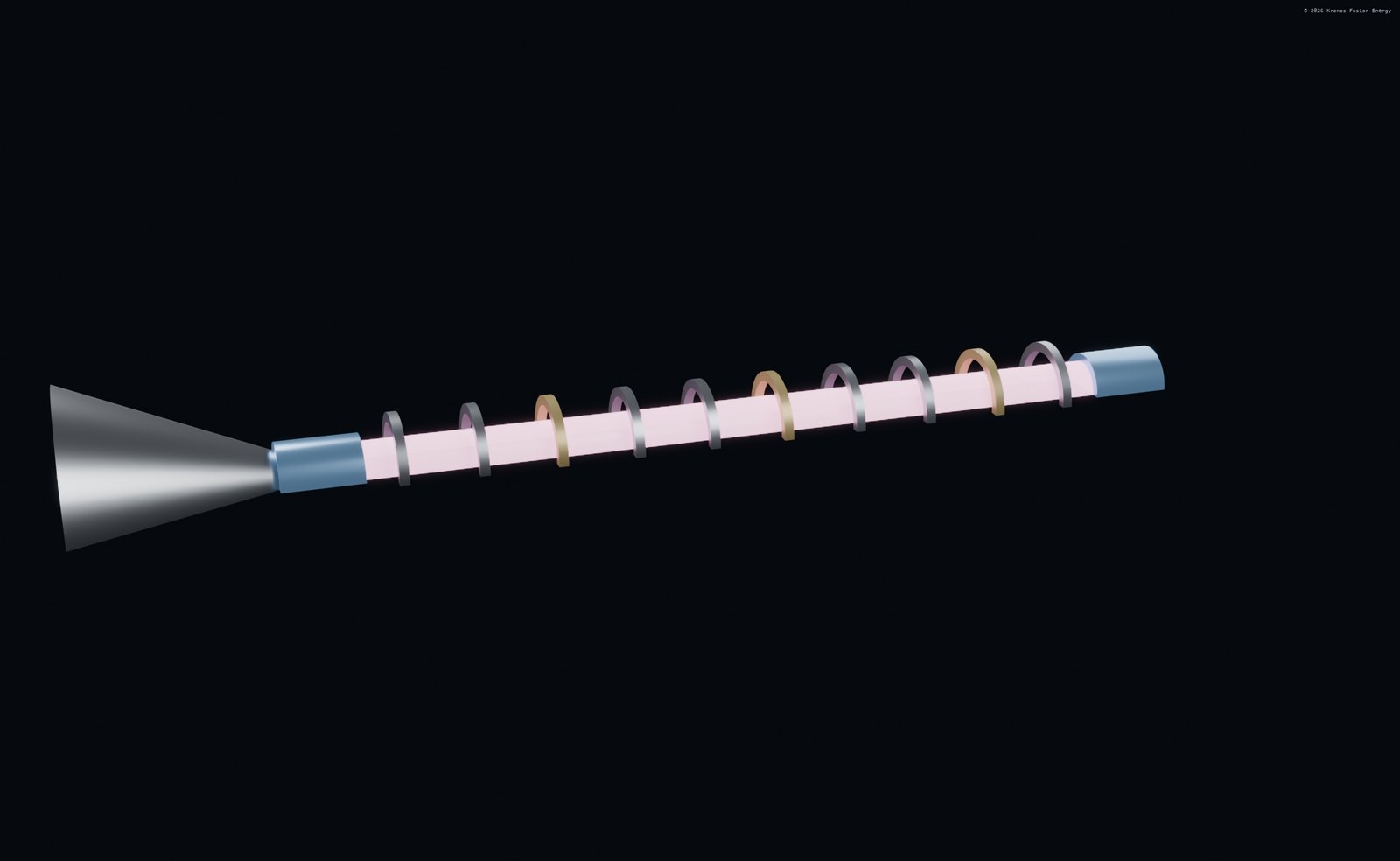
A fusion reactor is built around superconducting magnets, a refractory first wall, a vacuum vessel and shield, and — for Kronos — a direct-energy-conversion train.
The Kronos machine is a distinctive assembly: REBCO magnets, an HfC first wall, a vacuum vessel and shield, and a DEC train — with no breeding blanket.
Questions & answers
What are the main parts of a fusion reactor?
At the core: superconducting magnets that confine the plasma, a vacuum vessel holding the plasma's vacuum, a first wall and divertor facing the plasma, and a neutron shield protecting the magnets. Around them sit the heating and current-drive systems, the cryogenic plant, and — in Kronos — a direct-energy-conversion train instead of a steam turbine.
What materials does Kronos use?
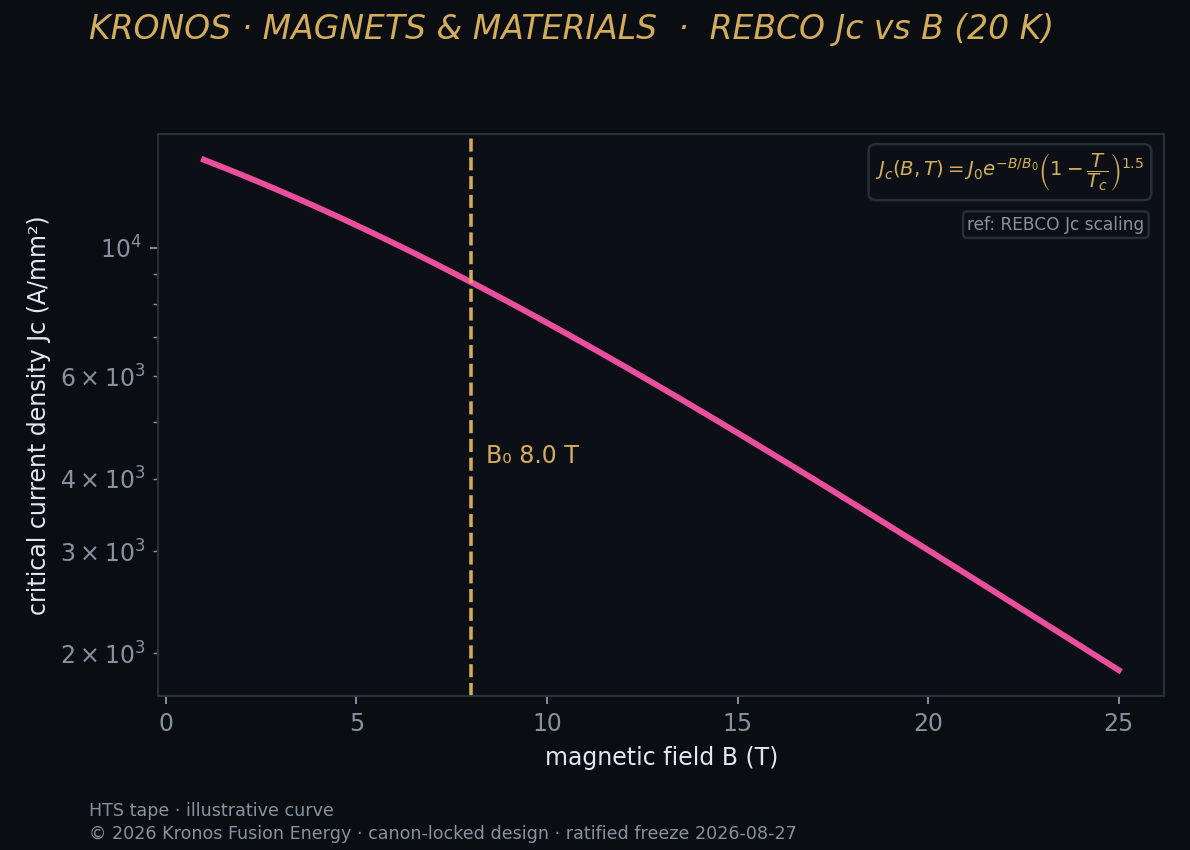
REBCO high-temperature-superconductor magnets, a laser-fused hafnium-carbide first wall, and a graded, demountable winding pack. Being low-neutron means lighter shielding and longer-lived components than a D–T machine needs.
What's notably absent compared with other fusion designs?
No lithium breeding blanket (Kronos breeds its own helium-3 in the plasma) and no large steam turbine hall (direct energy conversion replaces it). Both simplify the plant.