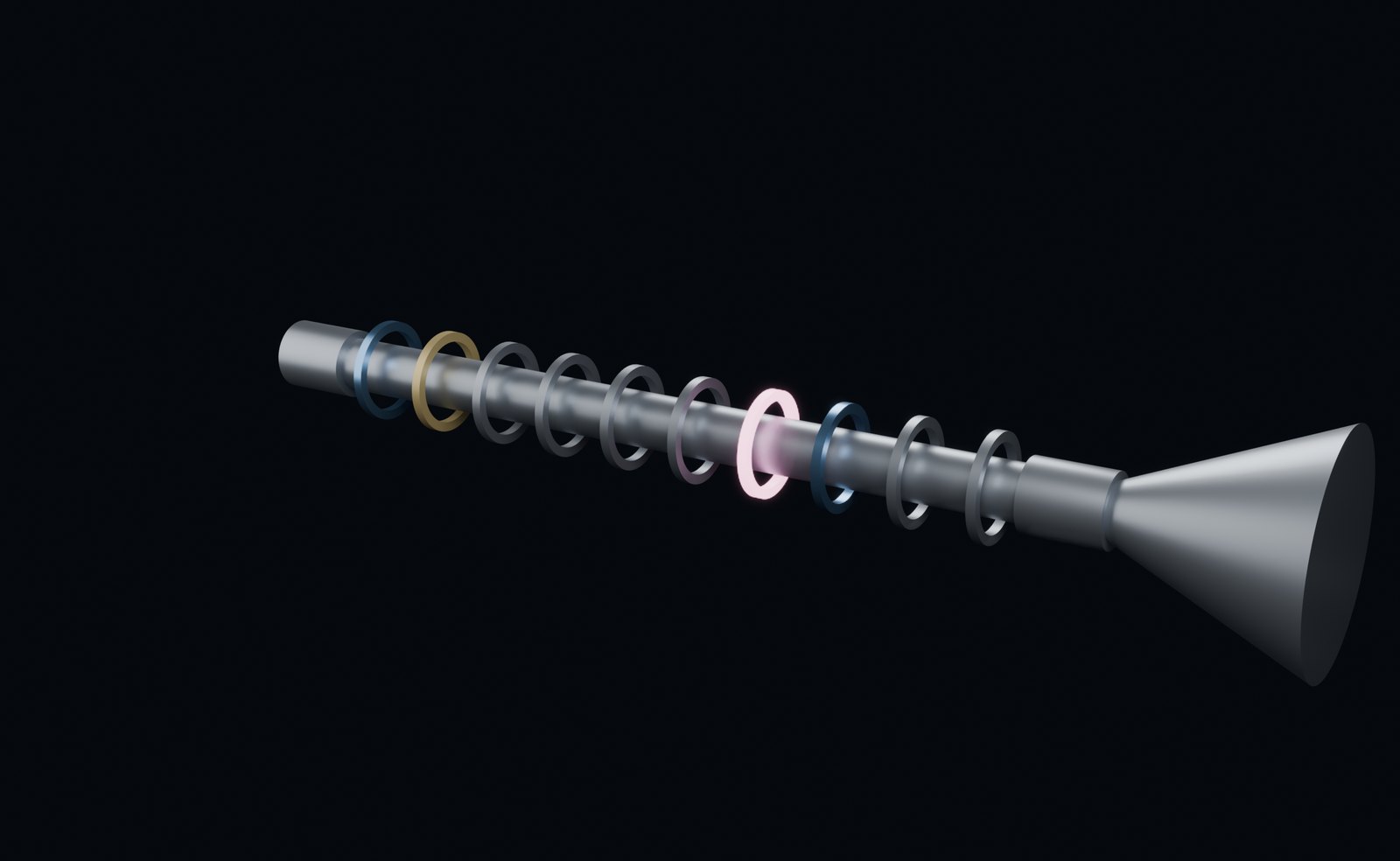
Deep Dive: The ³He Mass Balance
How Kronos breeds and recycles helium-3 in a staged, catalyzed cycle — and the honest ~33% fleet self-sufficiency gap the analyses report.
- Breeding
- Catalyzed D–D makes ³He + tritium (→³He)
- Recovery
- > 95% single-pass DIR (P4)
- Fleet self-sufficiency
- 80:20 mix leaves ~33% gap (S56)
- Implication
- Some external ³He or fleet balancing needed
The helium-3 supply question is answered at the level of a mass balance, not the market. In the Kronos staged, catalyzed cycle, deuterium–deuterium reactions breed helium-3 directly and via tritium decay, while direct internal recovery (> 95% single-pass) recycles unburned fuel — so the plant supplies much of its own ³He.
Kronos is honest about the accounting, though. The fleet self-sufficiency analysis (S56) finds that at an 80:20 fuel mix there is roughly a 33% gap — the plant breeds most, but not quite all, of its helium-3 needs, implying some external ³He or fleet-level balancing over time.
This is exactly the kind of quantified open item Kronos publishes rather than glossing: in-situ breeding carries the fuel argument and removes the crippling scarcity dependence, but the mass balance isn't perfectly closed, and the design says so. See the staged fuel cycle and where does helium-3 come from?