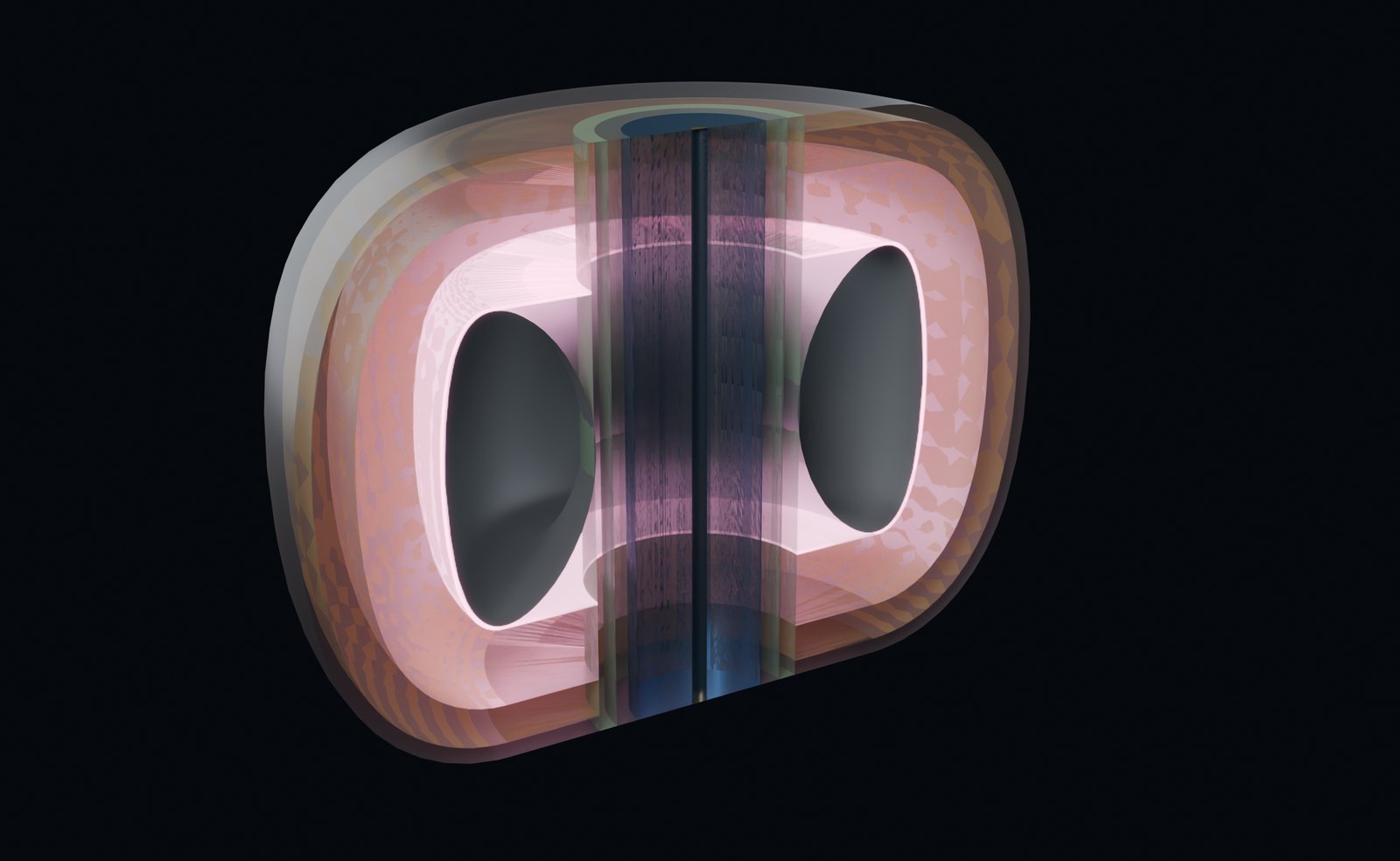
Deep Dive: The Divertor Challenge
Exhausting a fusion plasma's heat is one of the hardest engineering problems. Kronos relies on detachment and Super-X flux expansion — a demanding, honestly-stated requirement.
- Challenge
- Rocket-nozzle-class heat flux
- Approach
- Detachment at f_rad ≈ 0.998
- Geometry
- Super-X flux expansion F_x ~ 3–4×
- Status
- Beyond precedent — ranked open item
Handling the exhaust heat of a fusion plasma — concentrated where the open scrape-off layer meets the target — is among the toughest engineering problems in the field, with heat fluxes rivaling a rocket nozzle. Kronos's approach is aggressive and stated honestly.
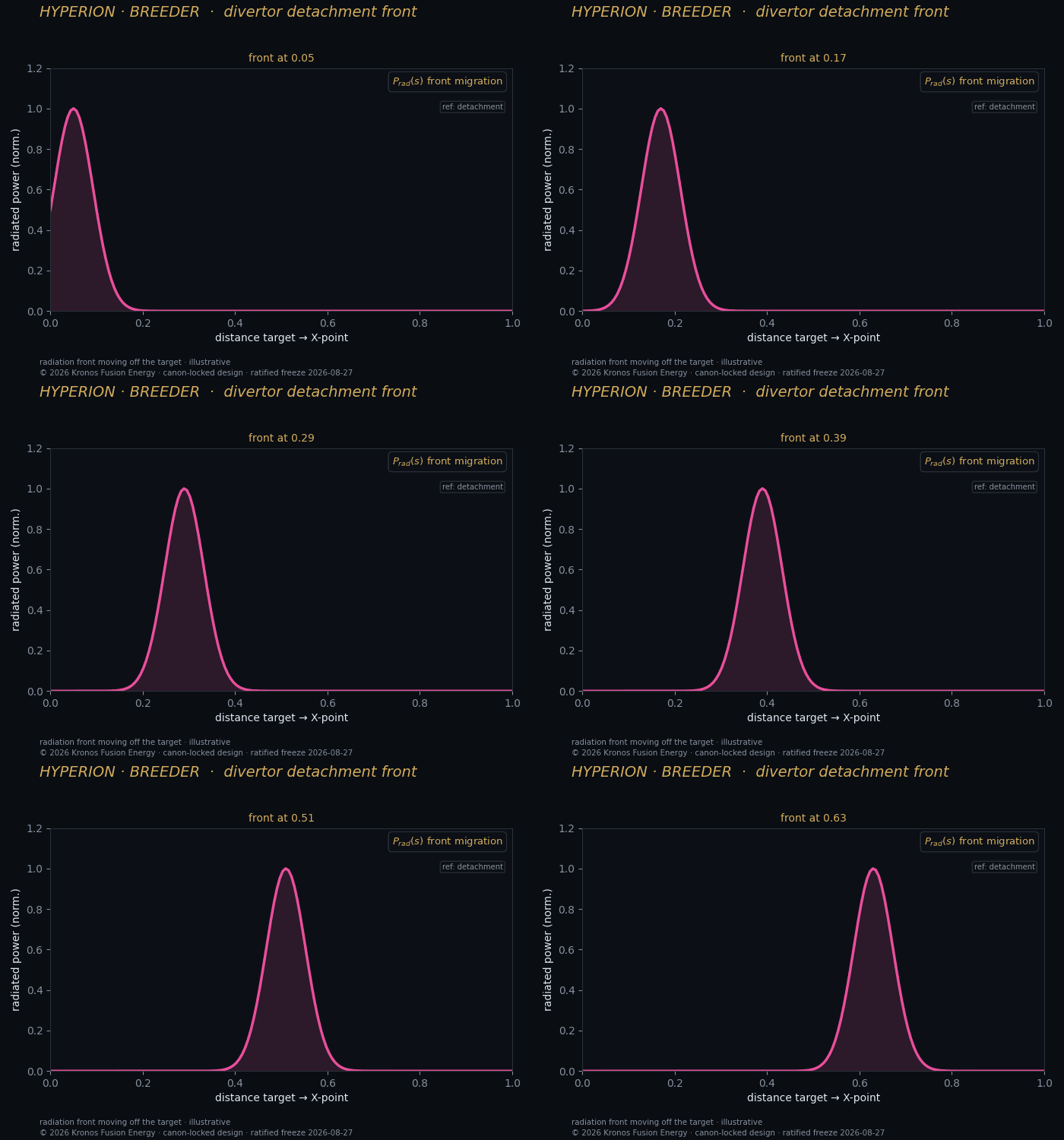
The strategy is detachment: radiating away almost all the exhaust power (a radiated fraction f_rad ≈ 0.998) before it reaches the target, using deliberate impurity seeding. This is aided by a Super-X geometry that spreads the heat over a long, flux-expanded leg. The good news: the flux expansion needed (F_x ~ 3–4×) sits within the 5–10× range MAST-U has demonstrated.
The honest caveat: f_rad ≈ 0.998 is beyond current operating precedent. The deposited Lengyel seeding analysis (S74) maps the window, with SOLPS-ITER as the Tier-2 check, and the divertor remains one of the design's ranked open items.