Plasma Startup & the Ramp Phase
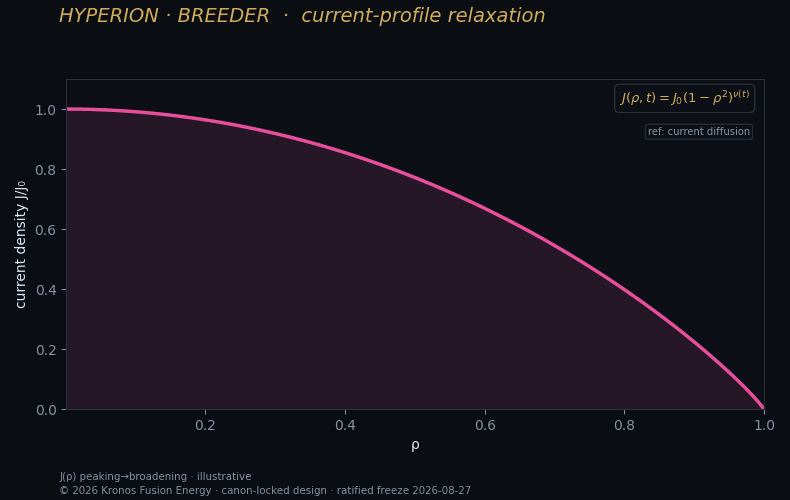
Starting a tokamak means breaking down the gas, ramping the current, and heating to burn — a choreographed sequence Kronos budgets flux and power for.
- Steps
- Breakdown → current ramp → heating → burn
- Driver
- Central solenoid flux, then current drive
- Budgeted by
- Startup / ramp flux demand (S05)
- Then
- Hand off to steady-state operation
Plasma startup is the choreographed sequence that takes a tokamak from cold vacuum to a burning plasma: the fuel gas is broken down into plasma, the plasma current is ramped up (largely by the central solenoid), and auxiliary heating brings it to fusion temperature. Each step has to stay within the machine's stability and hardware limits.
Kronos MetroVolt's deposited analyses include the startup and ramp flux demand (S05), which sizes how much of the solenoid's finite flux the ramp consumes before non-inductive drive and the bootstrap current take over for steady-state operation. Getting startup right in the space-limited center stack of a spherical tokamak is a real design constraint, not an afterthought.