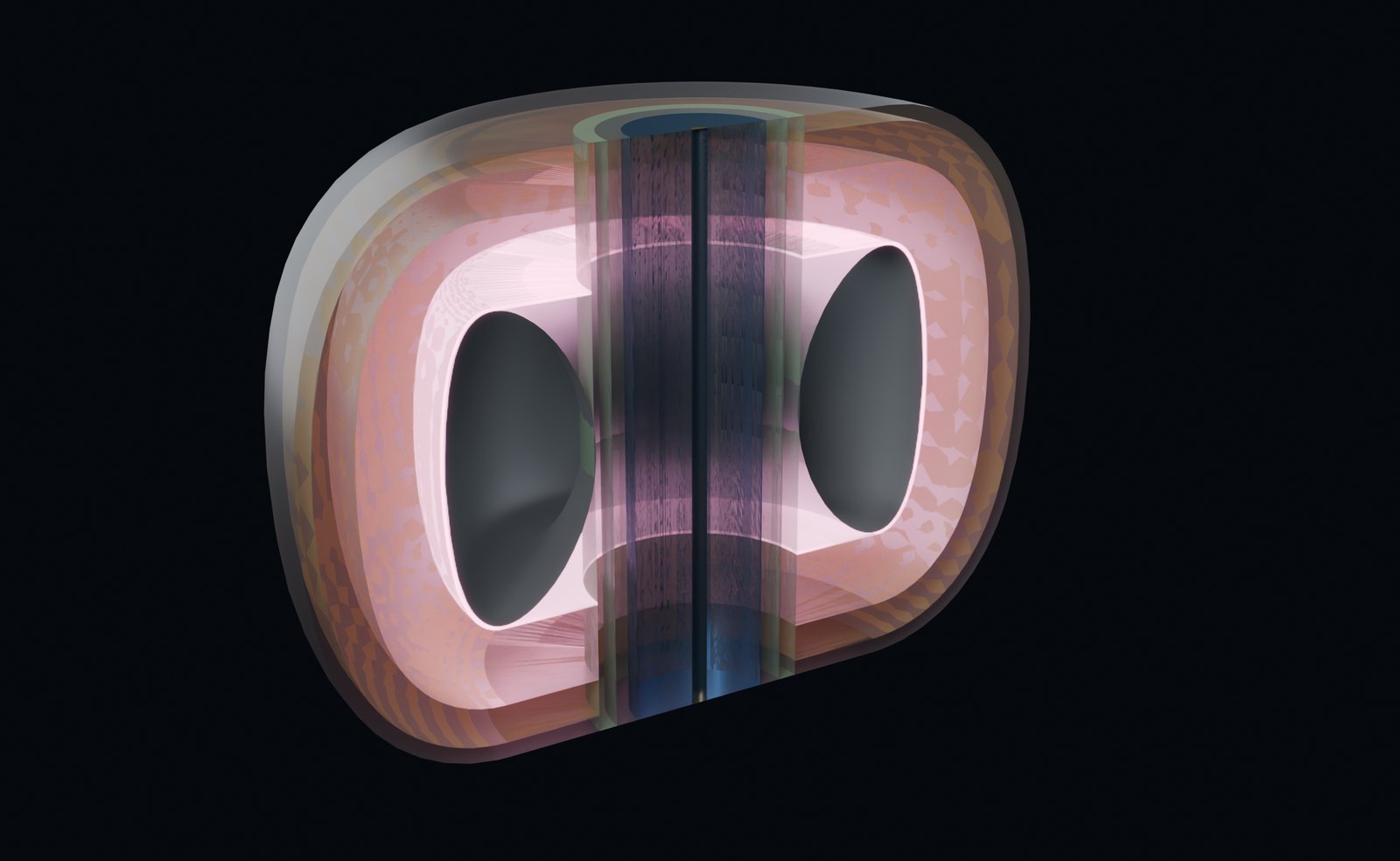
Plasma Rotation & Flow Shear
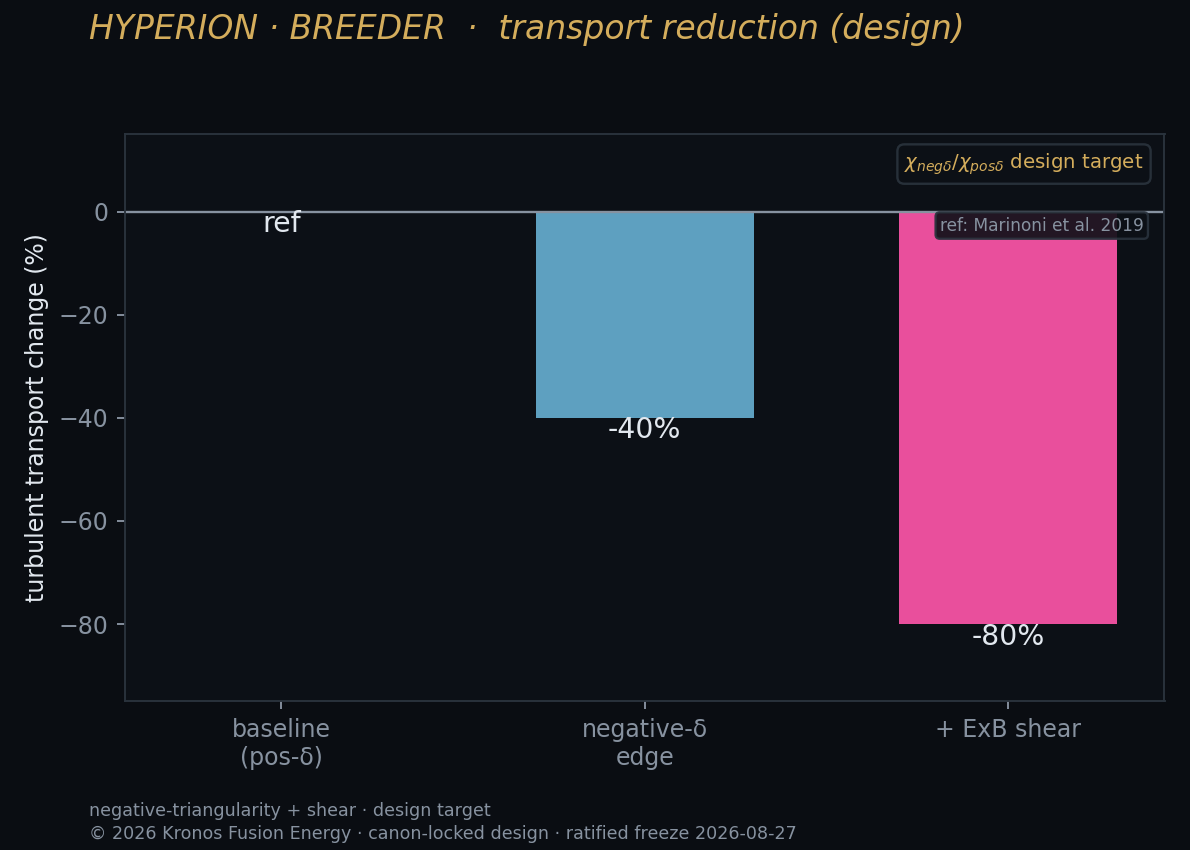
A rotating plasma with sheared flow suppresses turbulence and helps stabilize instabilities — a lever that supports the Kronos confinement and stability case.
- What
- Bulk toroidal rotation of the plasma
- Flow shear
- Velocity varying across the radius
- Benefit
- Suppresses turbulence; stabilizes the RWM
- Source
- Neutral-beam torque, intrinsic rotation
A fusion plasma can rotate as a whole, and when that rotation varies across the plasma radius — flow shear — it tears apart the turbulent eddies that carry heat outward. Sheared flow is one of the most effective natural suppressants of turbulence, and it also helps stabilize the resistive wall mode at high beta.
Rotation can be driven by the torque from neutral beams or arise intrinsically. For Kronos MetroVolt it is a supporting lever in both the confinement and the stability cases: flow shear complements negative triangularity in reducing transport, and plasma rotation is one of the inputs to the resistive-wall-mode feedback that lets the design push toward its Troyon beta limit.