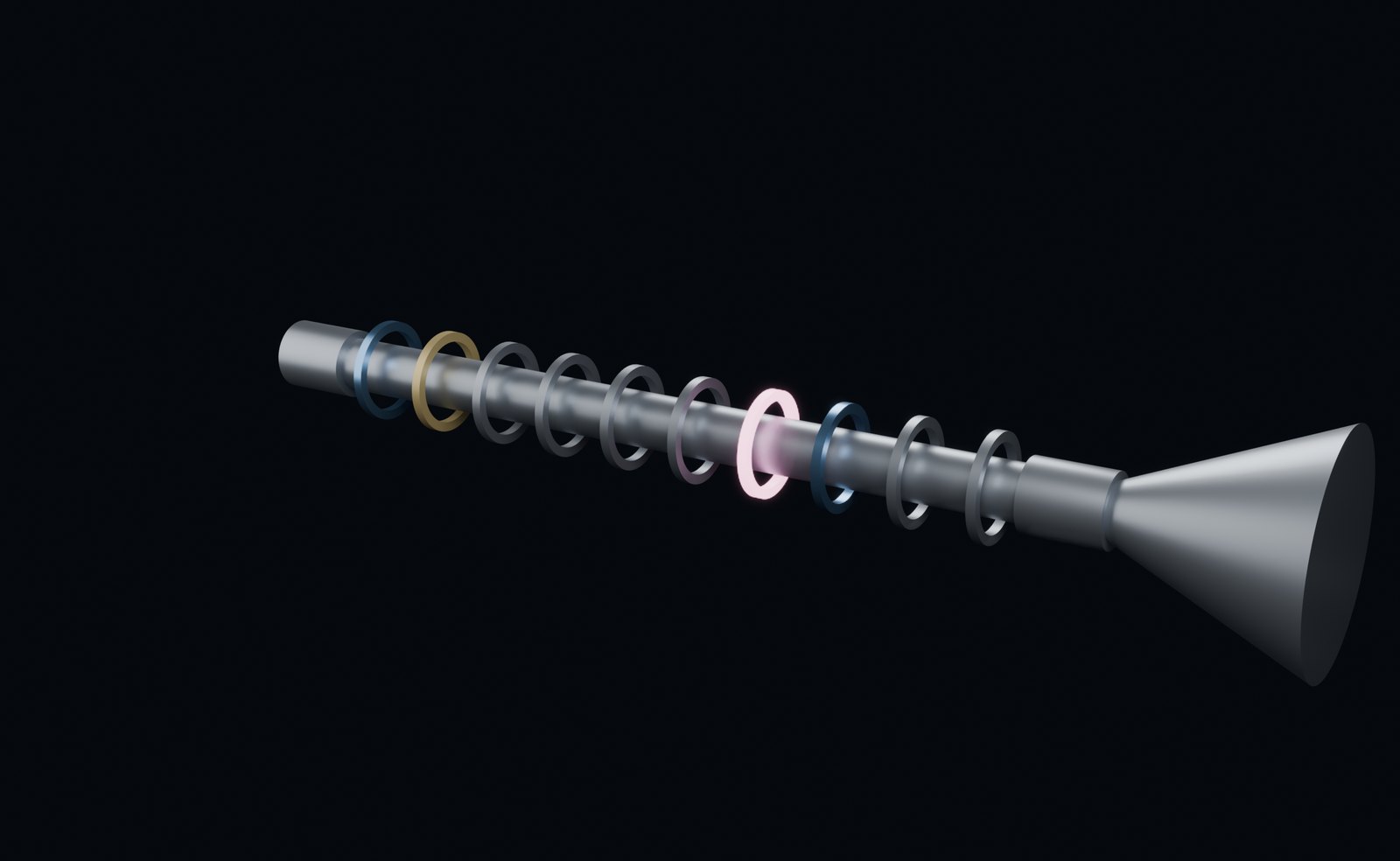
Deep Dive: Plasma-Facing Materials
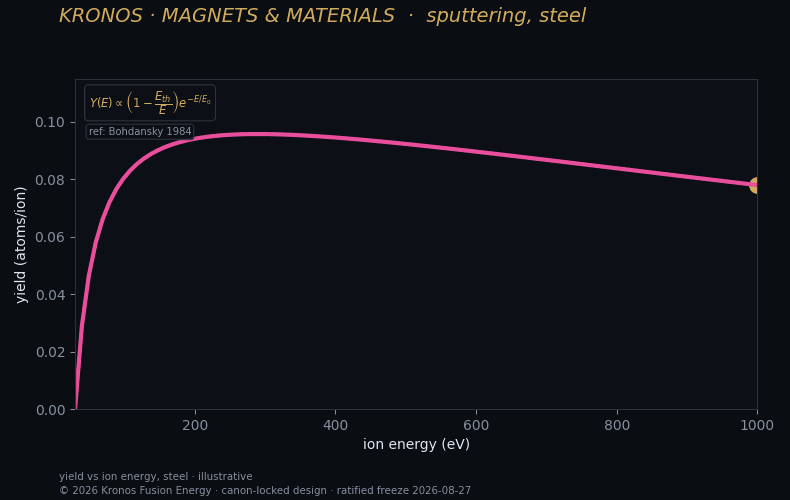
The first wall must survive heat, particle bombardment, and radiation for the plant's life. Kronos uses laser-fused hafnium carbide — and low-neutron fuel eases the burden.
- First wall
- Laser-fused hafnium carbide (HfC)
- Reflectivity
- R_wall ≥ 0.90 (recycles synchrotron)
- Challenges
- Heat flux, He implantation, fatigue, creep
- Advantage
- Low-neutron → far less damage
The plasma-facing components live in one of the harshest environments ever engineered — enduring intense heat flux, bombardment by escaping particles, and radiation, for the operating life of the plant. Material choice here is make-or-break.
Kronos uses a first wall of laser-fused hafnium carbide (HfC), chosen for its extreme melting point and for a high reflectivity (R_wall ≥ 0.90) that recycles synchrotron radiation back into the plasma. The deposited analyses cover the material threats — helium implantation and embrittlement (S12), high-temperature creep (S13), and structural fatigue (S14/S15).
The decisive advantage, though, is being low-neutron: with wall loading of 0.074–0.089 MW/m² (versus ~2–2.5 for D–T), the material damage rate is more than an order of magnitude lower, so the first wall lasts the full 30 full-power-years without replacement. Material endurance is far easier when the neutron flux is an order of magnitude smaller.