Learn › Concept encyclopedia
Concept
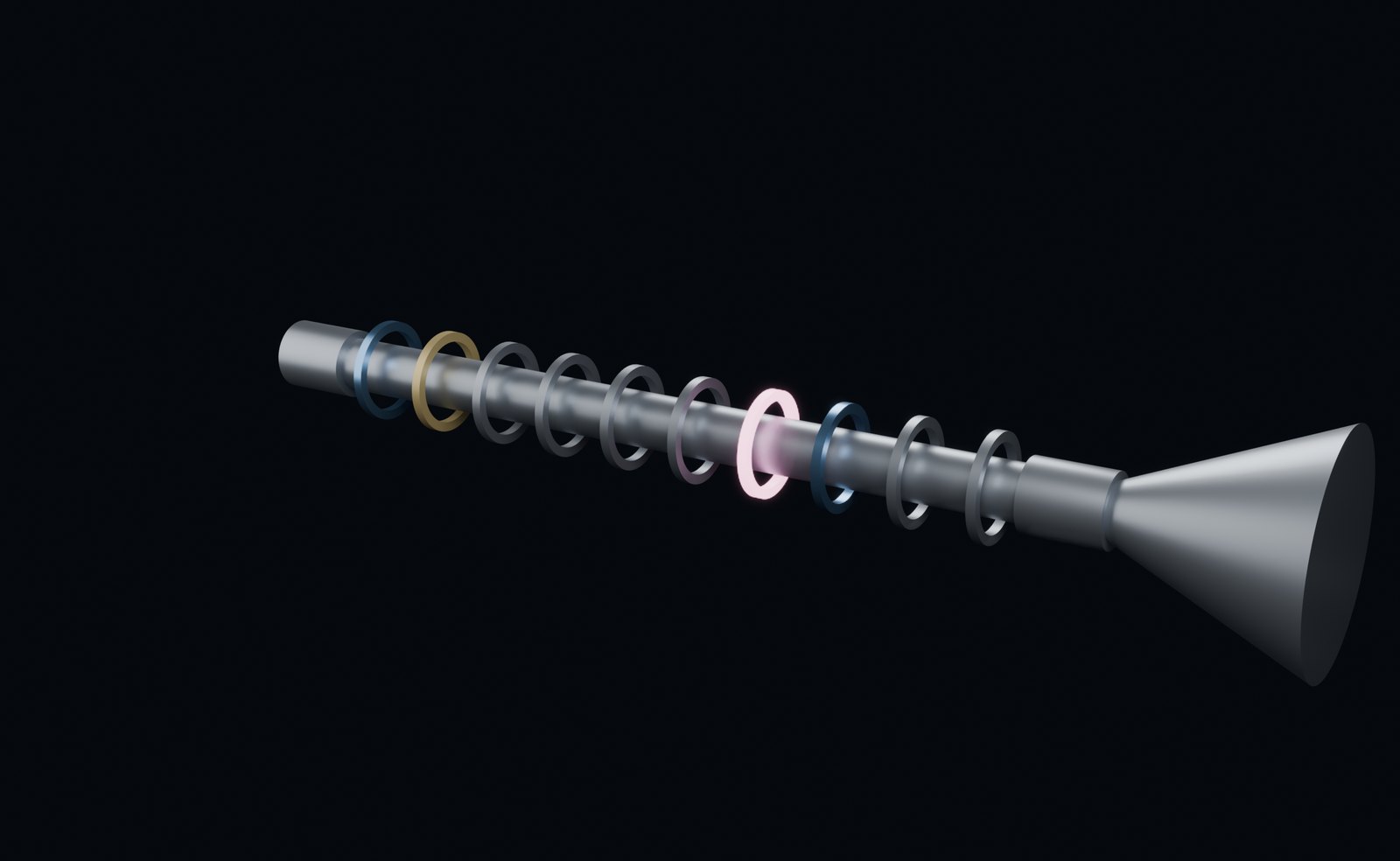
Negative Triangularity
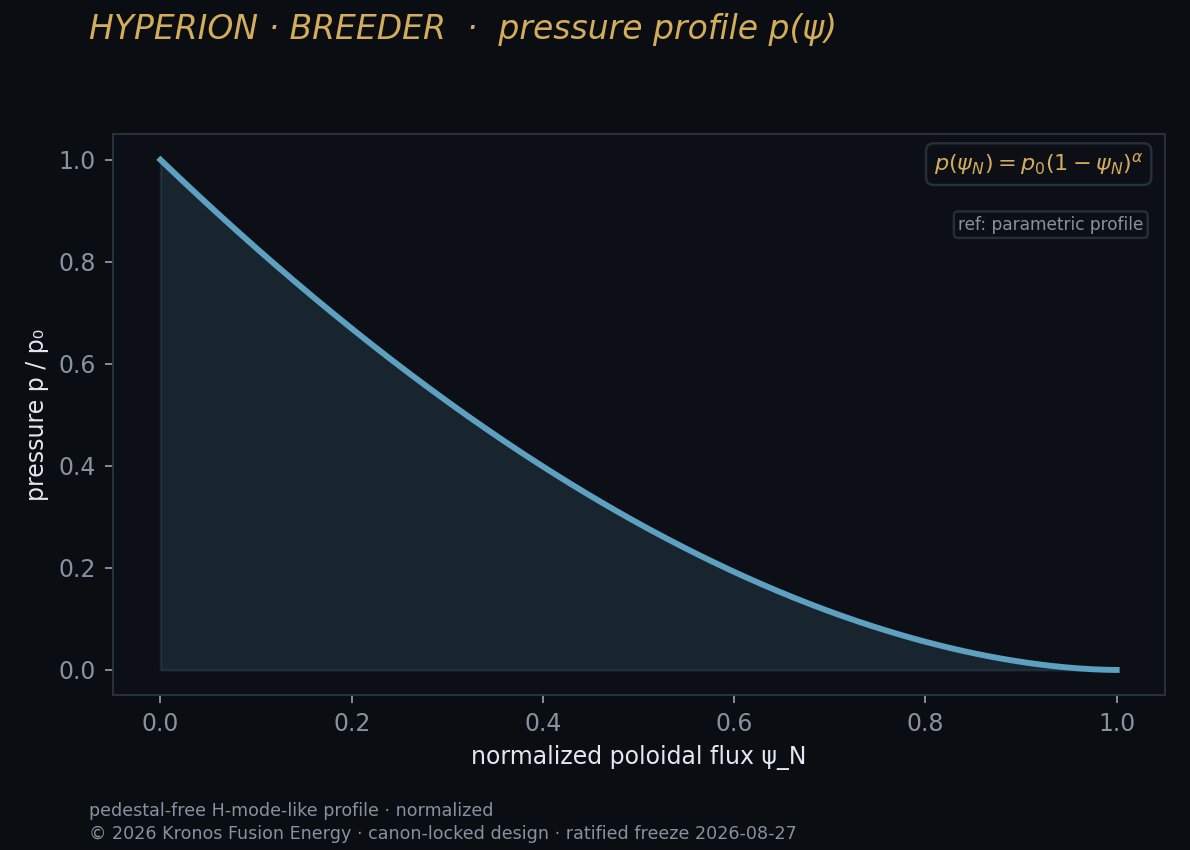
Negative triangularity (δ = −0.30) shapes the plasma cross-section to suppress edge instabilities — the design invariant at the core of the Kronos MetroVolt architecture.
- Symbol
- δ (triangularity)
- MetroVolt value
- −0.30 (held by X-point radial control)
- Why it matters
- ELM-free edge protects direct-energy-conversion grids
- Gate
- G1 confinement testbed
Triangularity (δ) describes how the D-shaped cross-section of a tokamak plasma is tilted. Conventional tokamaks use positive triangularity, which points the plasma's corners toward the central column. Negative triangularity reverses that shape. Kronos MetroVolt holds a strongly negative value, δ = −0.30, as a conserved design invariant.
Three properties make negative triangularity load-bearing for the Kronos design:
- An ELM-free edge. The negative-triangularity edge suppresses Edge-Localized Modes by demonstrated regime physics. A single reactor-scale Type-I ELM would deliver tens of megajoules in sub-millisecond bursts — lethal to electrostatic direct-energy-conversion collector grids. Negative triangularity and direct energy conversion are therefore co-dependent.
- Core confinement with an L-mode edge. The 2023 DIII-D campaign demonstrated H-mode-grade confinement (H98,y2 ≥ 1, βN > 2.5) with an L-mode-like edge intact. Kronos treats negative triangularity as recovering confinement an L-mode edge would otherwise forfeit — not as a bonus multiplier.
- Density headroom. Sustained non-disruptive operation up to 1.8× the Greenwald density anchors the plant's operating choice.
Honest gapThe required confinement multiplier is H98 = 2.28 on a profile basis at the Mode-D baseline (2.38 on the banking leg; the Mode-C-era 1.84/1.91 figures are labeled history), quoted from the reduced-order confinement chain and the DIII-D NT database — not yet from completed nonlinear gyrokinetics. The load-bearing verification is a nonlinear gyrokinetic study (CGYRO/GYRO), which remains outstanding and is the first thing the G1 testbed measures.