Learn › Questions people ask
Question
Isn't fusion always 30 years away?
That reputation came from decades of underfunding and overpromising. Kronos avoids date-promises entirely, advancing through pre-registered gates with published results.
Kronos treats the "always 30 years away" skepticism as fair, and answers it with structure instead of promises — the gate program and the Falsifiable Seven. See when will fusion power the grid?
Questions & answers
Isn't fusion perpetually '30 years away'?
It has that reputation for two reasons: fusion research was chronically underfunded against its own roadmaps, and some programs overpromised. Kronos's response is to not promise a headline date at all — it advances through pre-registered gates, each tied to a checkable prediction, and publishes results regardless of outcome.
What's actually different now?
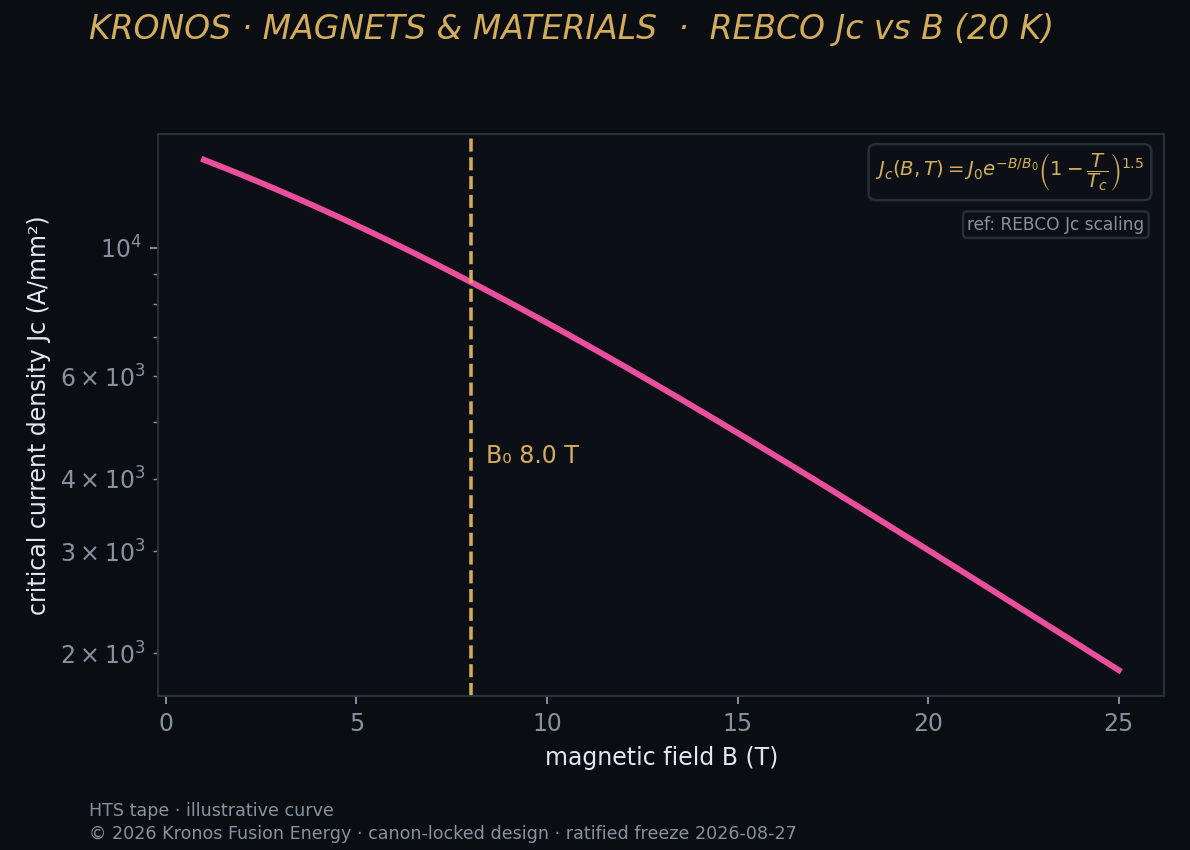
Two enabling technologies matured recently: high-temperature superconductors (REBCO), which allow compact high-field magnets, and demonstrated negative-triangularity confinement. These make compact, potentially economical designs plausible in a way they weren't a decade ago.
How can I judge Kronos's progress honestly?
By the gates. Rather than a slogan, Kronos publishes its Falsifiable Seven predictions and its gate structure, so progress can be measured against real milestones — the first being the G1 confinement testbed.