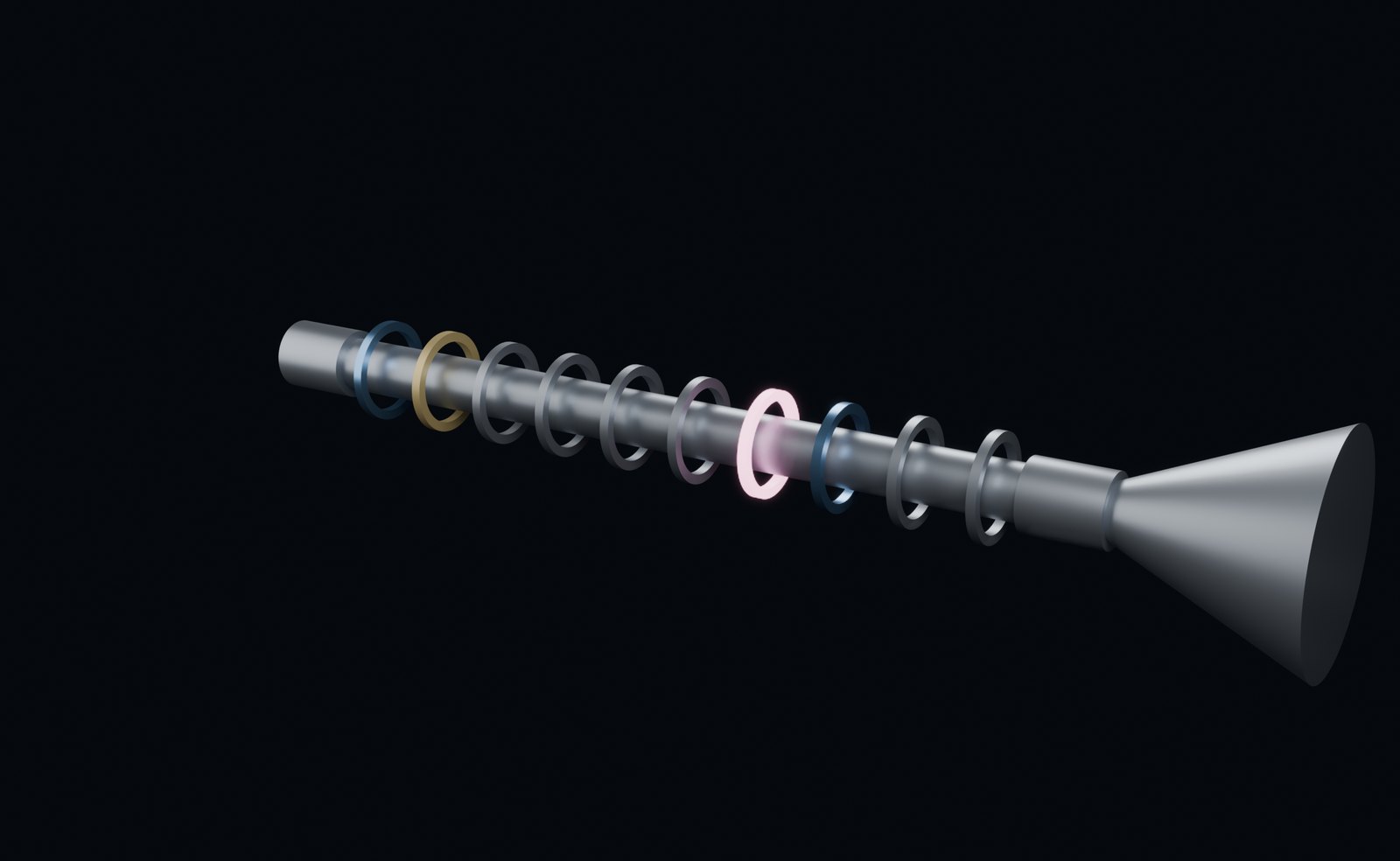
Is Kronos fusion aneutronic?
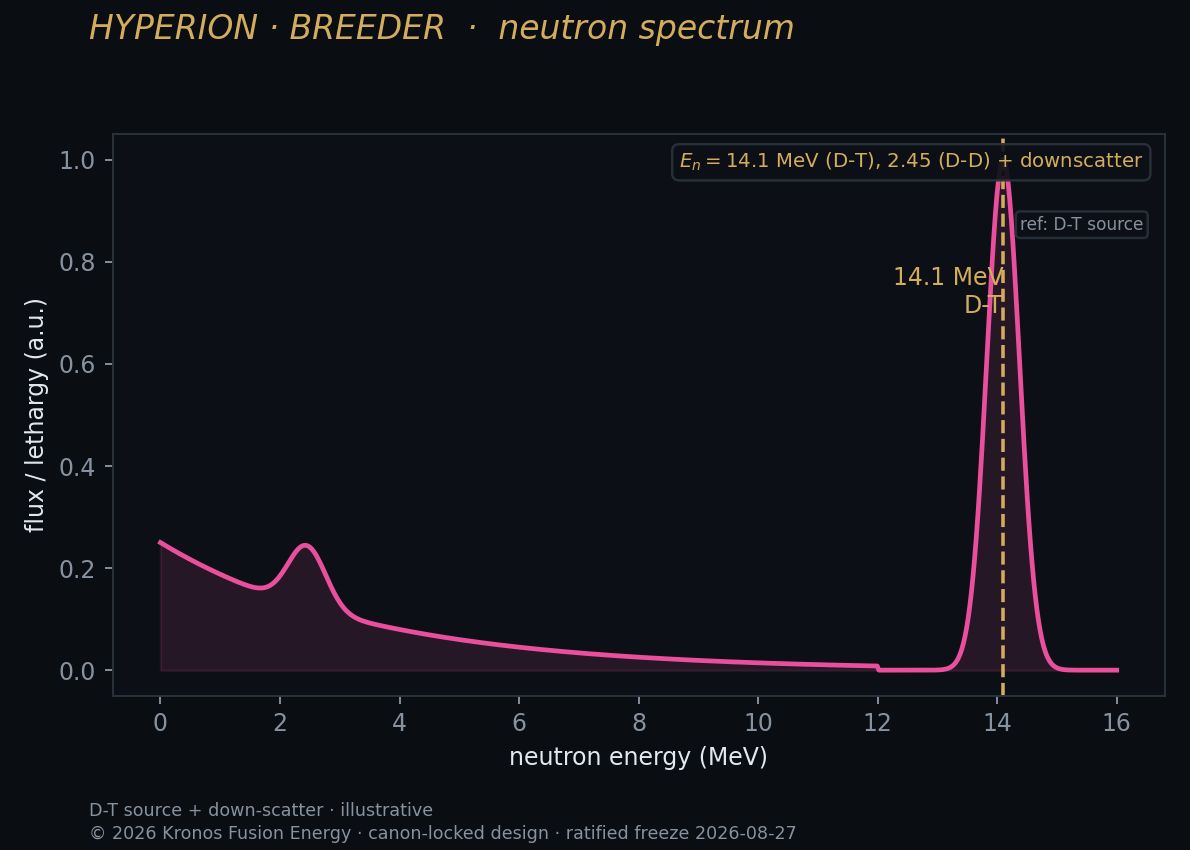
No — and Kronos is careful to say so. The machines are low-neutron, not aneutronic. One of them is deliberately neutron-rich, and the other keeps its neutron fraction small but never zero.
- Breeder (HYPERION)
- D–T — neutron-rich by design (it breeds)
- Burner (Aegis / MetroVolt)
- D–³He — low-neutron, f_n ≈ 5.44%
- Aneutronic?
- No — truly aneutronic operation does not close
- Wording
- 'Low-neutron, not aneutronic' — frozen
"Aneutronic" means a reaction that releases essentially no neutrons. Kronos does not claim it, for two separate reasons — one per machine.
The breeder is neutron-rich on purpose. HYPERION burns D–T, whose energy comes out mostly as neutrons — and that is the point: those neutrons breed the tritium (and, through decay, the helium-3) that the second machine needs. A breeder that avoided neutrons could not breed.
The burner is low-neutron, not zero-neutron. The D–³He burner runs at a neutron fraction of about 5.44% at its frozen closing point — small, and adjustable down to ~2.5% by adding helium-3, but not zero, because unavoidable D–D side reactions still make some neutrons. Pushing to a truly aneutronic mix (helium-3 fraction ≥ 0.45) does not close on the frozen configuration.
So the honest phrase, which Kronos freezes into the record, is "low-neutron, not aneutronic." It is a meaningful advantage — far less activation and a long first-wall life — stated without overclaiming.