Impurity Seeding & the Radiative Divertor
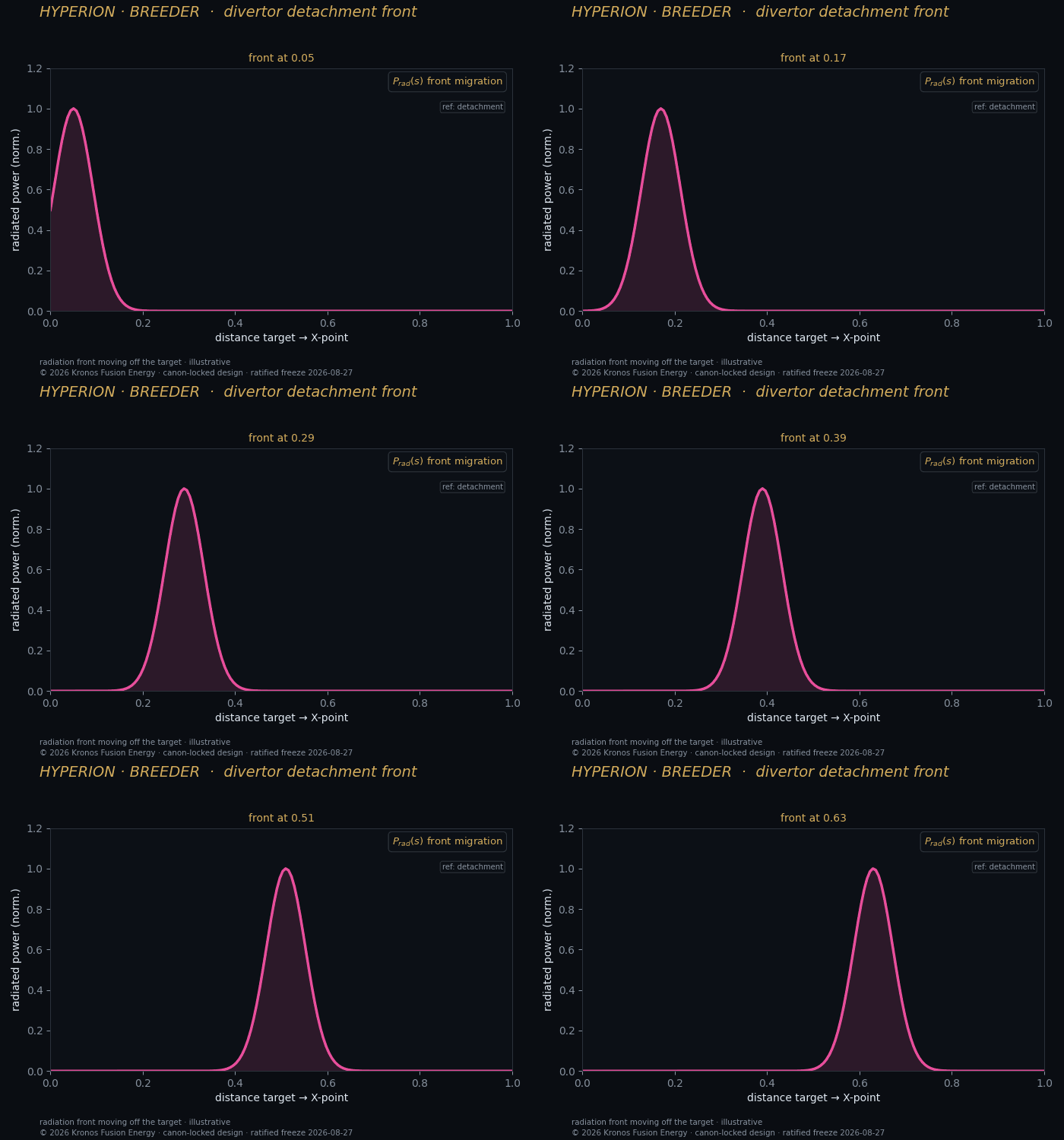
Deliberately adding trace impurities makes the exhaust radiate its heat away before it reaches the target — how Kronos achieves divertor detachment.
- What
- Injecting trace impurities to radiate exhaust power
- Goal
- Detachment — cool the plasma before the target
- Kronos need
- f_rad ≈ 0.998
- Analysis
- Lengyel seeding scan (S74)
Impurity seeding is the deliberate injection of small amounts of a radiating gas (such as nitrogen, neon, or argon) into the plasma edge. The impurities absorb energy and re-radiate it as light spread over a wide area, cooling the exhaust plasma before it strikes the divertor target — the basis of a radiative divertor and of detachment.
Kronos MetroVolt needs a very high radiated fraction (f_rad ≈ 0.998) to protect its divertor, and the deposited Lengyel impurity-seeding analysis (S74) maps the window where that is achievable. The honest finding: the detachment window is contingent on the Super-X flux expansion, with a higher-fidelity SOLPS-ITER calculation as the Tier-2 check. It is one of the design's ranked open items — a demanding but bounded requirement.