Learn › Questions people ask
Question

How does the reactor survive the heat?
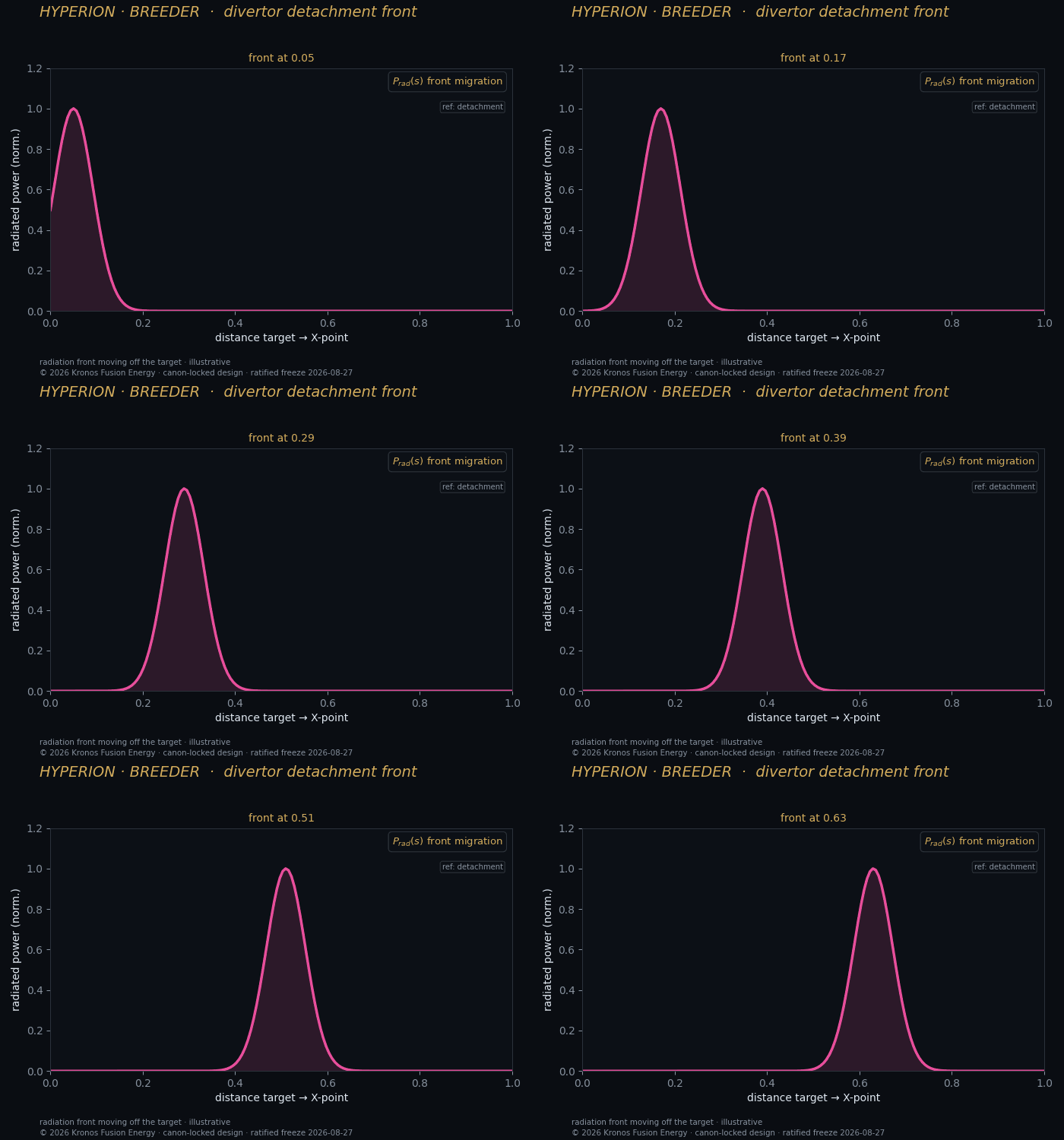
The plasma core never touches the wall. The wall handles a manageable edge flux, exhaust goes to the divertor, and low-neutron fuel limits material damage.
Surviving the environment is an engineering problem the design addresses with the divertor, the HfC first wall, and — fundamentally — the low-neutron fuel that keeps wall loading gentle.
Questions & answers
If the plasma is that hot, how does the machine not vaporize?
The core plasma is suspended in a magnetic field and never contacts the wall. What the wall actually sees is a far lower heat and particle flux at the plasma edge — demanding, but within what engineered materials can handle.
How is the exhaust heat managed?
Through the divertor, a dedicated exhaust region that spreads and radiates the power away (detachment), aided by a Super-X geometry. Kronos's first wall is laser-fused hafnium carbide, chosen to endure the flux and to reflect synchrotron radiation.
Does the low-neutron fuel help here?
Yes. Fewer neutrons means far less material damage and activation, so components last longer — the Kronos first wall is expected to last the full 30 full-power-years without replacement.