High-Temperature Superconductivity
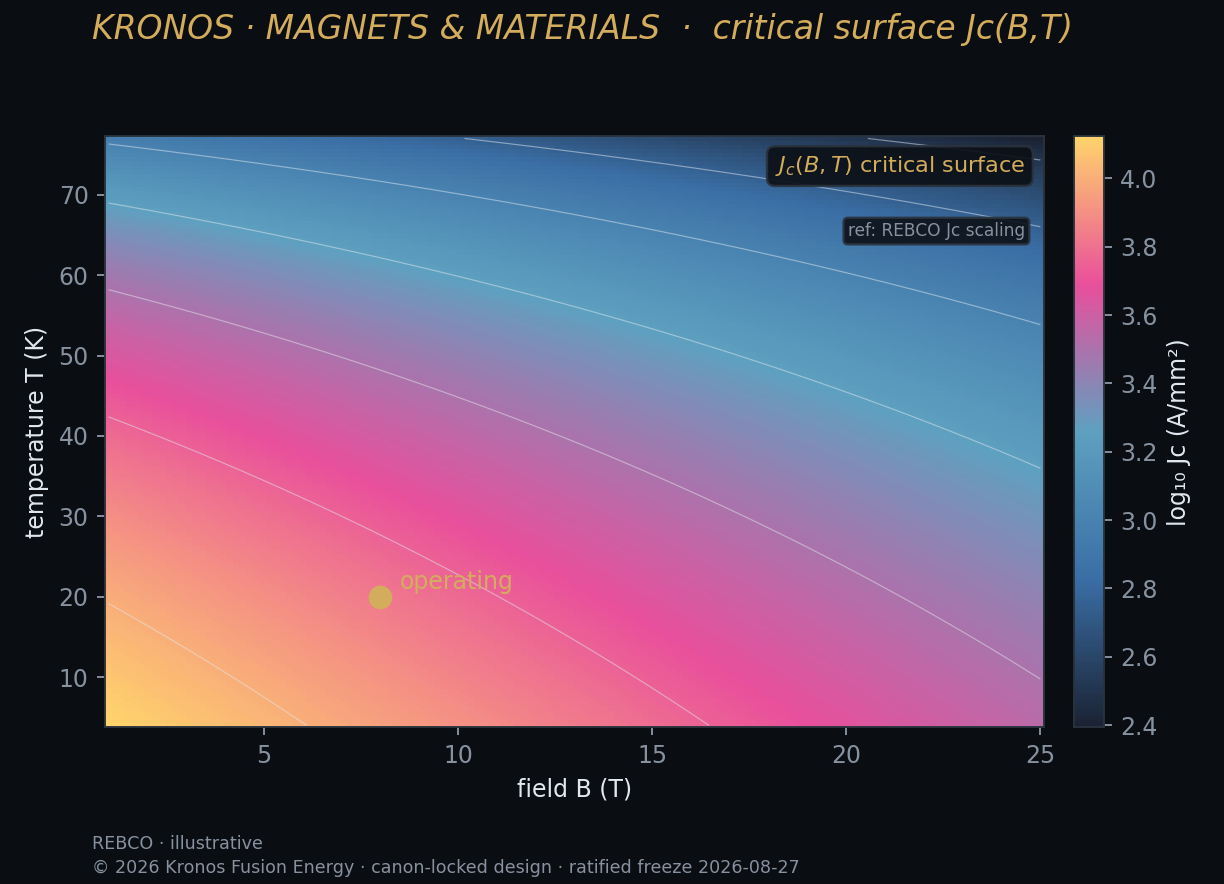
HTS materials carry lossless current at high field and warmer temperatures than old superconductors — the breakthrough enabling compact high-field fusion.
- What
- Lossless current at higher temperature and field
- Kronos material
- REBCO coated-tape HTS
- vs LTS
- Nb₃Sn/NbTi cap out near 12–20 T
- Operating temp
- ~20 K (vs ~4 K for LTS)
High-temperature superconductivity (HTS) refers to materials that carry electric current with zero resistance at temperatures — and, crucially, magnetic fields — far beyond the reach of conventional low-temperature superconductors like NbTi and Nb₃Sn. The relevant advantage for fusion is field: HTS keeps superconducting at fields where older conductors quench.
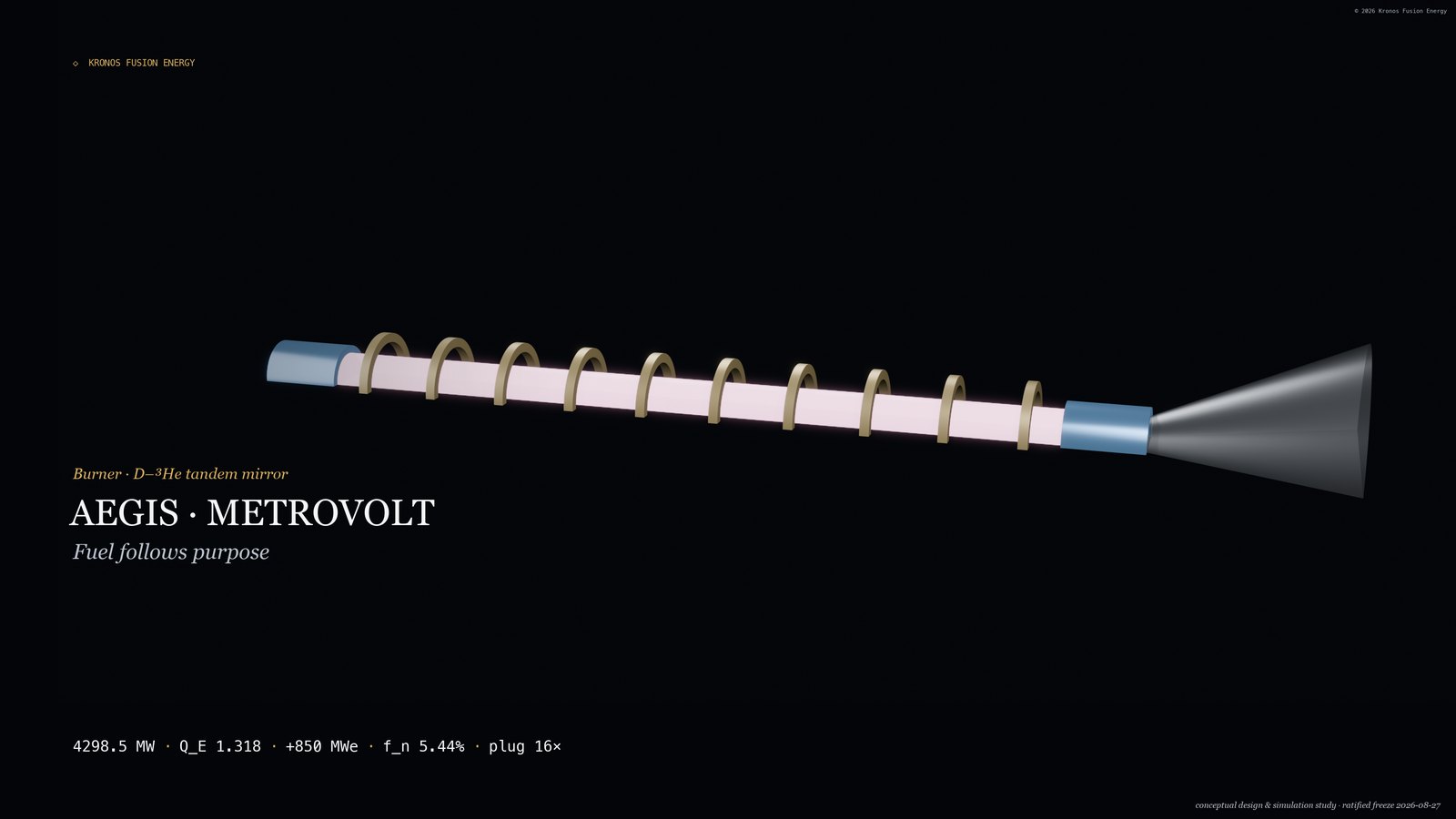
Kronos MetroVolt uses REBCO coated tape, an HTS material, to reach a 26.49 T peak field that a low-temperature magnet simply could not sustain. HTS also operates at a more forgiving ~20 K rather than ~4 K, easing the cryogenic system. Without HTS, the whole premise of a compact high-field tokamak — high power density in a small machine — would not exist.