Learn › Concept encyclopedia
Concept · Fuels
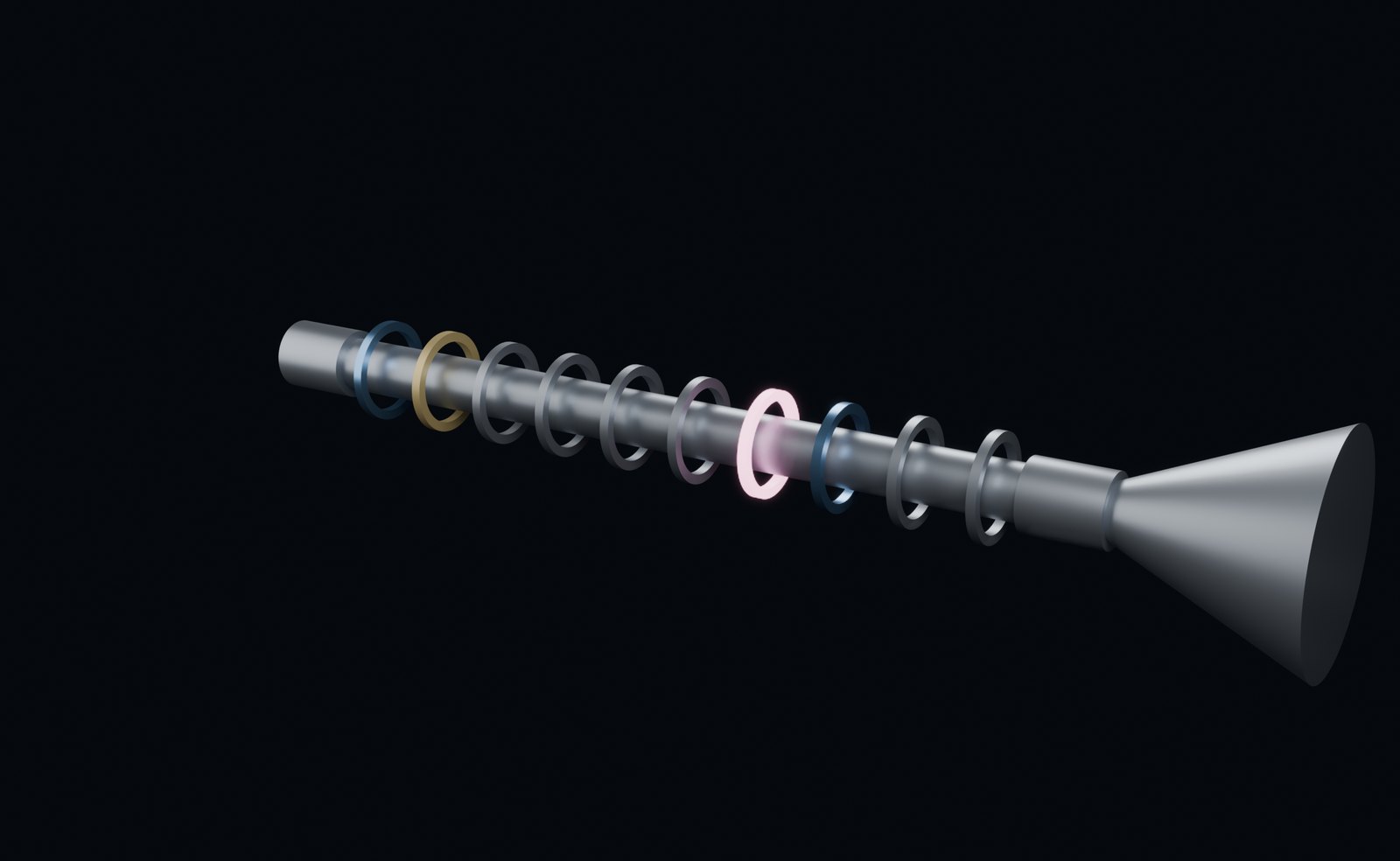
The fuel 'generations' — and where Kronos sits.
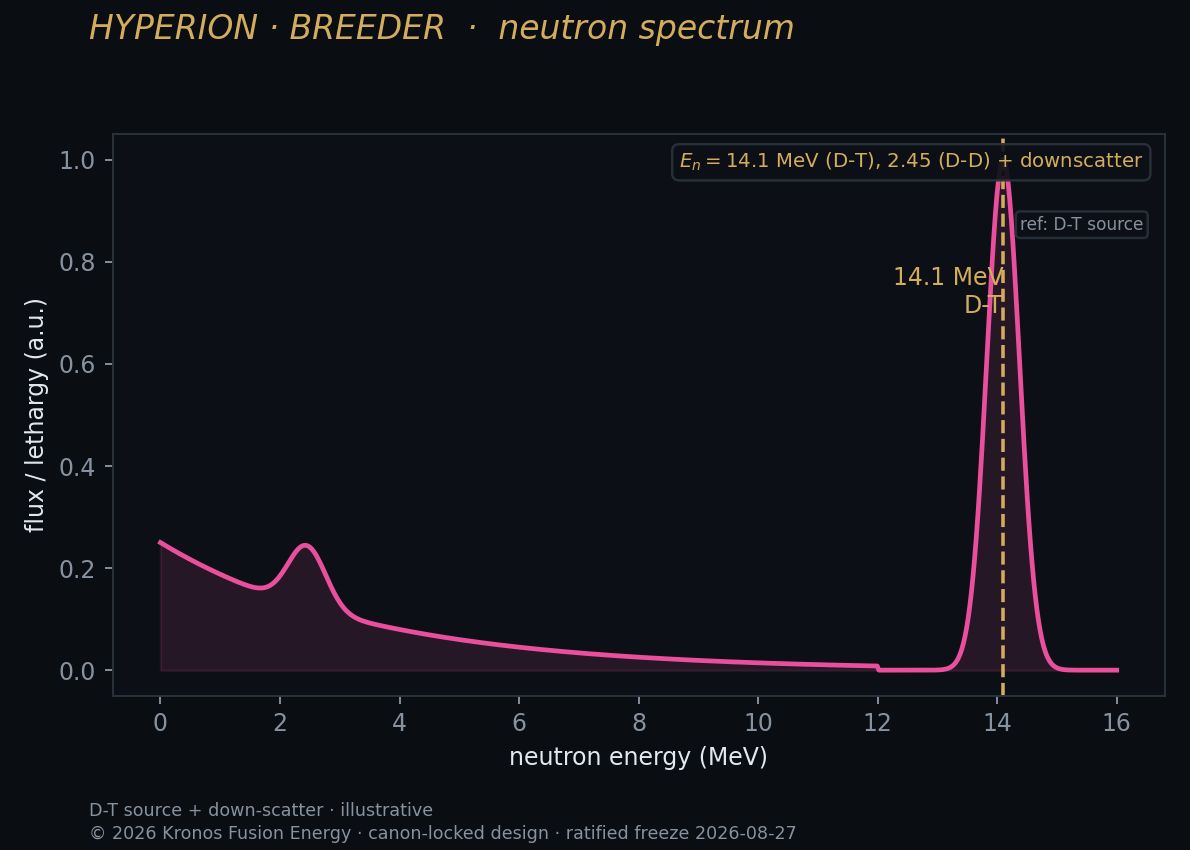
Fusion fuels are often ranked by how clean they burn: D–T, then D–³He, then aneutronic p–¹¹B. Kronos runs the first two — and is careful not to claim the third.
- Gen 1 — D–T
- Neutron-heavy; easiest to ignite — the breeder
- Gen 2 — D–³He
- Low-neutron; hotter — the burner
- Gen 3 — p–¹¹B
- Aneutronic; hardest — not a Kronos product
- Kronos runs
- Gen 1 and Gen 2
Fusion fuels can be arranged as a cleanliness ladder: from neutron-heavy D–T, through low-neutron D–³He, to aneutronic p–¹¹B. Cleaner fuels release more of their energy as charged particles and fewer neutrons — but they are harder to ignite, needing far higher temperatures.
- Gen 1 — D–T
- Neutron-heavy, lights first. Kronos uses it deliberately in the breeder — the neutrons breed the next fuel.
- Gen 2 — D–³He
- Low-neutron, needs ~90 keV. This is the burner fuel (f_n ≈ 5.44%).
- Gen 3 — p–¹¹B
- Aneutronic but the hardest of all. Not a Kronos product — it does not close on the burner design.
So Kronos runs Gen 1 and Gen 2, and describes its machines as low-neutron, not aneutronic. p–¹¹B stays on this ladder as the field's long-run ideal, not as a Kronos endpoint.
Correction noteEarlier text presented Kronos 'staging up' the ladder to a p–¹¹B endpoint. Superseded: Kronos runs D–T (breeder) and D–³He (burner); p–¹¹B is not pursued.