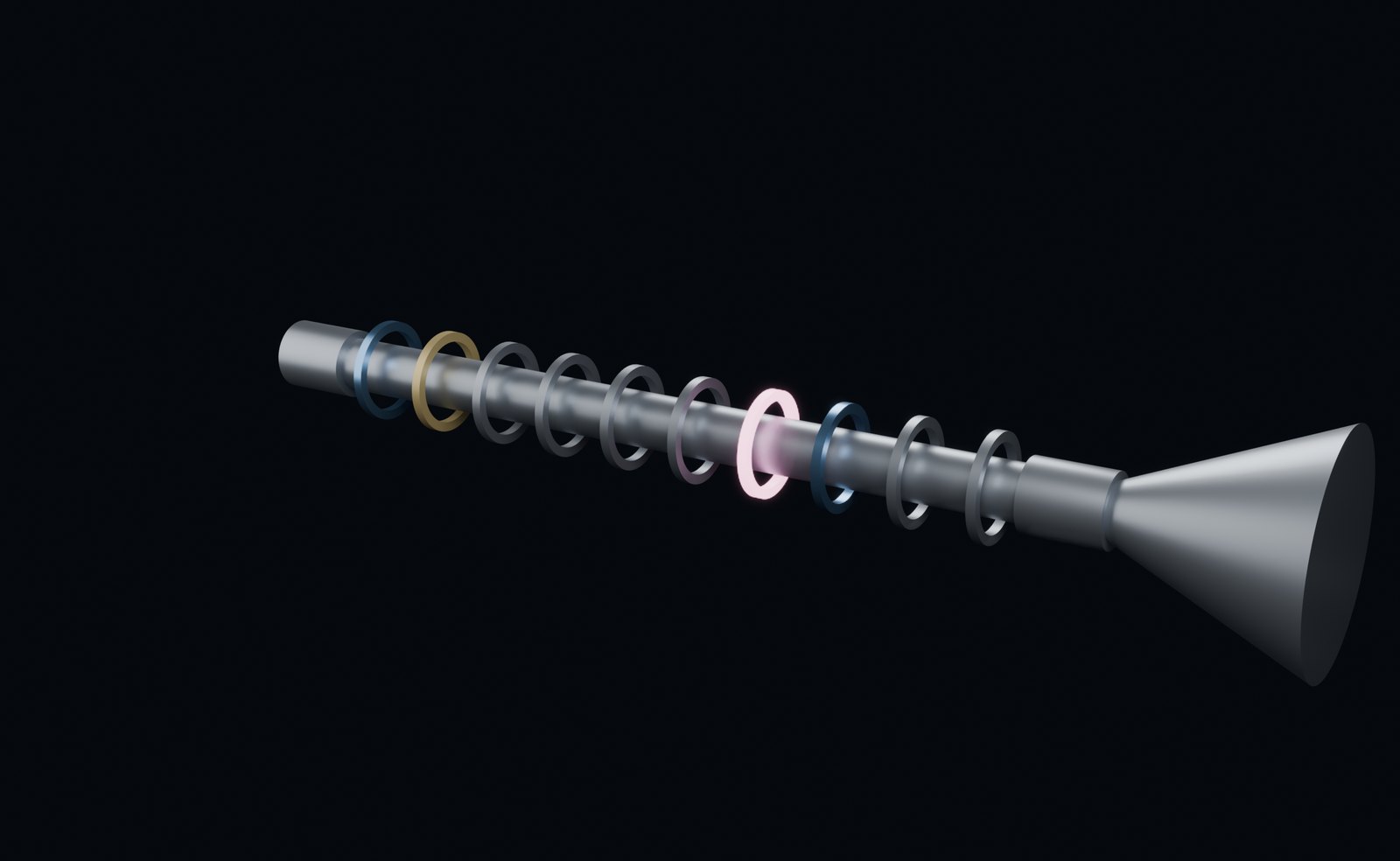
Fusion for Space Propulsion
Fusion's energy density is transformative for space travel — faster transits, less propellant. It's a compelling long-horizon use, though not Kronos's current focus.
- Appeal
- Extreme energy density → high-performance propulsion
- Benefit
- Faster transits; far less propellant
- Horizon
- Long-term (after terrestrial designs mature)
- Kronos focus
- Firm terrestrial power today
Space propulsion is where fusion's energy density becomes genuinely transformative. Chemical rockets are limited by the energy in their propellant; a fusion drive could deliver vastly more energy per unit mass, enabling faster transits across the solar system with far less propellant — the difference between months and weeks to Mars, in principle.
A low-neutron, direct-conversion design is especially attractive for space: compact, producing electricity (or thrust) directly, with minimal shielding mass. It's one of the most exciting long-horizon applications of the technology.
It is not, however, what Kronos builds today. The company focuses on firm terrestrial power, because that's where the need is most urgent and the economics work first; mobile and space applications add mass and size constraints best tackled after the stationary design is proven. See can fusion power ships or spacecraft?