Fusion for Space Habitats
Off-world bases will need compact, firm, fuel-light power far from resupply. Low-neutron fusion is a compelling long-horizon candidate — though not Kronos's current focus.
- Need
- Compact firm power far from resupply
- Solar limits
- Weak/absent sunlight (deep space, lunar night)
- Fusion appeal
- Energy-dense, fuel-light, direct electricity
- Kronos focus
- Terrestrial power today
Permanent bases on the Moon, Mars, or in deep space will need reliable power where solar is weak or intermittent (a two-week lunar night, distant or dim sunlight) and where resupply is rare and enormously expensive. Compact, firm, fuel-light power is exactly what off-world habitats require.
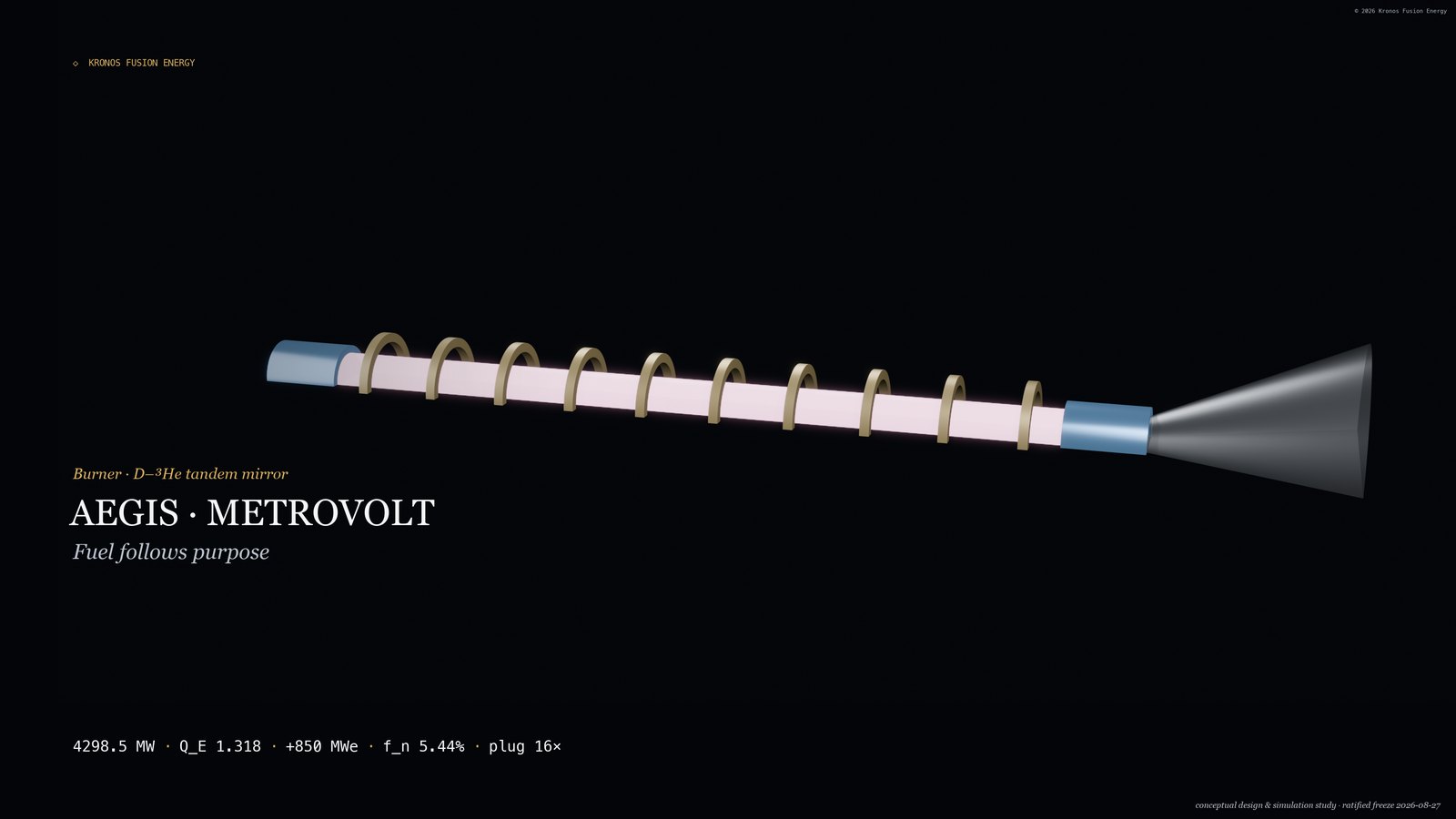
Fusion is a compelling long-horizon candidate: its extraordinary energy density means a small fuel mass powers a base for years, and a low-neutron, direct-conversion design is well suited to space — compact, producing electricity directly, with minimal shielding mass. Lunar helium-3 even offers a potential in-situ fuel source.
This is a distant prospect, not Kronos's current work — the company builds firm terrestrial power first, since that's where the need is urgent and the economics work. But powering humanity's expansion off Earth is among the most inspiring long-term possibilities the technology opens. See fusion for space propulsion.