Learn › Concept encyclopedia
Concept · Fuel strategy
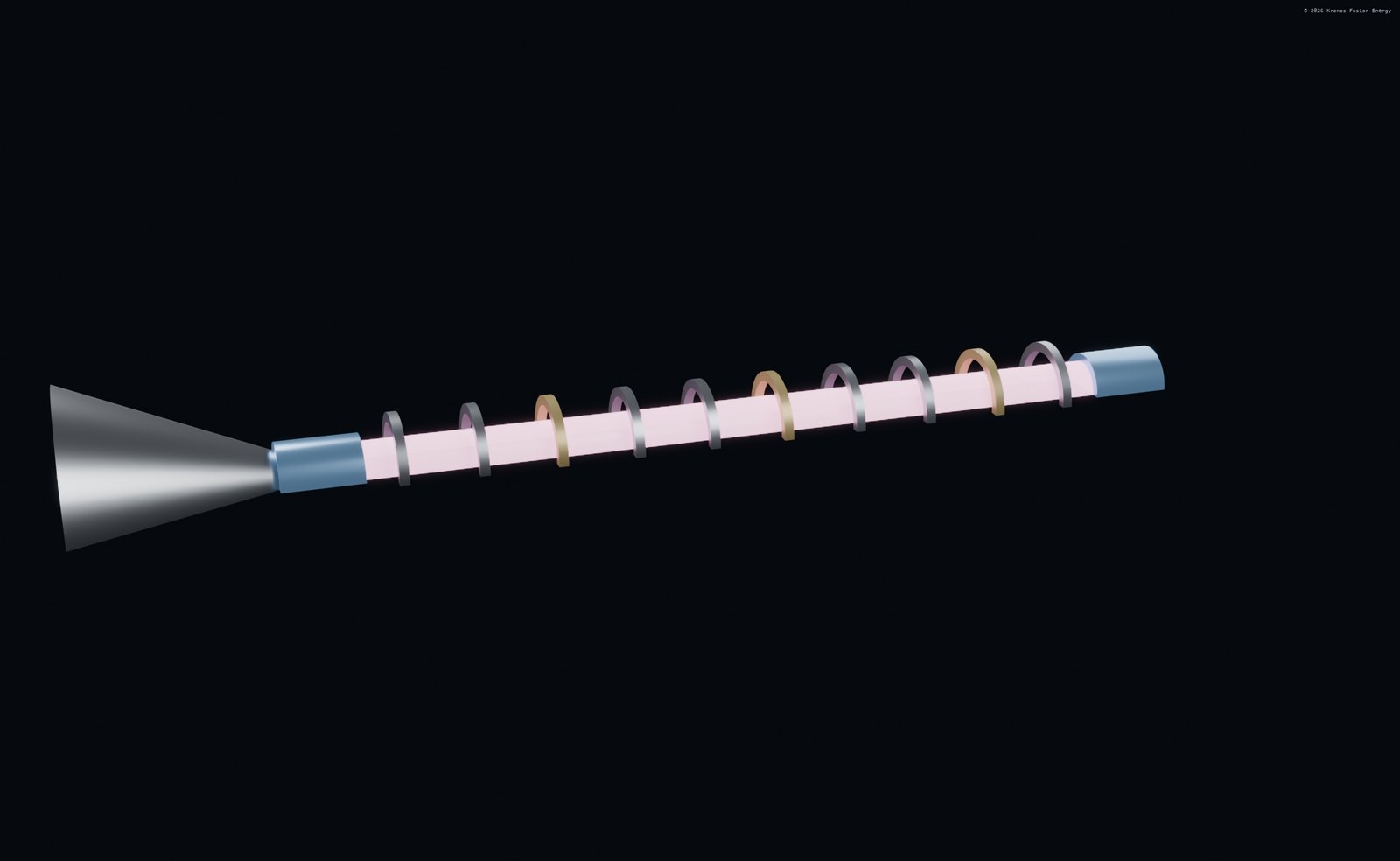
The fuel strategy: breed, then burn.
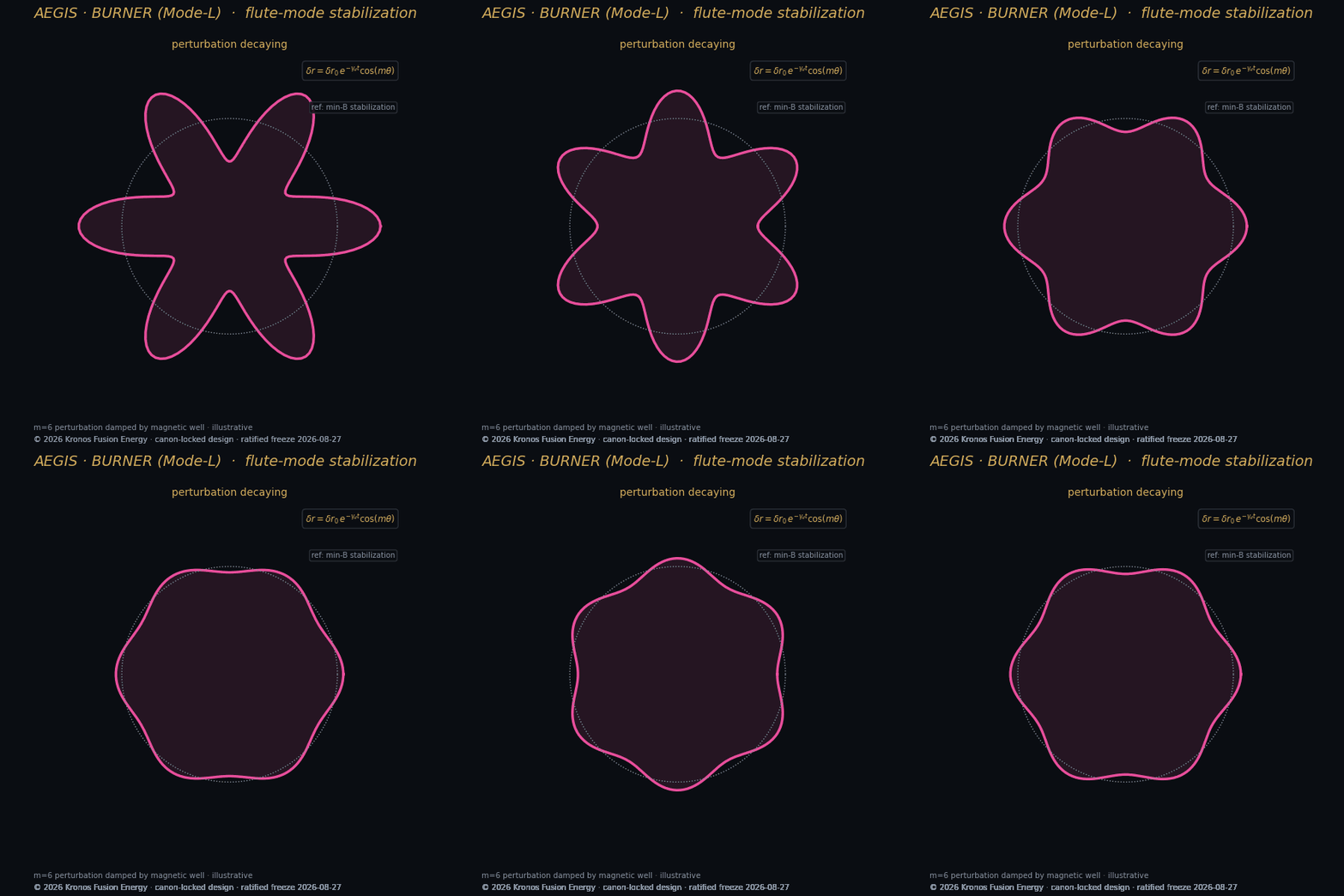
Kronos's fuel plan is a sequence of two machines, not a ladder inside one. The breeder makes the fuel; the burner burns it. Fuel follows purpose.
- Machine one
- HYPERION — D–T breeder
- Makes
- ≈ 4 kg/yr tritium → ≈ 1.97 kg/yr helium-3
- Machine two
- The D–³He burner
- Rule
- Fuel follows purpose, not platform
An earlier Kronos narrative described a single machine climbing a multi-stage fuel ladder. The current, frozen strategy is simpler and stronger: two machines in sequence.
- Breed. HYPERION burns D–T, capturing neutrons to breed about 4 kg of tritium per year. That tritium decays into helium-3 (~1.97 kg/yr).
- Burn. The tandem-mirror burner runs the low-neutron D–³He that the breeder's decay inventory provides.
This is the breeder-first strategy: embrace D–T's neutrons in machine one so machine two can run clean. There is no "Stage 0–3" single-reactor ladder in the current design.
Correction noteThis page previously described a staged single-reactor fuel cycle. Superseded by the two-machine breed-then-burn strategy.