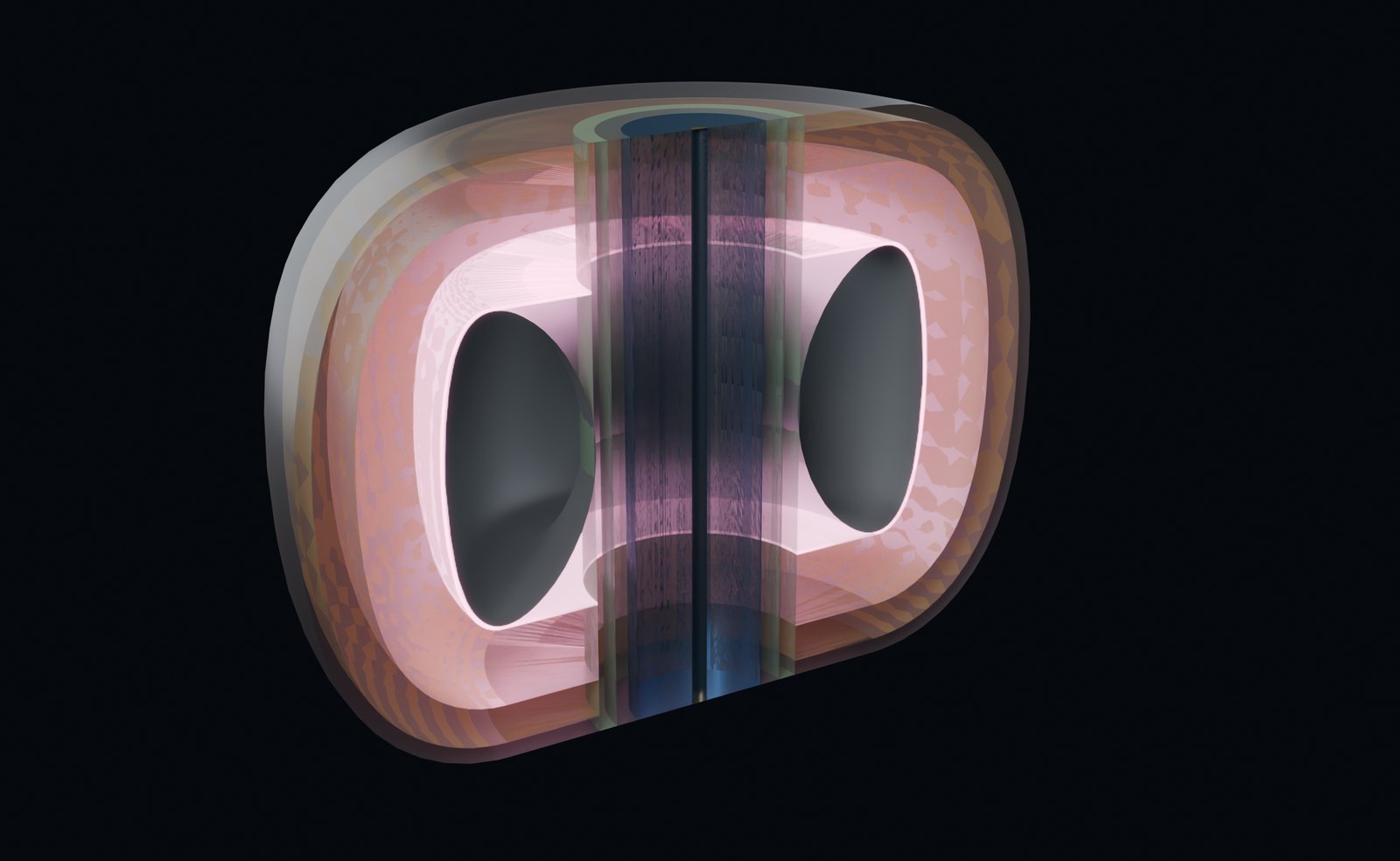
Direct energy conversion (DEC).
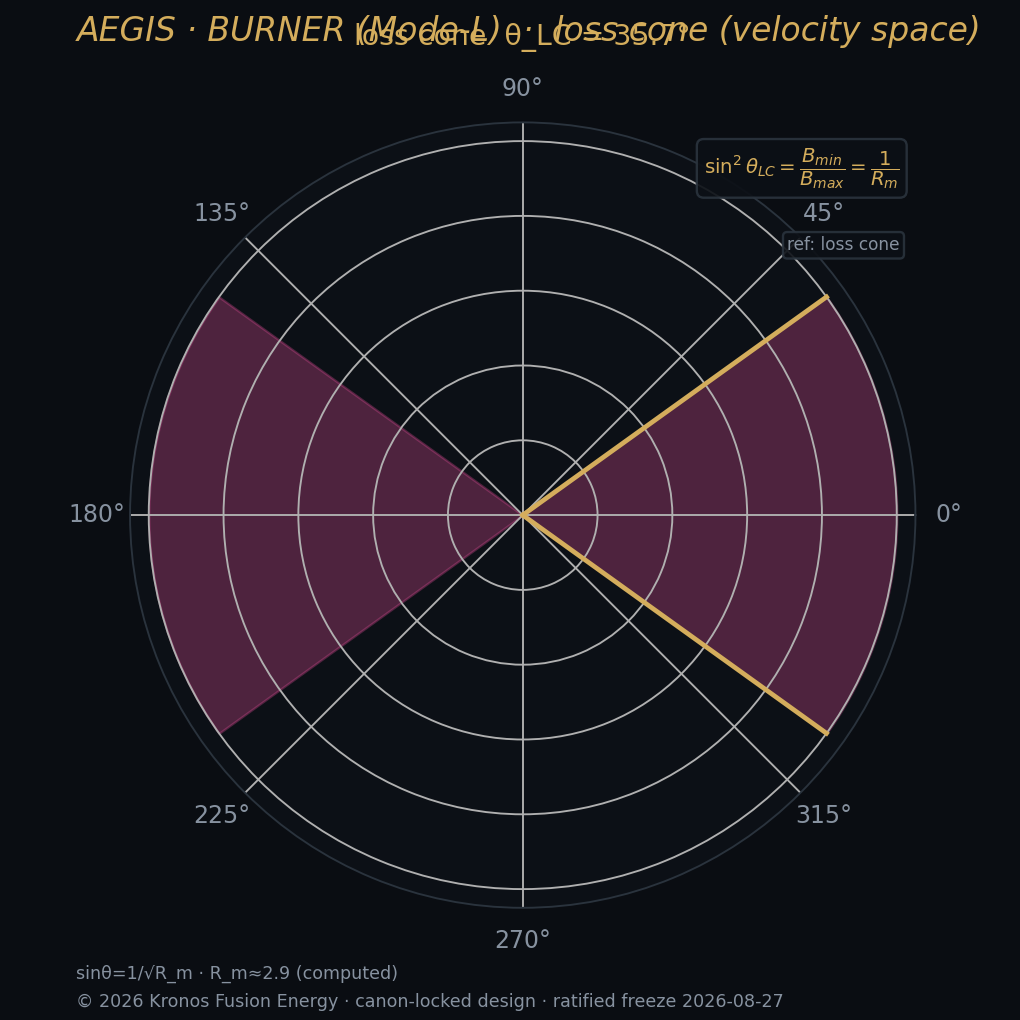
Most power plants boil water. A tandem mirror can skip that: its escaping charged particles are decelerated against collector electrodes and turned straight into electricity.
- What it does
- Charged particles → electricity directly
- Where
- The tandem-mirror burner's open ends
- Why the fuel matters
- D–³He pays back in charged power
- The breeder
- Still uses a thermal cycle
In a conventional plant, fusion (or fission) heat boils water to spin a turbine, capped by the Carnot limit. Direct energy conversion takes a shortcut for the part of the power carried by charged particles: as they stream out of the plasma they are decelerated against a series of biased electrodes, depositing their energy as electrical current instead of heat.
This only pays off if the fuel's energy comes out charged rather than as neutrons — which is exactly why the Kronos burner runs D–³He. And it needs somewhere for the particles to go: the tandem mirror's open field lines carry them straight out the ends onto the collectors, something a closed tokamak cannot do. Open geometry and a charged-particle fuel are what make DEC practical here.
The breeder is different: it burns neutron-rich D–T, so its power is captured thermally, not by direct conversion. DEC is a burner feature, not a company-wide one.