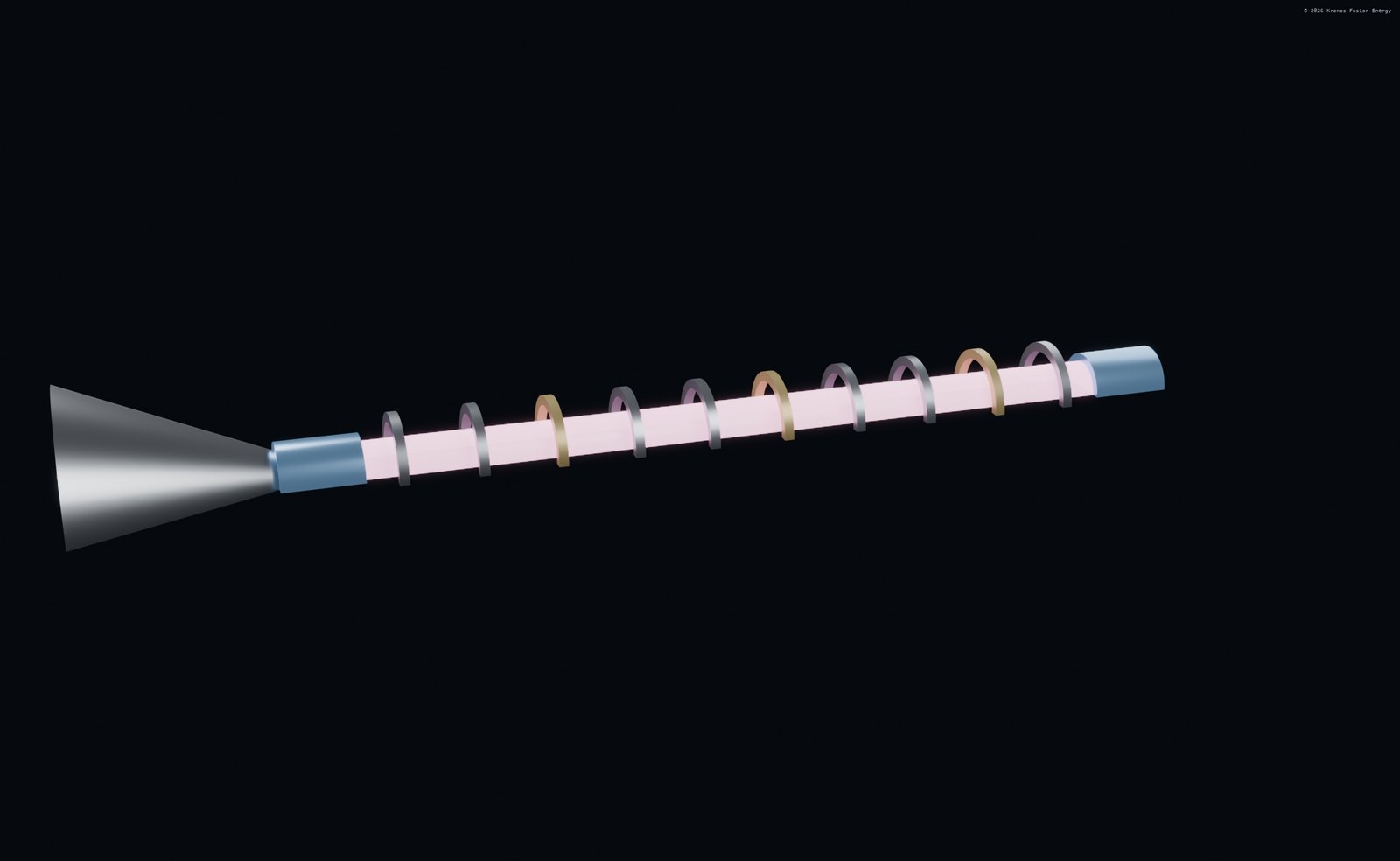
Cryogenics & Magnet Cooling
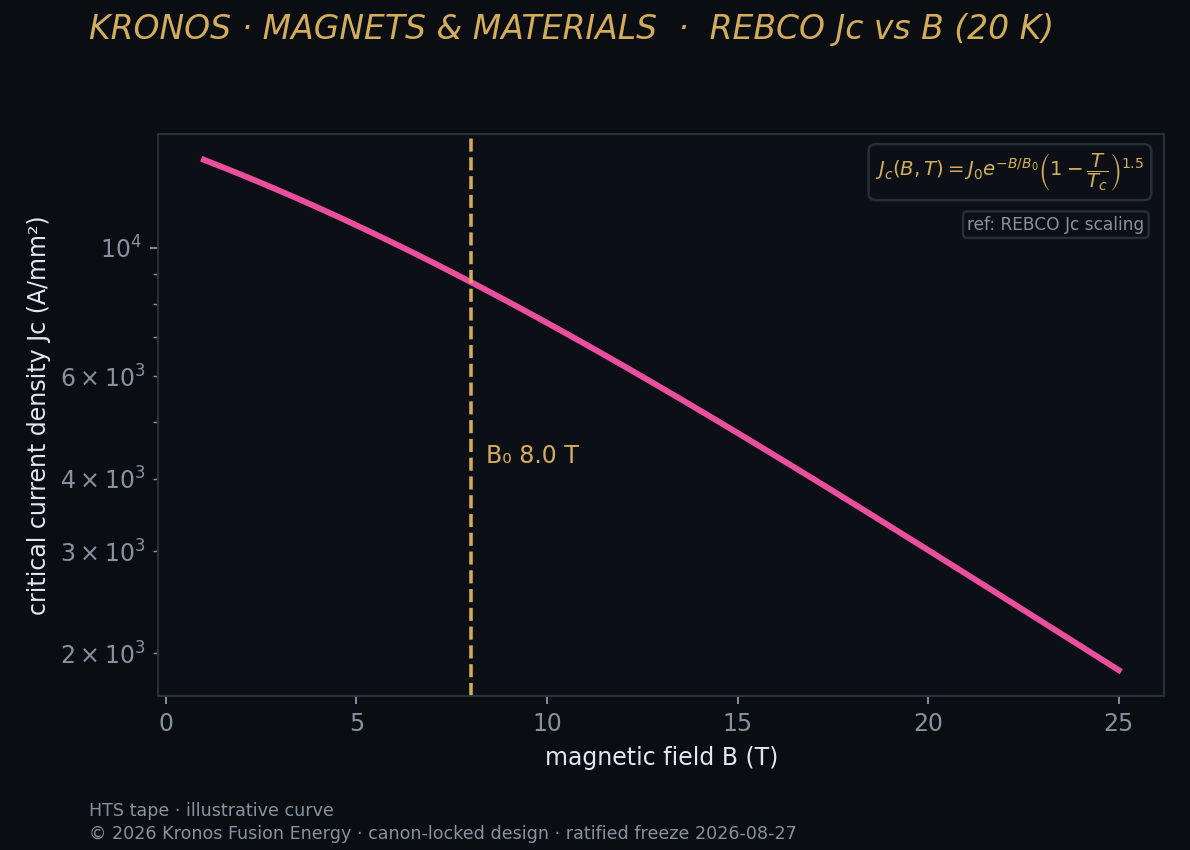
Superconducting magnets must be kept cold. HTS lets Kronos run near 20 K rather than 4 K — a meaningful engineering and efficiency easing.
- Why
- Superconductors only work below a critical temperature
- LTS temperature
- ~4 K (liquid helium)
- Kronos HTS temperature
- ~20 K
- Benefit
- Higher operating temp → easier, more efficient cooling
Cryogenics is the engineering of very low temperatures, and it is inseparable from superconducting magnets: a superconductor only carries lossless current below its critical temperature, so the coils must be held cold against the heat leaking in from a 100-million-degree plasma nearby. The cryogenic plant that does this is a significant part of a fusion reactor's balance of plant.
Here Kronos's choice of HTS pays a second dividend. Conventional low-temperature magnets must sit near 4 K, requiring liquid helium and large refrigeration power; Kronos's REBCO conductor operates near 20 K. That higher operating temperature makes the cooling easier, more efficient, and more robust — recovering some of the recirculating power that would otherwise cut into engineering gain.