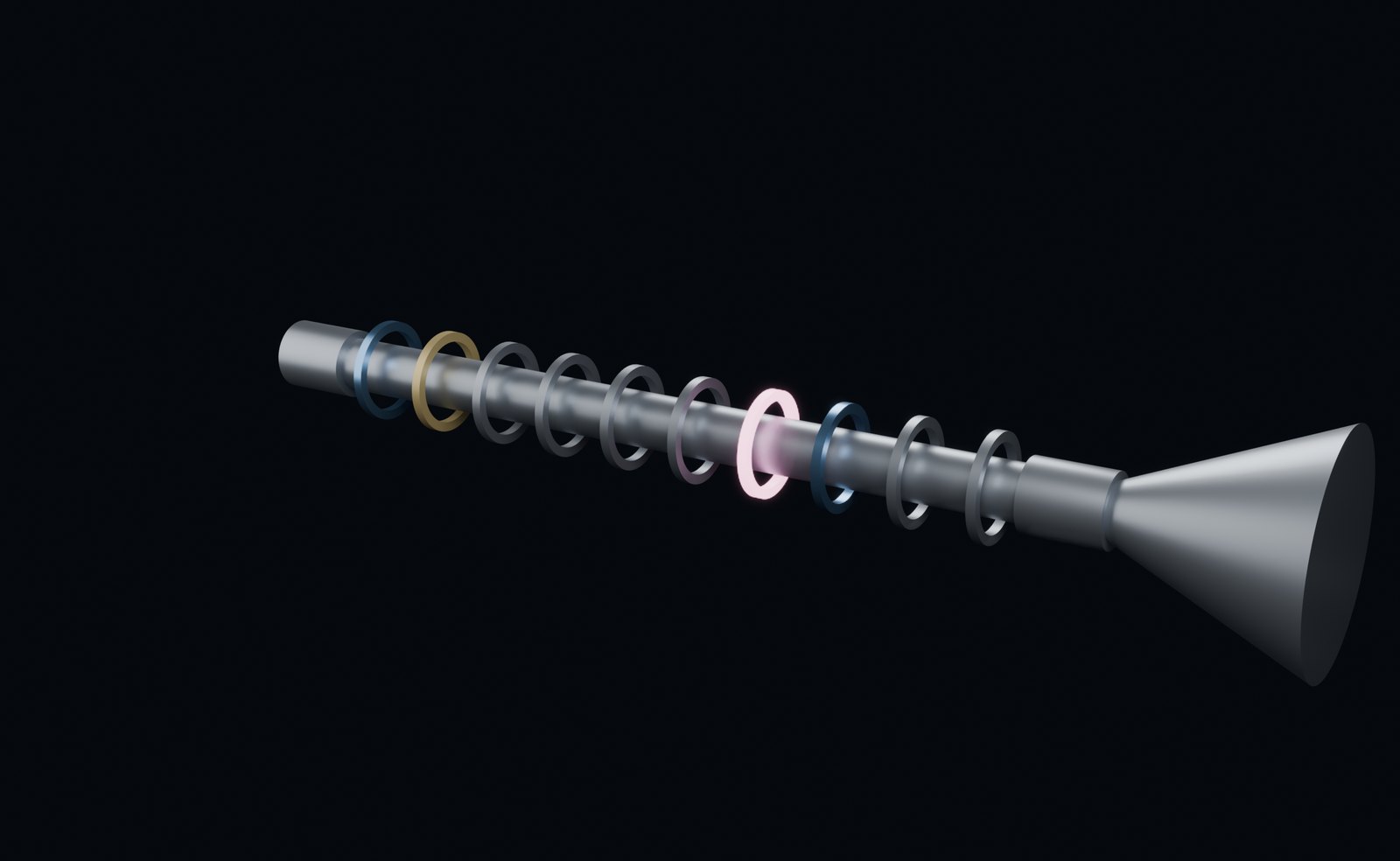
Catalyzed D–D Fuel Cycle
In a catalyzed D–D cycle, deuterium fuses with itself and the products (³He and tritium) are burned in turn — how Kronos breeds its own helium-3.
- Base reaction
- D + D → (³He + n) or (T + p)
- Catalysis
- Burn the ³He and T products in turn
- Kronos role
- Breeds ³He in situ, easing supply
- Cost
- The D–D branch is the residual neutron source
A catalyzed D–D cycle exploits the fact that deuterium fuses with itself along two branches — one producing helium-3 plus a neutron, the other tritium plus a proton — and then burns those products in turn. The tritium fuses with deuterium, and the helium-3 fuses with deuterium, so the cycle "catalyzes" its own higher-energy fuels from plain deuterium.
This is the mechanism behind Kronos's staged, catalyzed D–³He approach: the plant breeds much of its own helium-3 in situ rather than depending on a thin external market. The trade is that the D–D branch that yields a neutron is exactly what makes the plant low-neutron rather than neutron-free — an honest, quantified cost of self-sufficiency.